
MP Ranawaka shows Sri Lanka borrowed more than it repaid in foreign loans
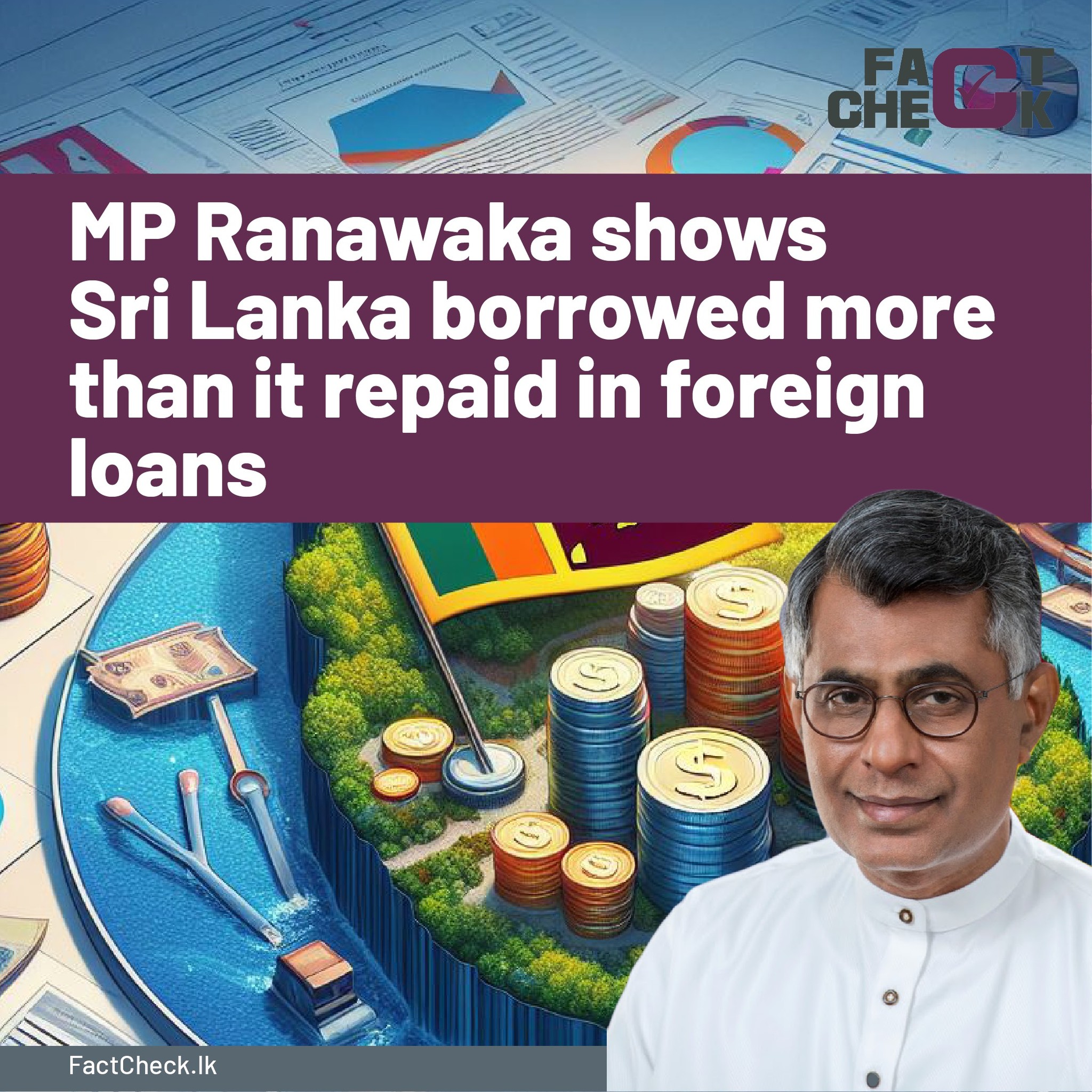
MP Ranawaka claimed on X that Sri Lanka borrowed more (USD three billion) than it has repaid (USD two billion) in the period after the country’s April 2022 default on external debt (‘post-default’ period). For a detailed analysis of his claim, click here
This week in The Media Analysis...
Double issue
01. Visa issuance outsourcing deepens mistrust of present government
02. The Language Divide
03. The TV coverage of the issues
04. This week’s cartoons
05. This week’s memes
06. Other topics covered in reportage
Past issues can be viewed here
Disclaimer: This week’s TMA is focusing on the outsourcing of the tourist visa issuance process to VFS Global.
01. Visa issuance outsourcing deepens mistrust of present government
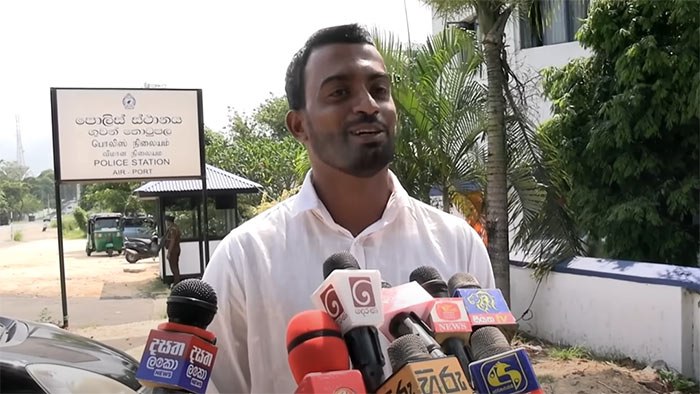
Photo credits: ONLANKA
Event: In early May 2024, a video surfaced on social media featuring a Sri Lankan traveller, Attorney-at-Law Sandaru Kumarasinghe, voicing his discontent with the on-arrival visa counter officers at the Bandaranaike International Airport.[1][2][3][4] The officials had allegedly denied a visa to his partner.[5][6] In the video, Kumarasinghe can be heard stating that Indian nationals were operating the visa counter and questioned why Sri Lankan officials were not involved in the process of issuing visas.[7][8]
On May 6, Minister of Public Security Tiran Alles, under whose purview the Department of Immigration and Emigration is placed, held a media briefing to address the allegations around the outsourcing of the on-arrival visa process to a foreign company VFS Global.[9][10] The minister stated that the proposal to transfer the new visa system to VFS Global had been unanimously passed in parliament on November 23, 2023 following cabinet approval.[11][12]
On the same day, Kumarasinghe was summoned to the Katunayake Airport Police to provide a statement.[13][14]
Analysis
Over the past two weeks, Sinhala press reporting, TV coverage and social media commentary were overwhelmingly critical of the government’s decision to outsource the visa issuance process to a foreign (reportedly Indian) company.[1] The on-arrival visa issuance process was reportedly previously managed by government officials.[2]
In the print media, editorials in Lankadeepa and Aruna led the criticism against the government. Meanwhile, the Mawbima newspaper, with ownership connected to Minister Tiran Alles, did not feature any editorials on the matter.[3]
This week’s TMA is presented in two parts. The first part will unpack three entrenched narratives concerning actions of the state in relation to its economic decision making that are perceived as contrary to public interest. The second part will analyse how Sinhala media criticism of the government’s decision to outsource the visa issuance process has invoked all three of these negative narratives against the current government.
There are three entrenched narratives in the Sinhala public psyche about state actions on economic matters being contrary to the wider public and national interests.[4]
I. The foreign influence narrative
Sri Lanka’s post-independence era has been marked by resistance to what might be seen as political intervention or ‘impositions’ by foreign powers.[5] Anxiety about compromising the sovereignty and interests of the country foregrounds this narrative.[6] International agreements involving any sale, lease or development of assets owned by the government tend to be cast negatively by this “foreign influence narrative”.[7]
II. The corruption narrative
There have been longstanding public consensus and frustration across party lines and social groups on issues of large-scale corruption, whereby government decision makers are thought to be profiting themselves and vested interests at massive economic cost to the country. In the past decade, major exposés of corruption under successive governments have intensified this “corruption narrative”. Two prominent examples include the 2015 ‘bond scam’ under the UNP-led government and the 2021 ‘sugar scam’ under the current SLPP-led government.[8] There is deepening public anger and frustration over the corrupt nature of economic decision making in the country.[9]
III. The privatisation narrative
In the public psyche, the privatisation of state-owned enterprises and assets is frequently met with a high level of scepticism and suspicion. This mistrust stems from an underlying social apprehension about corruption that pervades such transactions, as well as the expectation of exploitative practices by the private sector after forfeiting government control. Privatisation is often presented as a means of benefitting ‘overly powerful’ private entities that may exploit or harm public interest and social benefits.[10]
I. ‘Foreign influence’ in visa outsourcing
Media voices, including Sandaru Kumarasinghe, MP Patali Champika Ranawaka and editorials in Lankadeepa and Aruna, stridently criticised the government for outsourcing the visa issuance process to a foreign (reportedly Indian) company. These critics, drawing on the entrenched “foreign influence narrative”, accused the government of subjugating itself to Indian interests and acting contrary to national interests.
II. ‘Corruption’ in visa outsourcing
Critical voices, including MP Ranawaka, Opposition Leader Sajith Premadasa and Gamini Sumanasekara, placed the outsourcing of the visa issuance process to a foreign company within the “corruption narrative”. They likened it to a ‘national robbery,’ and as a greater loss to the government than the infamous 2015 ‘bond scam’ (which is often framed as one of the largest corruption scandals in the country). These allegations of corruption were reinforced by the government’s failure to follow a proper procurement process – along with competitive bidding – to award the contract. Such transactions are seen as designed to benefit private interests such that benefits can also flow back to politicians through kickbacks.
III. ‘Privatisation’ of visa outsourcing
In addition to the corruption narrative, critics also discussed the outsourcing through the “privatisation narrative”. This is because it was an existing revenue generating function of government that was alienated to the private sector such that potential government revenue would be diverted into private hands.[11]
In the past, the government led by the UNP/Wickremesinghe has been judged by the courts to have practiced grand corruption in the privatisation of state entities – where laws and regulations were also changed to accommodate corrupt transactions. Two notable judgements by the Supreme Court are on the attempted sale of Lanka Marine Services (LMS) and the sale of Sri Lanka Insurance Corporation (SLIC). In both cases the courts reversed the sales and condemned the corruption that had occurred.[12] Therefore, the current public discontent over the visa outsourcing appears to have brought back the corruption concerns related to the “privatisation narrative” and undermined the support for privatising state-owned enterprises that had been mobilised over the past two years since the economic crisis.[13]
Overall, the three entrenched narratives portray the political leadership and the state as acting against the interests of the Sri Lankan people, reflecting deep public suspicion and scepticism of state-led actions, especially in the state’s economic decision making. The UNP/President Wickremesinghe are particularly implicated in these narratives given the historical perception of them as bowing to Western-supported foreign interests, unduly ‘pro-privatisation’ alongside vested interests and connected to grand corruption.[14] Accordingly, the allegations surrounding the visa outsourcing process have amplified these narratives of suspicion, bringing them to the forefront and deepening public mistrust in the actions of the present government.
02. The Language Divide
Signposts the differences and nuances in reporting between Sinhala and Tamil language newspapers

The last two weeks’ Sinhala and Tamil press converged in relation to six main stories. The six stories were on the: (i) outsourcing of the tourist visa issuance process to VFS Global; (ii) speculation on whether the parliamentary election or the presidential election will be held first; (iii) ongoing internal disputes of the SLFP; (iv) Supreme Court ruling on Diana Gamage’s parliamentary seat; (v) reported racket to send retired Sri Lankan military soldiers to Russia as mercenaries; (vi) ongoing strikes by the health sector trade unions and the non-academic university staff. The Tamil press exclusively featured three main stories, and they were on the: (i) commencement of the Mullivaikkal Remembrance Week with the distribution of Mullivaikkal kanji (rice porridge); (ii) reported plans to nominate a common Tamil candidate for the upcoming presidential election; (iii) proposed wage increases for the Hill Country plantation workers. There were no main stories featured exclusively in the Sinhala press during the period monitored.
Do you want to see the divided priorities on a daily basis? Check out FrontPage. It captures the day’s headlines and features succinct summaries of the political news reported in the most widely read Sinhala and Tamil newspapers.
Commencement of the Mullivaikkal Remembrance Week and the serving of Mullivaikkal kanji: How did TV channels cover it?
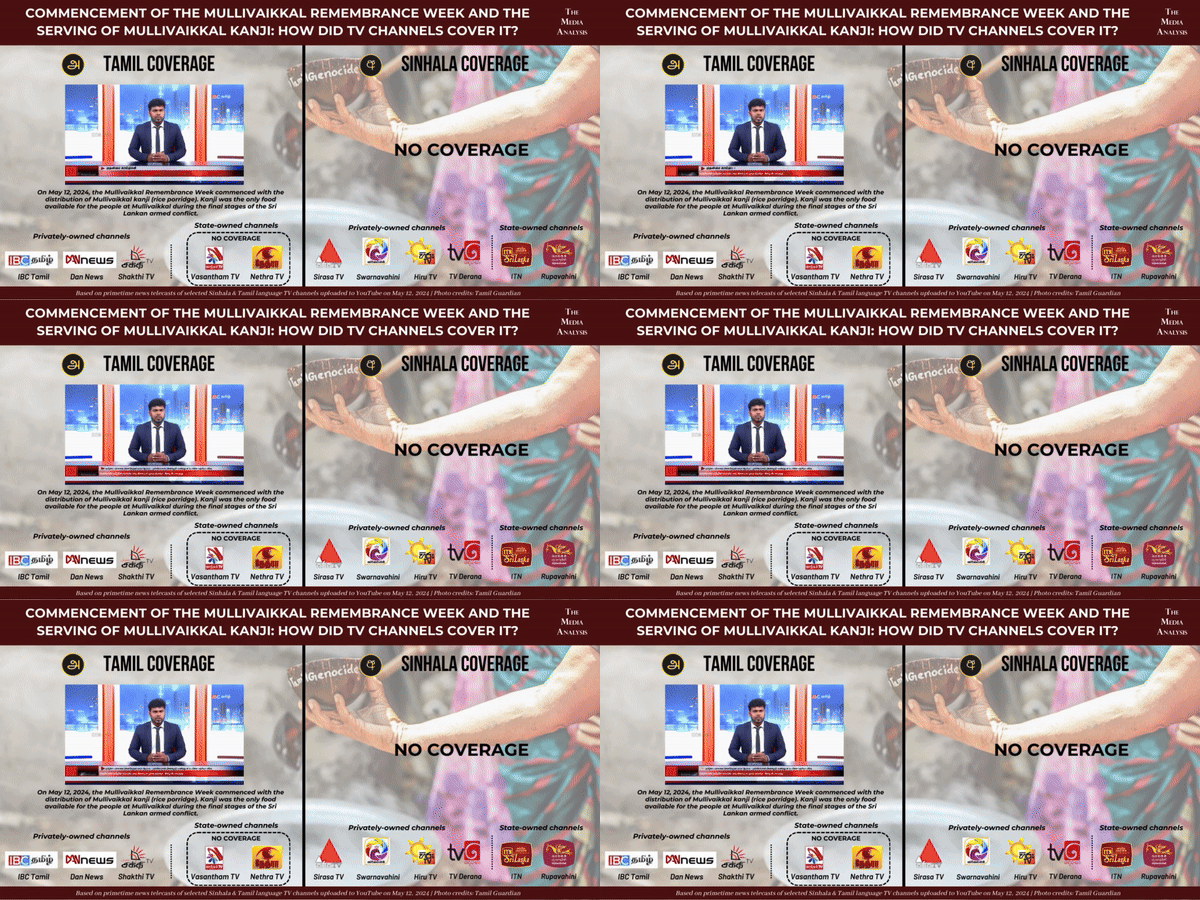
On May 12, 2024, the Mullivaikkal Remembrance Week commenced with the distribution of Mullivaikkal kanji (rice porridge). Kanji was the only food available for the people at Mullivaikkal during the final stages of the Sri Lankan armed conflict. The commencement of the commemoration was afforded coverage by privately-owned Tamil TV channels IBC Tamil, Dan News and Shakthi TV in their primetime news telecasts. By contrast, no coverage was afforded to the commemoration on state-owned Tamil TV channels Vasantham TV and Nethra TV, privately-owned Sinhala TV channels Sirasa TV, Swarnavahini, Hiru TV and TV Derana and state-owned TV channels ITN and Rupavahini. For more information, click here
03. The TV coverage of the issue
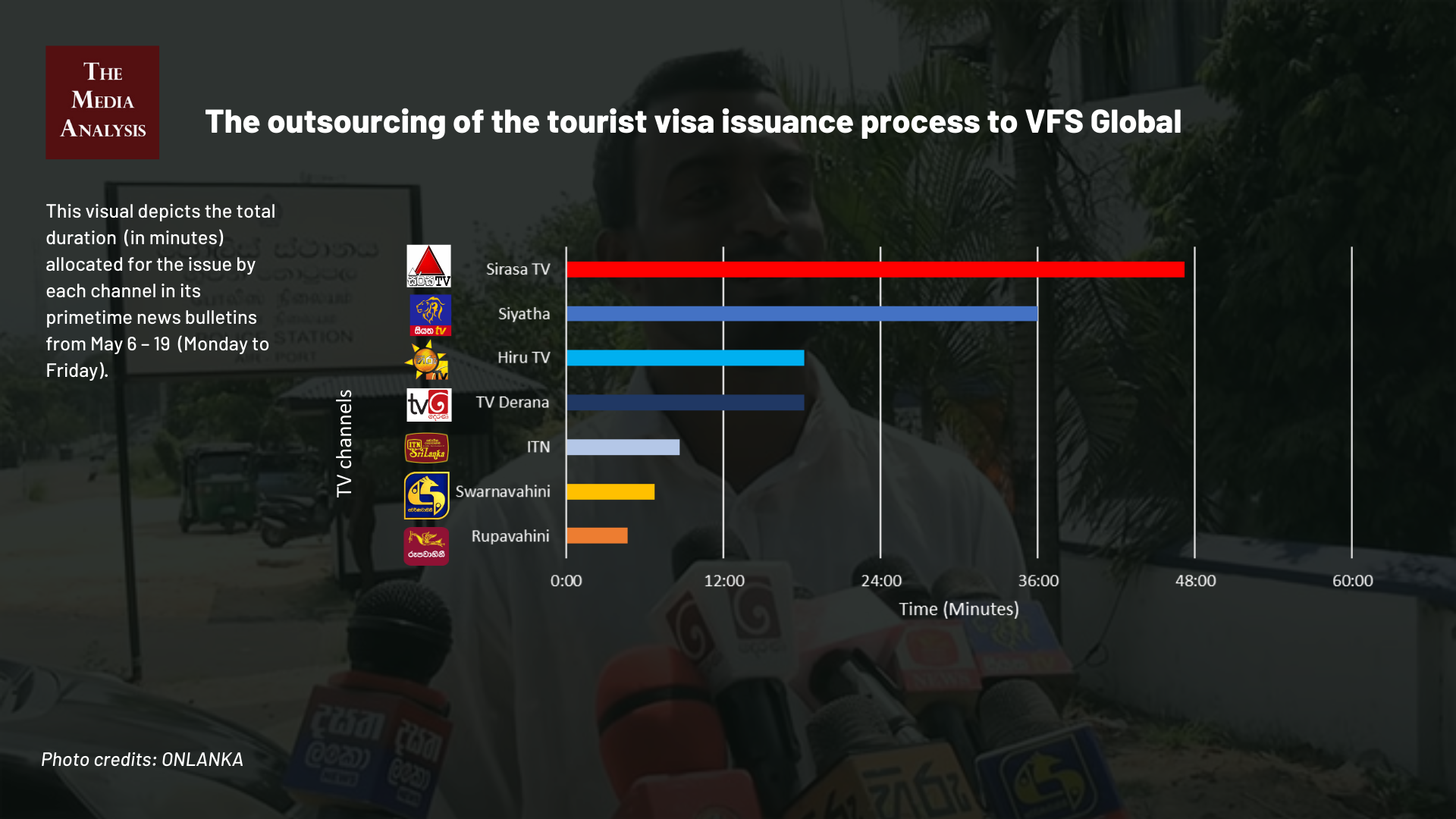
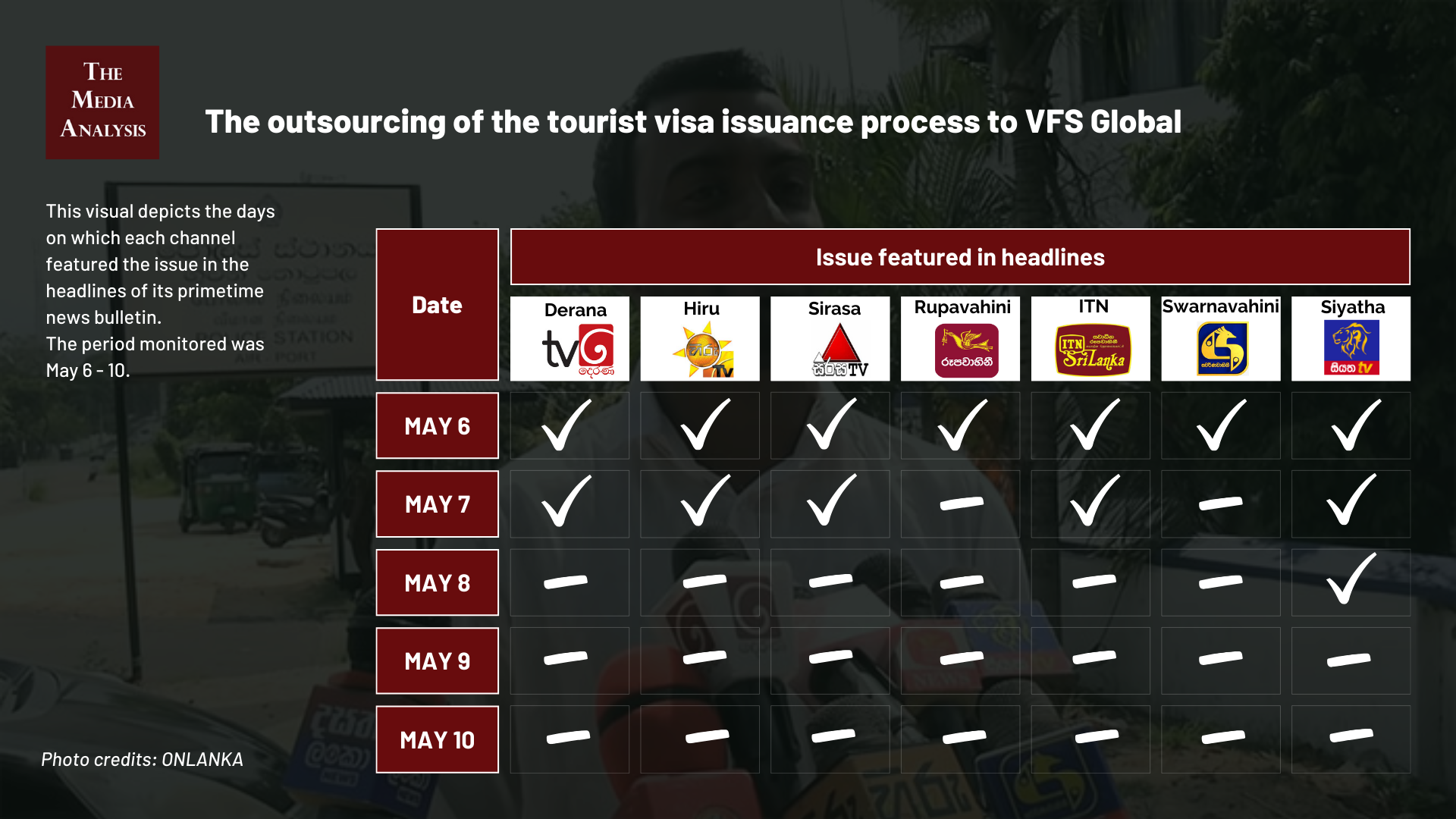
The data on television coverage is based on the monitoring of the primetime news telecasts of selected Sinhala language TV channels uploaded to YouTube. During the monitoring period May 13 – 17, none of the channels except for Siyatha featured the issue in its headlines. Siyatha featured the issue in its headlines on May 14.
04. This week’s cartoons
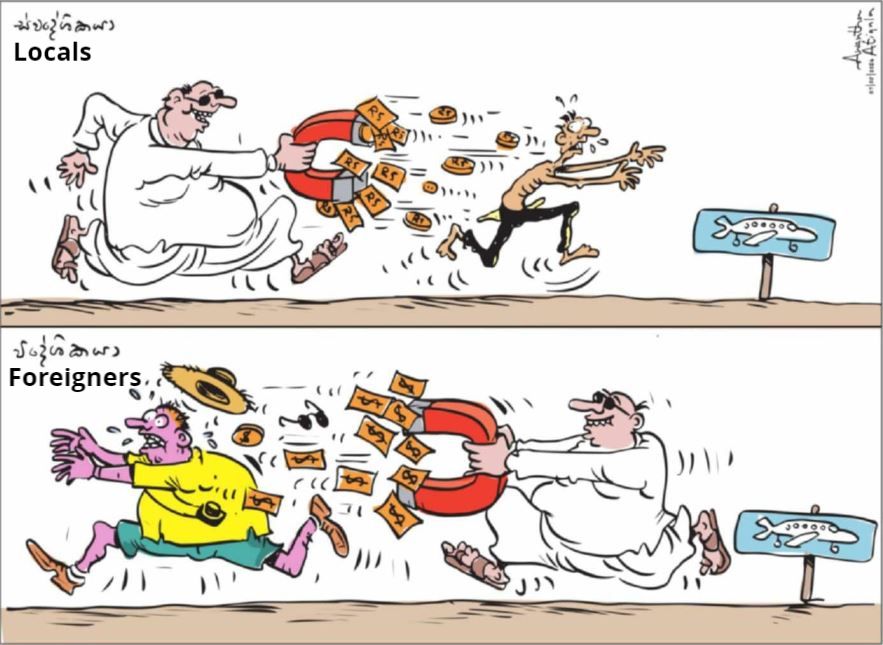
Courtesy of Ada, May 7, 2024

Courtesy of Tamil Mirror, May 12, 2024
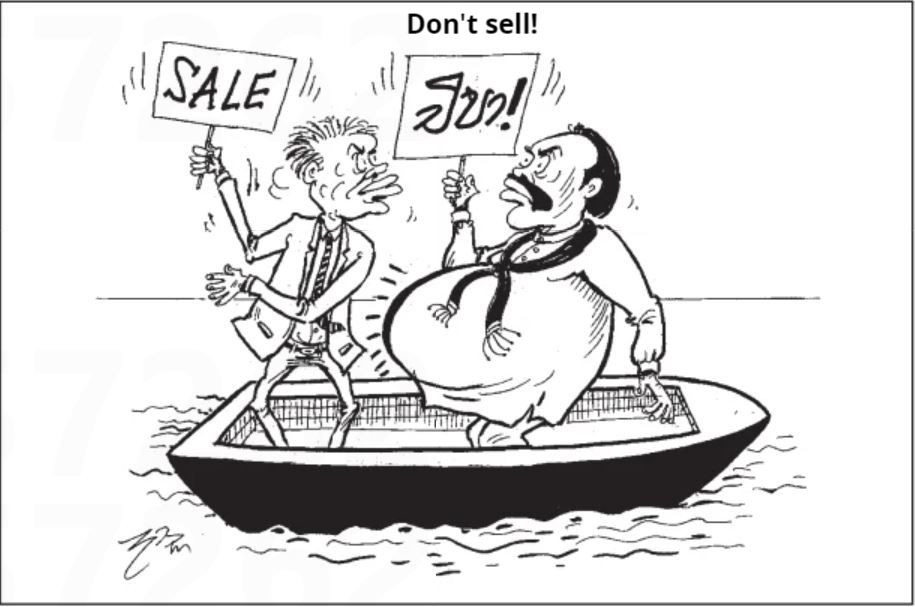
Courtesy of Lankadeepa, May 15, 2024
05. This week’s memes
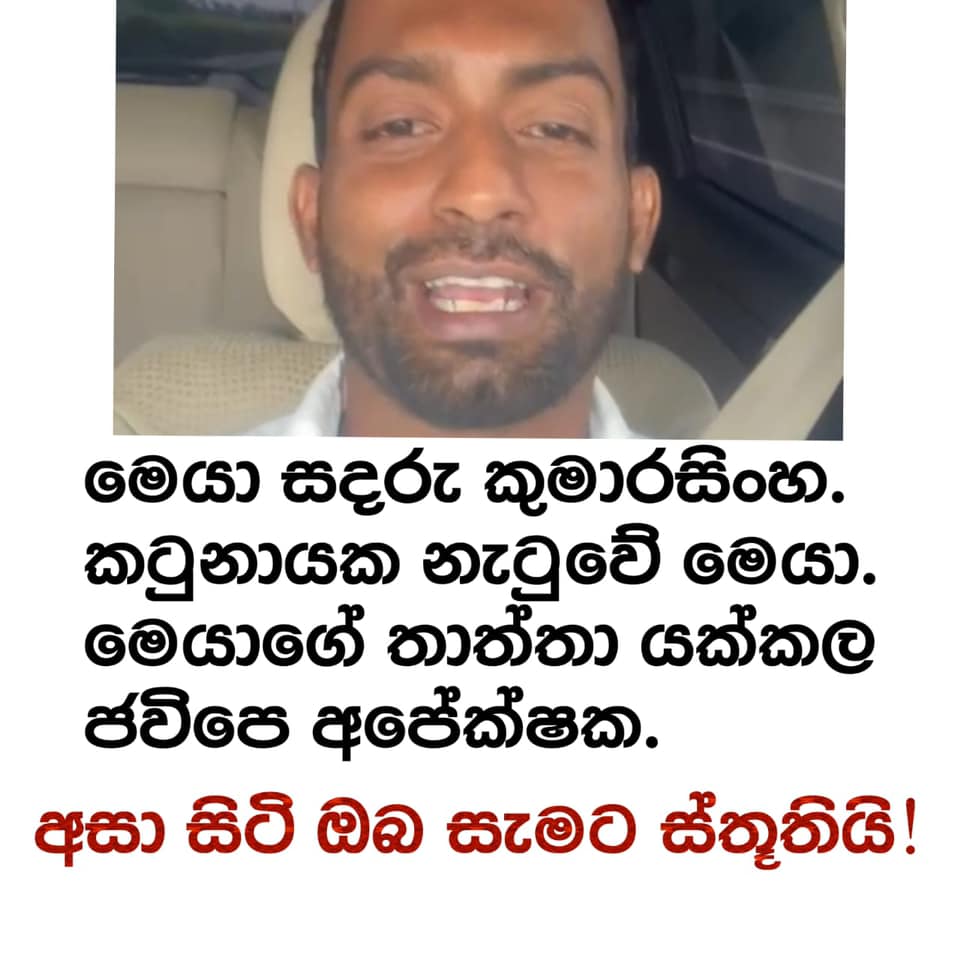
This is Sandaru Kumarasinghe.
He is the one who raised a commotion at the Katunayake Airport.
His father is the JVP candidate [for elections] for Yakkala.
Thank you for listening!
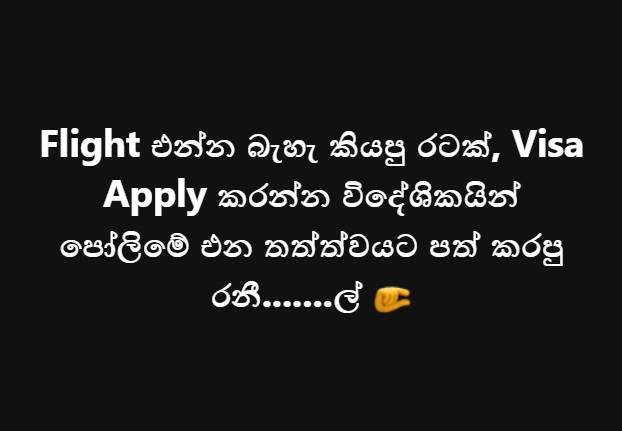
Raniiiiii…l, who turned a country to which flights refused to come into a country where tourists queue up to apply for visas
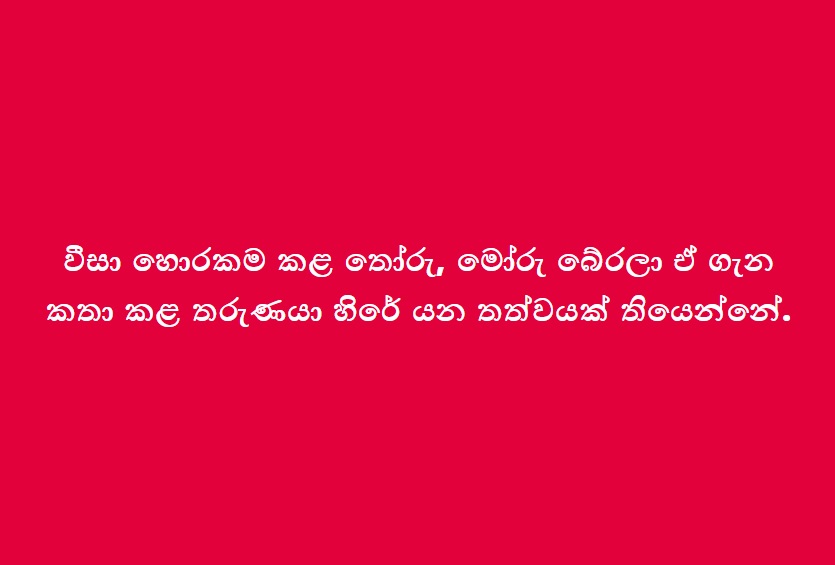
It looks like we are in a situation where the big fish who carried out the visa scam are getting away scot-free and the young man who spoke up about it is going to jail.
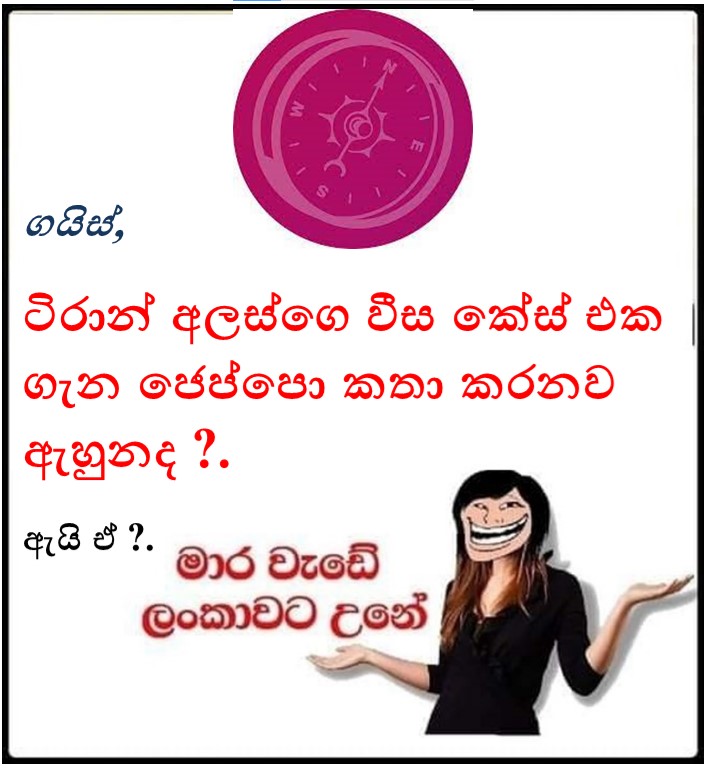
Guys,
Did you at any point hear the jeppos (JVP supporters) talking about Tiran Alles’ visa issue? How come? Just see what has become of Sri Lanka
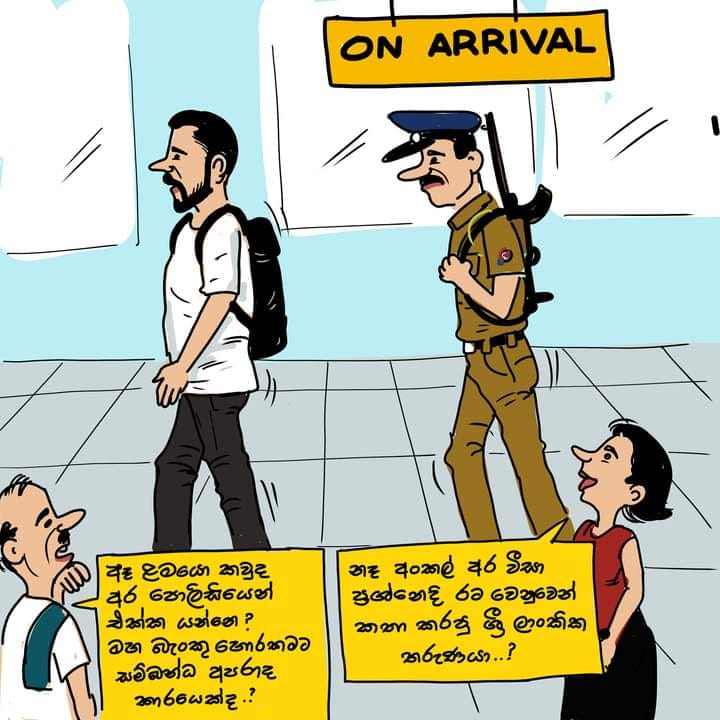
Man: Child, who is the police taking away? Is he a criminal linked to the Central Bank robbery?
Woman: No, uncle. He is the young Sri Lankan who spoke up for the country regarding that visa issue.
06. Other topics covered in reportage
- Sri Lanka’s economic crisis and the disbursement of the third tranche of the IMF EFF
- Plans to celebrate Vesak
- State Minister Prasanna Ranaweera’s assault of an official at the airport
- Court summons on former President Gotabaya Rajapaksa in relation to the pardon granted to Sunil Ratnayake, a former army soldier who was convicted in relation to the Mirisuvil massacre
- The leakage of question papers and incorrect questions being included in question papers distributed at national exams
To view this week’s news summaries, please click here