
October 21, 2024 — October 27, 2024 | Vol. 14, #42 | ISSN — 2386-1827
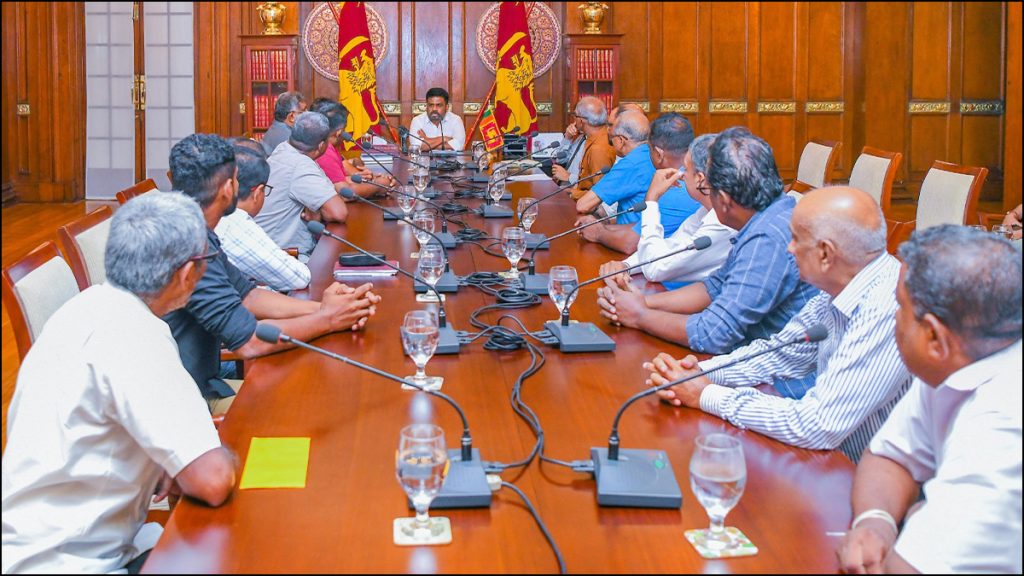
Photo credits: Sri Lanka Mirror
Analysis
Last week’s issue of TMA examined the expanding criticism from the Opposition directed at President Anura Kumara Dissanayaka and the NPP government ahead of the upcoming GE.[1]
This week’s analysis notes that the criticism directed at the government has grown in TV news coverage and print media, with some press editorials appearing in privately-owned Divaina and Mawbima echoing some of the sentiments of the Opposition. Similar criticism was advanced through social media commentary, analysed through the monitoring tool Junkipedia.[2]
This analysis will unpack two grounds on which criticism was directed at the government.
(i) Inadequate action in tackling corruption
First, the NPP government came under criticism for inadequate action in tackling corruption, a key promise in Dissanayaka’s presidential election campaign.[3] For example, Mawbima alleged that the government was delaying to keep its pledge to commence investigations into corruption cases. The main yardstick of expectations placed on the NPP government is that of delivering on its anti-corruption promises.[4]
(ii) Inadequate action in controlling prices
Second, the NPP government was criticised for inadequate action in controlling the prices of goods and ‘trade mafias’ amidst the rising cost of living. As unpacked in past issues of TMA, ‘trade mafias’ are business groups that are seen as flouting the protective prices set by the government, creating artificial shortages by hoarding and profiting at the expense of the consumers.[5]
Popular Sinhala memes referenced the prevalence of a ‘rice mafia’ (a group of large-scale mill owners) that seems to have artificially created shortages through hoarding to increase the prices of rice (refer This week’s memes). The NPP government was perceived as not taking adequate action to control these ‘mafias’.
Similar criticism appeared in the press, where an editorial in privately-owned Divaina criticised the government for burdening the public by failing to adequately address inflation while a column in Mawbima criticised the delay in providing salary hikes to government employees. Thus, such criticism echoed the Opposition’s sentiments that government is yet to control the ‘trade mafias’ and deliver practical relief to those facing economic hardships.
Despite the criticism of the NPP government gaining momentum, the public response to this criticism reflects an understanding of the complexities and challenges confronting the NPP government. As set out in a past issue of TMA, the post-election ‘honeymoon’ period has provided a buffer where the public and media typically grant space for the new administration to deliver on its promises.[6] Based on the public response – discerned from social media commentary – this public understanding during the ‘honeymoon’ period seems to have reduced the momentum of the pre-general election criticism.
[1] See TMA Vol.14, #41.
[2] The TMA team monitored Facebook profiles and TikTok handles using Junkipedia for the keywords Anura, election, Sajith and power. The monitoring period was October 21 to 25.
[3] Ibid.
[4] See TMA Vol.14, #40 and Vol.14, #41.
[5] See TMA Vol.11, #35, Vol.11, #31 and Vol.10, #22 & 23.
[6] See TMA Vol.14, #40.