
July 8 – July 28, 2024 | Vol.14, #28, 29 & 30
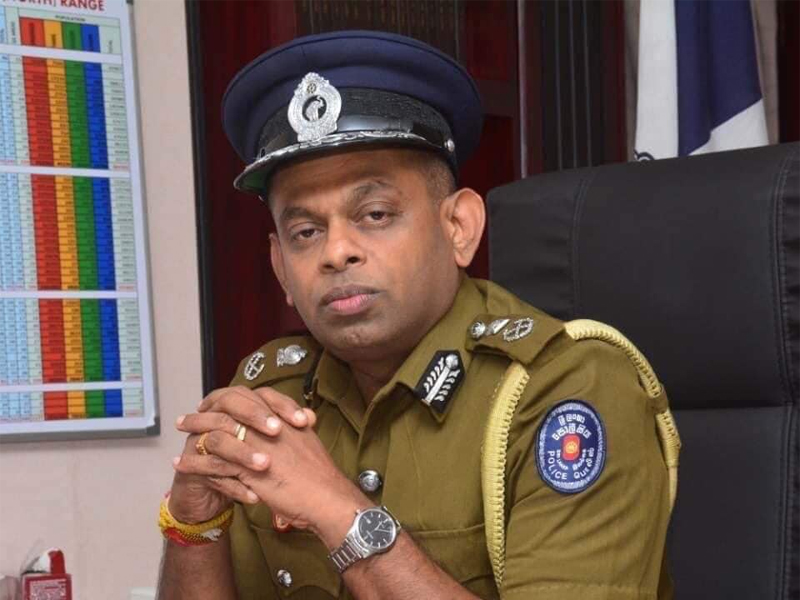
Photo credits: Ceylon Today
Highlights: The SC’s interim order against Deshbandu gave rise to two conerns: (1) President Wickremesinghe might use him as a ‘pawn’ to undermine democratic freedoms in the run up to elections and (2) the executive’s refusal to adhere to the SC’s ruling in the an attempt to potentially delay elections through a legal logjam.
Event: On July 18, President Ranil Wickremesinghe published the gazette notification for the 22nd Amendment to the Constitution.[10][11] The amendment proposes changing Article 83(b) by replacing the words “exceeding six years” with “exceeding five years”.[12][13]
On July 24, the Supreme Court (SC) issued an interim order restraining Deshabandu Tennakoon from functioning as the Inspector General of Police (IGP).[14][15]
Analysis
Over the past week, views supportive of the SC’s interim order against Deshabandu Tennakoon dominated the Sinhala newspapers, TV and social media commentary. Members of the Opposition, along with the privately-owned Anidda newspaper and Siyatha TV channel, prominently supported the SC’s interim order. As per the CrowdTangle tool used in TMA to analyse social media posts on the SC’s ruling, the SC’s ruling received overwhelmingly positive reactions and comments from Facebook users.[1]
Sinhala media discourse on the SC’s ruling and criticism of Deshabandu reflects two underlying concerns deeply rooted in the Sinhala psyche. These concerns are briefly analysed below.
1. Concerns regarding Deshabandu’s character and appointment as IGP
The past appointment of Deshabandu Tennakoon as the IGP faced criticism due to concerns over his character and suitability for the role, as analysed in TMA Vol.14, # 08 & 09. This criticism arose from his actions during the Easter Sunday attacks, his involvement in the attacks on aragalaya protesters on May 9, 2022 and allegations of human rights violations. This history, that positions him as a “bad egg” within the police force, has also led to concerns that Deshabandu might act as a ‘pawn’ of President Wickremesinghe, potentially undermining democratic processes, including the proper functioning of elections and the space for democratic discourse, especially in the lead-up to the presidential election.
This discussion overall, calling into question Deshabandu’s suitability as IGP based on his past conduct, raised concerns about the implications it may have when he was appointed as the IGP. Notably, the exceptionalism enjoyed by the government to suspend democratic processes during emergency situations (as detailed in the first issue published in this week’s TMA) does not appear to flow into acceptance of Deshabandu as a legitimate appointment for the role of IGP.
2. Concern over government disagreement with the SC’s ruling
Critical voices, such as Opposition Leader Sajith Premadasa, SJB MP Lakshman Kiriella, editorial of the privately-owned Anidda newspaper and privately-owned Siyatha TV channel, expressed concerns that the executive’s refusal to adhere to the SC’s ruling undermines the judiciary. The president in a public speech also stated that the functions of the election commission to conduct elections on time would be derailed if the country is not able to have a functioning IGP by the last week of July.[2]
Critics viewed President Wickremesinghe’s stance on the SC ruling as his latest manoeuvre to potentially entangle the electoral process in legal complications which could delay or prevent elections. Notably, this refusal to comply with the SC’s ruling occurs against the backdrop of multiple legal attempts to delay elections, including petitions seeking clarification on the president’s term of office and gazetting of the 22ndAmendment to the Constitution Bill amidst recommendations to do so after the presidential election.
This discussion on the executive’s stance against the SC’s ruling has sparked fears that it could become a potential pathway to a legal tangle, postponing or preventing the election from taking place. Consequently, these concerns underscore the heightened sense of anxiety that President Wickremesinghe might use any means necessary to stay in power, a concern and anxiety consistently echoed in media coverage despite the announcement of an election date.
Overall, public discussion around the SC’s ruling against Deshabandu reflects two anxieties primarily directed toward the president’s conduct ahead of the upcoming presidential election[3]: firstly, Deshabandu’s perceived non-suitability as IGP based on his past conduct and secondly, that it could become a potential pathway to a legal tangle, postponing or preventing the election from taking place as scheduled.
[1] In accordance with TMA’s methodology to monitor social media, the TMA team filtered the five posts with the highest interactions on Facebook in Sinhala for the names Deshabandu and Deshabandu Tennakoon using CrowdTangle, from July 8 to July 28.
[2] For more information, see https://www.dailymirror.lk/breaking-news/President-says-IGP-appointment-issue-will-be-resolved-within-a-week/108-288215 and https://mawratanews.lk/news/within-an-hour-of-ranil-homagamas-speech-sajith-premadasa-responds-from-monaragala-criticizes-presidents-handling-of-supreme-court-order-on-acting-inspector-general-of-police/.
[3] See TMA Vol.14, #25 and TMA Vol.14, #27.