
The cost of a kevili table in 2024
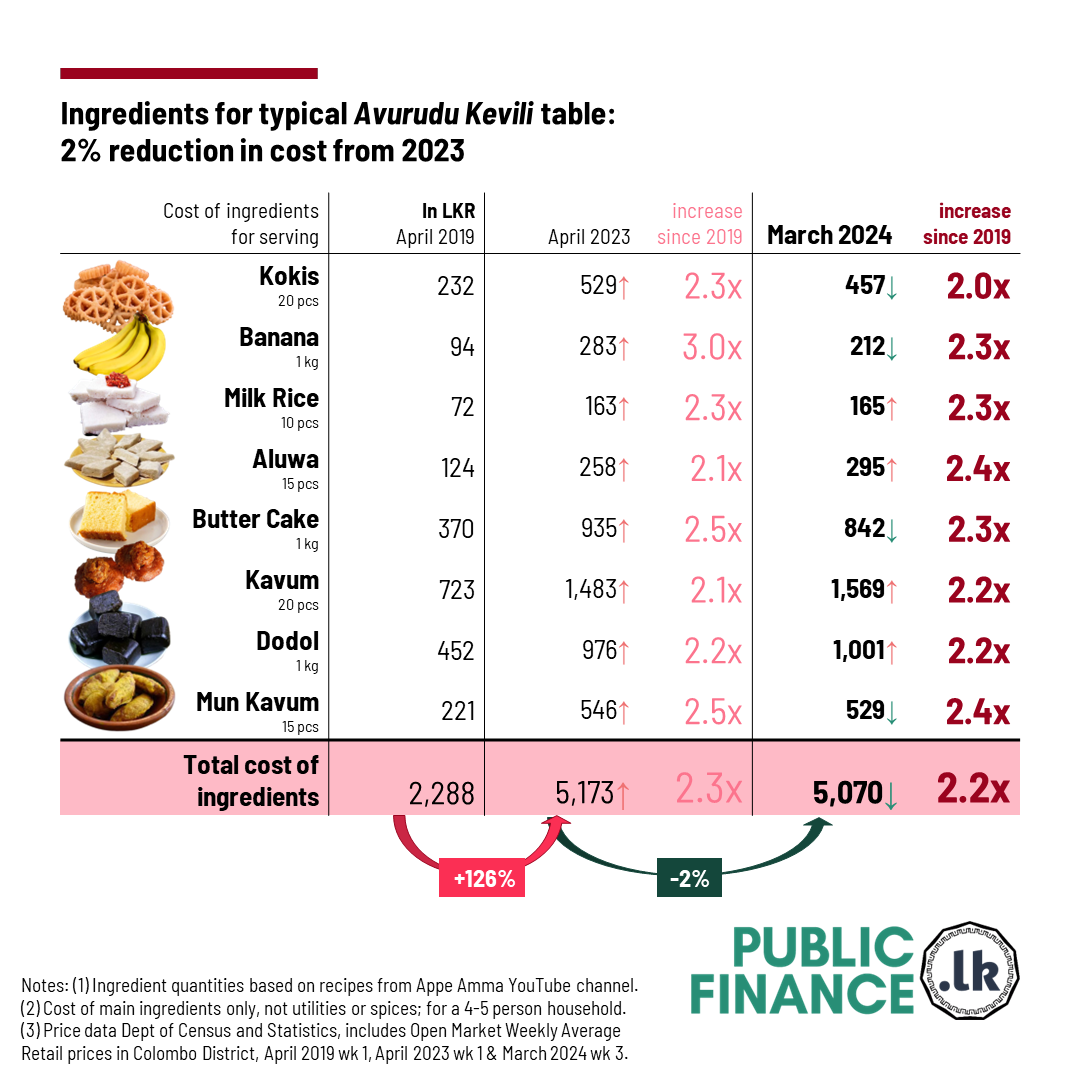
The cost of a traditional kevili table for the Sinhala and Tamil New Year went down in 2024 compared to 2023, but remained more than twice what it cost in 2019. For more information on the cost of a kevili table in 2024, click here
This week in The Media Analysis...
|
|
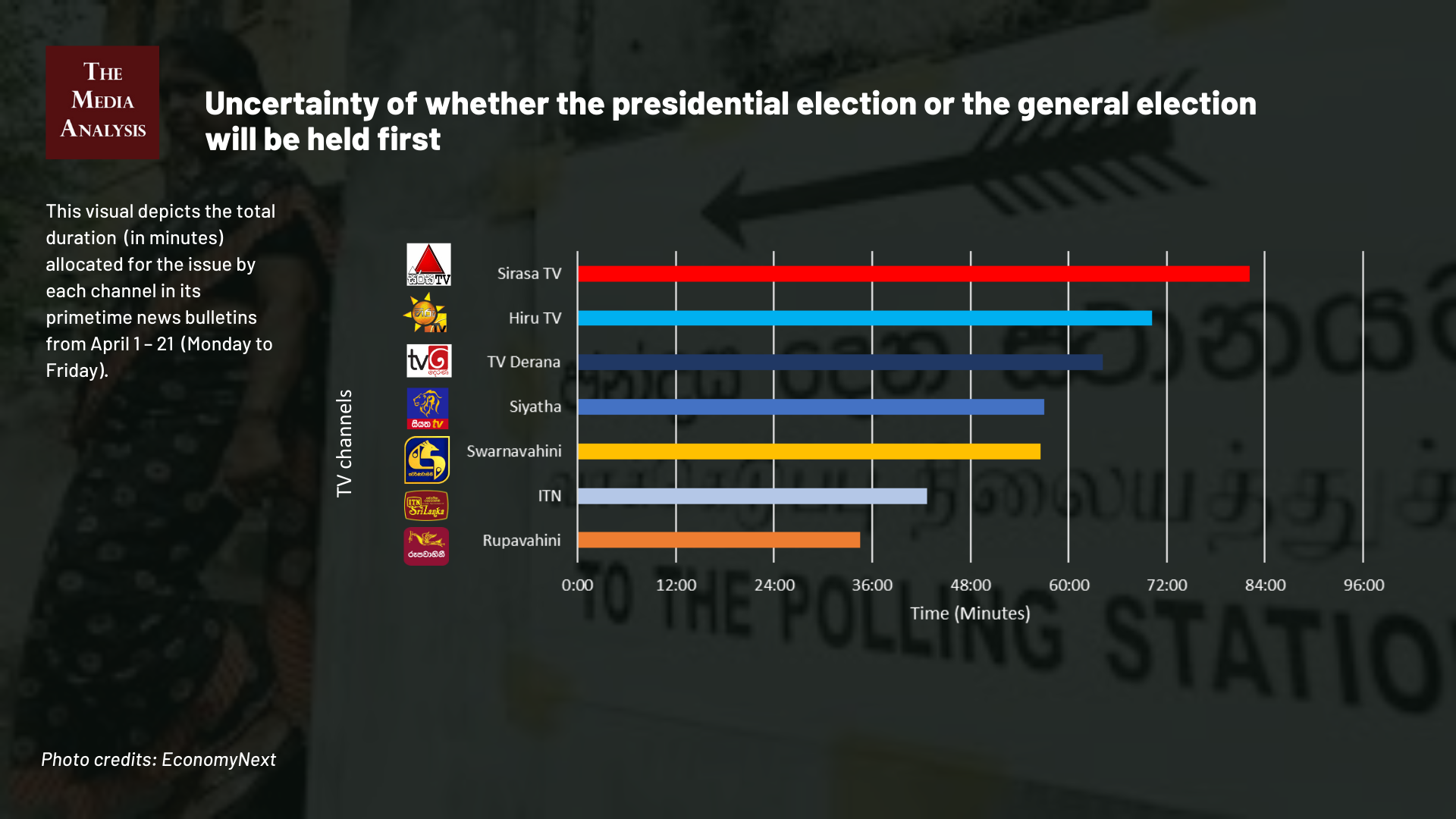
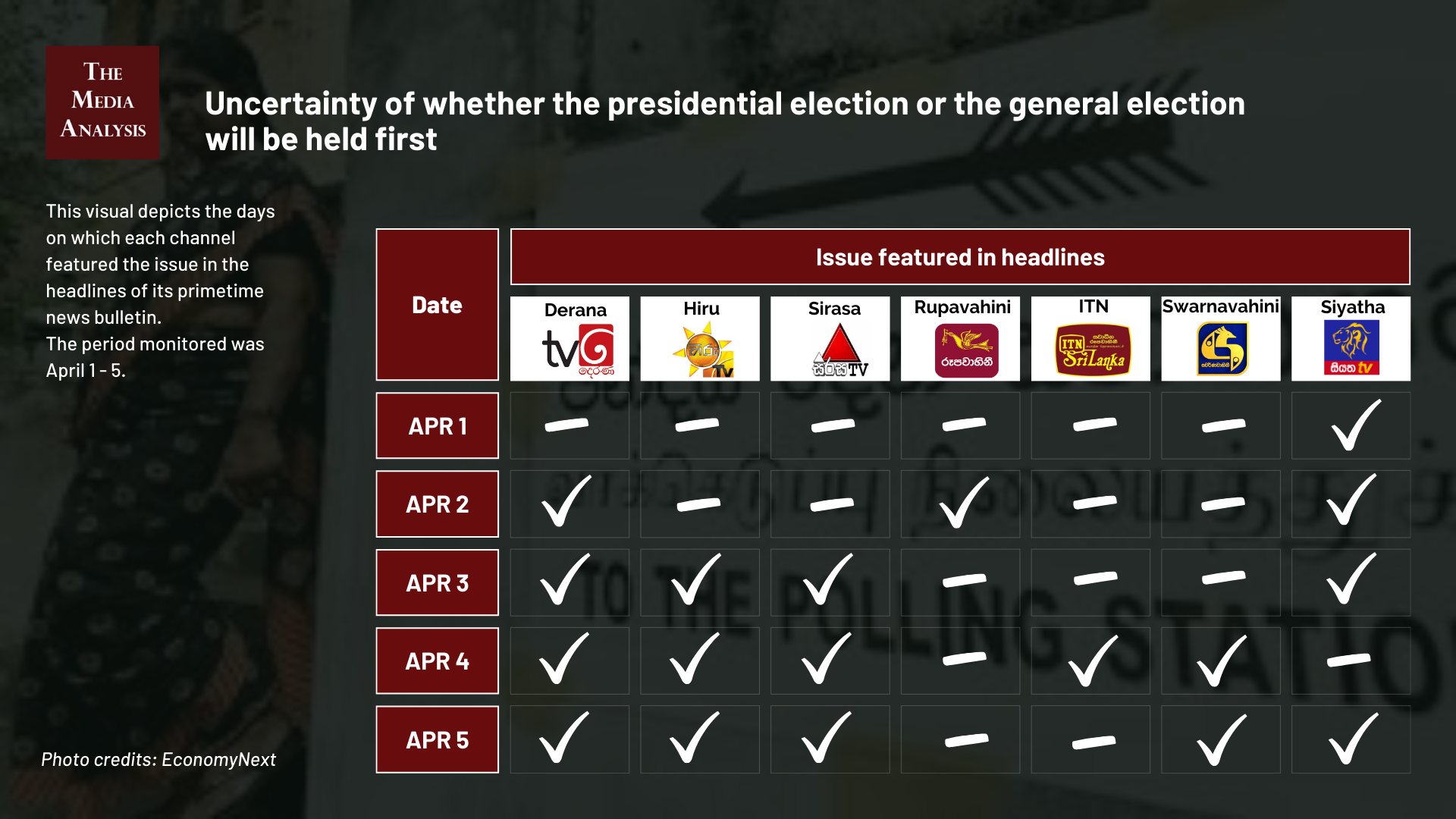
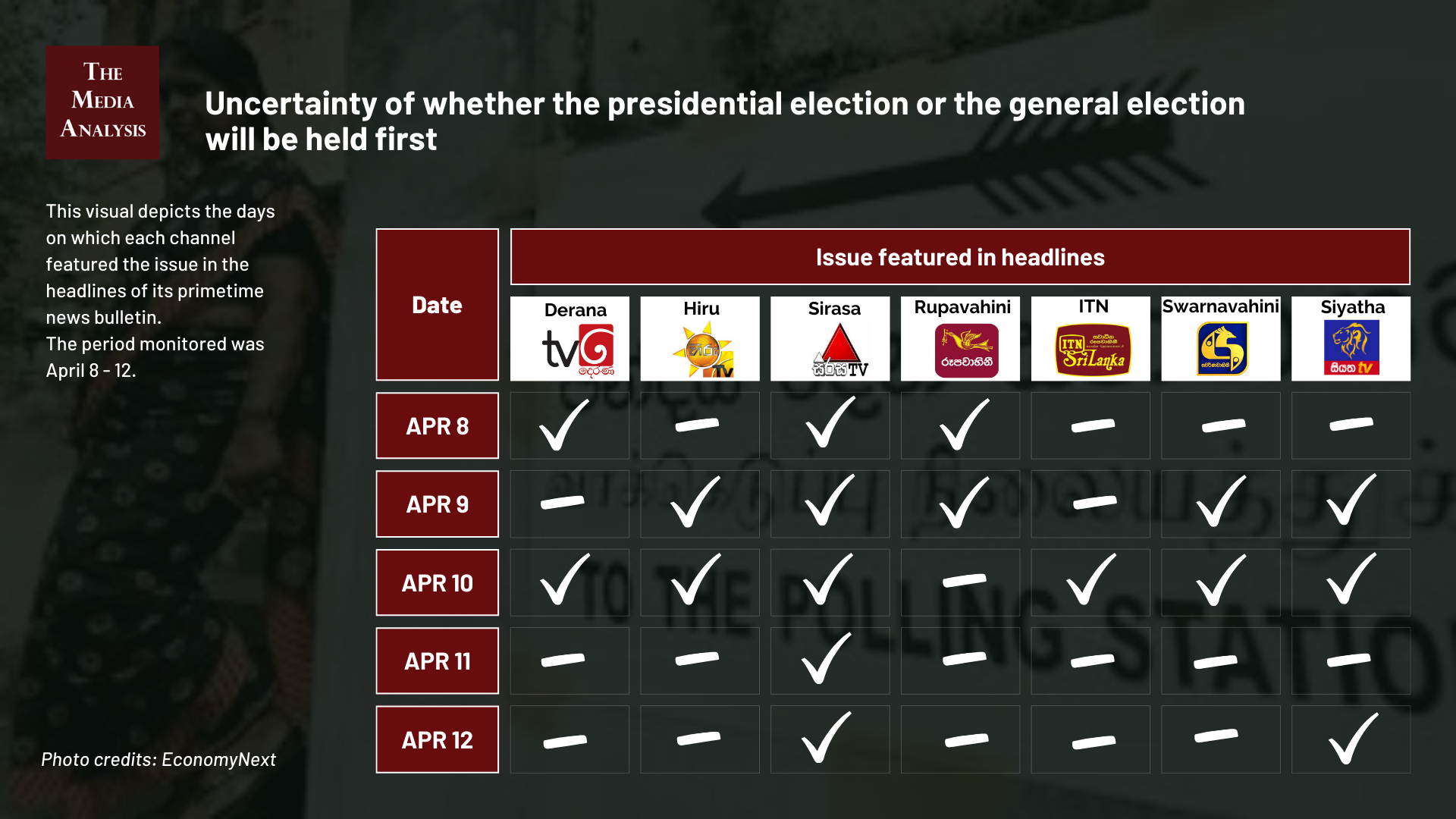
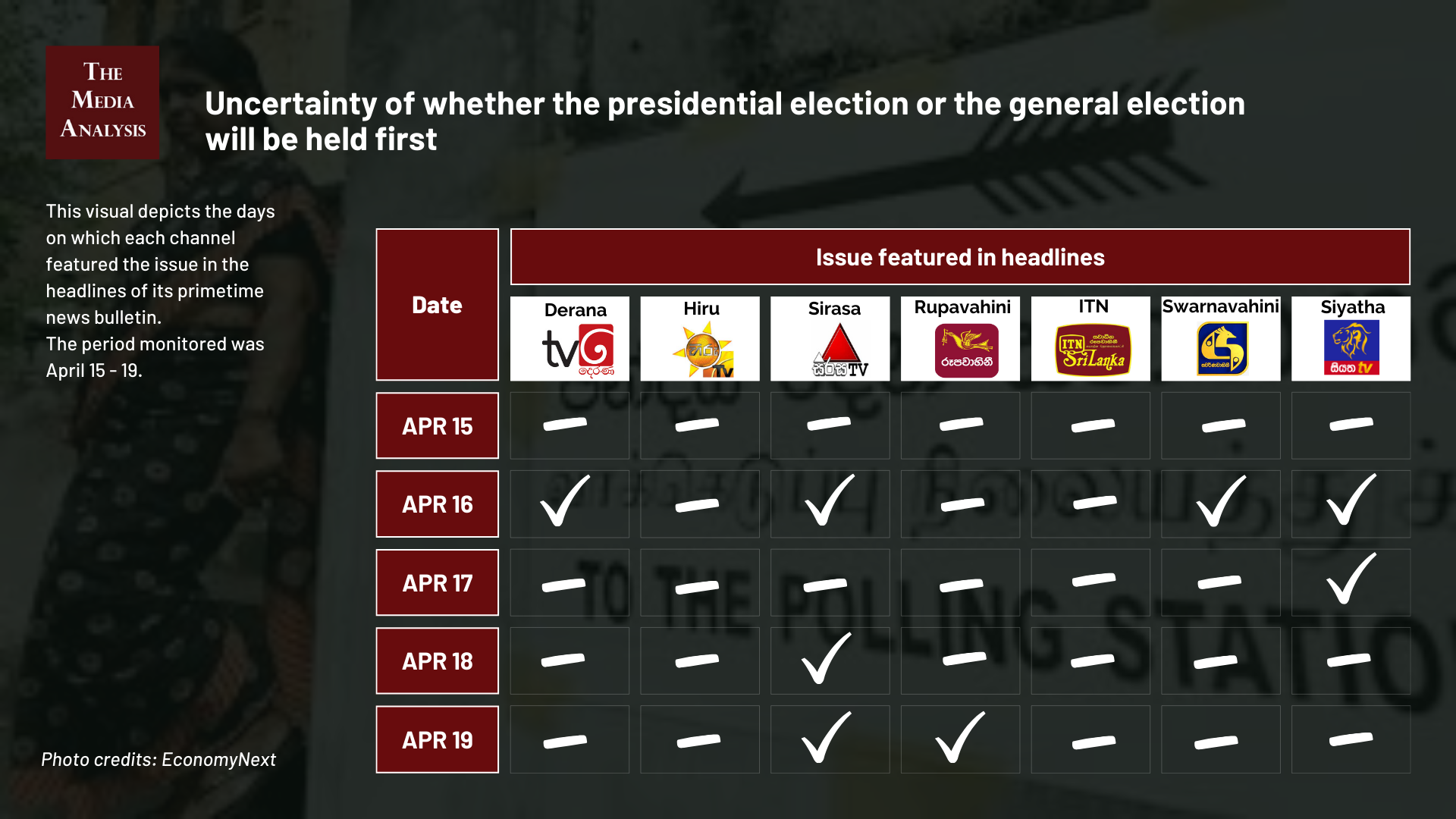
Disclaimer: This week’s TMA is focusing solely on the uncertainty of whether the presidential election or the general election will be held first.
01. Election landscape of the political psyche
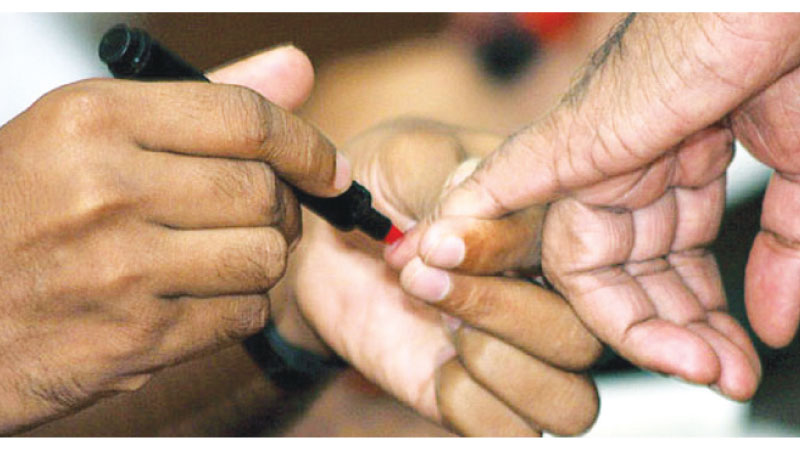
Photo credits: Dinamina
Issue: The Sinhala media covered election-related news over the past few weeks in anticipation of 2024 being an election year. The reports included, but were not limited to, the following:
On March 21, a one-on-one meeting was held between the founder of the SLPP Basil Rajapaksa and President Ranil Wickremesinghe to discuss the upcoming election(s).[1][2]
On April 5, a memorandum of understanding was signed between the SJB and a group of self-identified independent MPs from the Freedom People’s Congress (FPC).[3][4][5]
Analysis
Over the past three weeks, the Sinhala press reporting, TV coverage and social media posts predominantly focused on the anticipation of an election, the preparation of political parties and the potential coalitions. Consistent with past social media trends, the posts concerning the election rallies of the NPP received the most interactions.[1]
Three key aspects concerning elections can be distilled from the Sinhala media discourse. These aspects reflect longstanding patterns and perceptions in the social psyche concerning politicians and political parties/coalitions. This TMA will unpack these three aspects in the form of answers to three questions.
Question I: Which political party/coalition looks the strongest?
During the period under analysis, Sinhala media voices such as privately-owned Divaina and Lankadeepa portrayed the NPP and the SJB-led coalition as the leading contenders at an election. The following section will briefly expand on the attributes associated with the NPP and the SJB at present.
The NPP was positioned as the party capable of ushering in a ‘system change’, a key demand that emerged from the aragalaya (wave of democratic protests in 2022) – that the NPP is capable of making systemic changes in governance has been a persistent perception associated with the NPP in the aftermath of the aragalaya.
The SJB was positioned as the party that has a strong and competent team especially to steer the country towards economic stability. This has been a perception associated with the SJB since its inception.
Therefore, within the Sinhala media psyche at present, the NPP and the SJB-led coalition are the leading contenders to be the front runner at an election.
Question II: Which political party/coalition looks the weakest?
Sinhala media voices including Gamini Viyangoda and MP Dayasiri Jayasekara portrayed the SLPP as the weakest contender at an election. The following section will briefly analyse the grounds on which it is presented as the weakest.
The SLPP was seen as lacking public legitimacy. As observed in past issues of TMA, the SLPP continued to be depicted as being devoid of public legitimacy in the aftermath of the aragalaya.[2] The negative perception of the SLPP – that arose long before the aragalaya – appears to be continuing. Despite the campaigning of MP Namal Rajapaksa the party has not been able to generate a sense of freshness or novelty that would allow its record in the recent past to be overlooked.
The founder of the SLPP Basil Rajapaksa was depicted as a selfish politician who placed his own political ambitions and the institutional survival of the SLPP above the interests of the people and the country.
Therefore, the combined effect of the loss of public legitimacy of the SLPP and the portrayal of Basil Rajapaksa as a self-serving politician positions the SLPP as the weakest of the mainstream contenders in any election at present.
Question III: Which politician is least trusted?
Ranil Wickremesinghe was positioned as a ‘power-hogging’ politician – a perception that has long been associated with him. In the past, especially in the aftermath of the aragalaya, the media perceived Wickremesinghe as a political ‘manipulator’.[3] Wickremesinghe is credited with capability in managing international relationships and experience in economic management. However, in the current circumstances, he is also perceived as a power-hogging and manipulative politician (this sentiment has been voiced by MP Dilan Perera and Gamini Viyangoda, among others). This has led to a high trust deficit within the public psyche with regard to Wickremesinghe.[4]
Two notable aspects of the present political psyche
Additionally, two unique aspects of the present political psyche can be distilled from the Sinhala media coverage discussed above.
The first unique aspect concerns ‘democratic anxiety’ – a condition, not seen before, about whether an election will be held as expected. Concerns related to elections in Sri Lanka, such as vote rigging, election violence, the extensive misuse of state resources and the blatant disregard for the authority of the independent election commissioner,[5] are not new. However, unlike in the past, a new democratic anxiety concerning whether an election will not be held has emerged within the public psyche. This democratic anxiety is fuelled by President Wickremesinghe’s unprecedented move to not hold the local government elections in 2023 citing a lack of finances,[6] the passing of draconian legislation that gives the government additional legal tools for democratic suppression and the trust deficit with regard to Wickremesinghe in the public psyche.
The second unique aspect is the apparent acceptance of and respect for politicians who succeed, regardless of their unscrupulous methods. For instance, some political and media voices such as UNP MP Wajira Abeywardana expressed admiration for Wickremesinghe’s ascent to the presidency despite his entry into parliament via the national list. Even though this ascent involved significant unscrupulous manipulations and undermining of joint opposition negotiations to form an alternative government, the “success” resonates positively within the larger public sentiment. Therefore a narrative of awe and acceptance of Wickremesinghe for managing to become the president despite numerous challenges, including the electoral routing of his party to a single seat in parliament in the 2020 Parliamentary Election, can hold sway over the narrative of disgust and rejection for his unscrupulous manipulations and lack of regard for public aspirations.[7]
02. The Language Divide
|
|
|
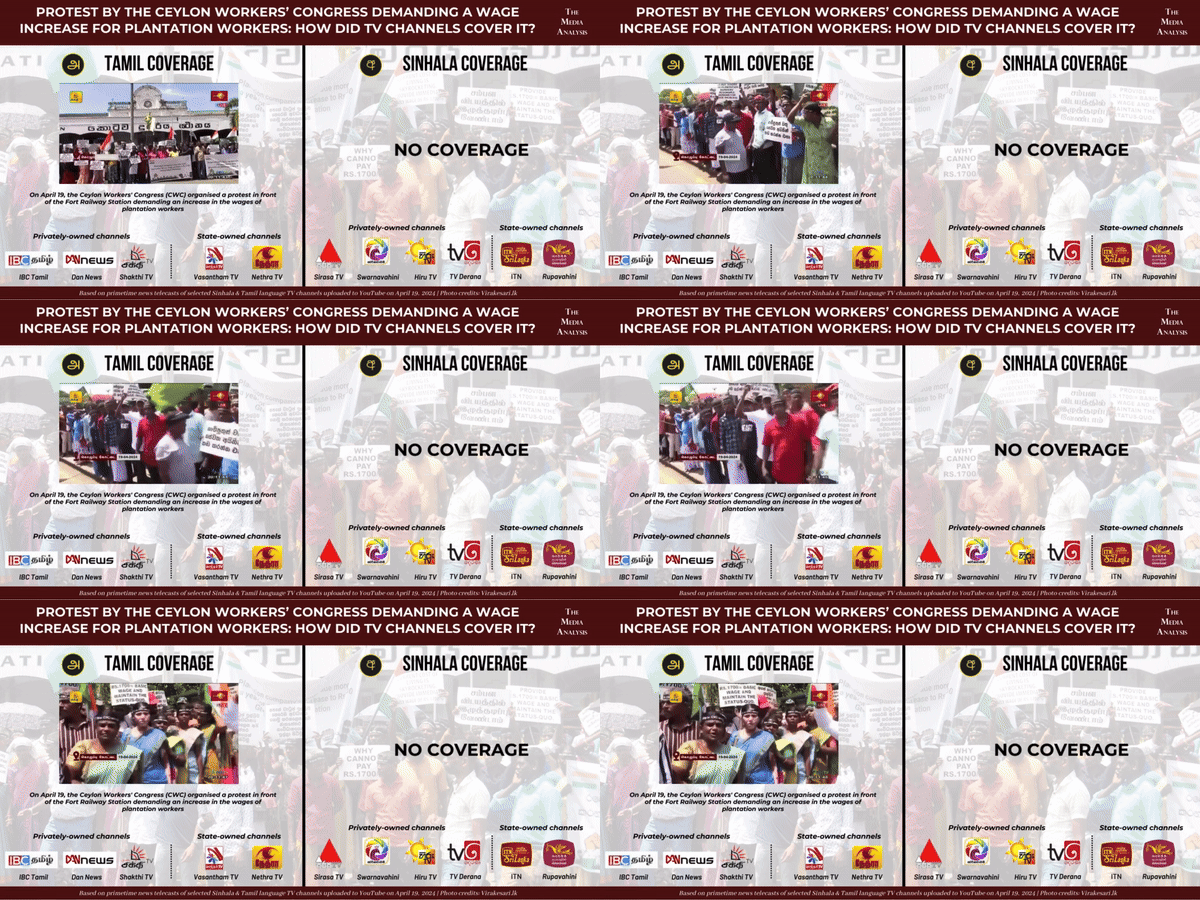
On April 19, the Ceylon Workers’ Congress (CWC) staged a protest in front of the Fort Railway Station demanding an increase in the wages of plantation workers. Privately-owned Tamil TV channels IBC Tamil, Dan News and Shakthi TV and state-owned Tamil TV channels Vasantham TV and Nethra TV afforded coverage to the protest in their primetime news telecasts. By contrast, privately-owned Sinhala TV channels Sirasa TV, Swarnavahini, Hiru TV and TV Derana and state-owned Sinhala TV channels ITN and Rupavahini did not afford any coverage to the protest. For more information, click here
03. The TV coverage of the issue
|
04. This week’s cartoons
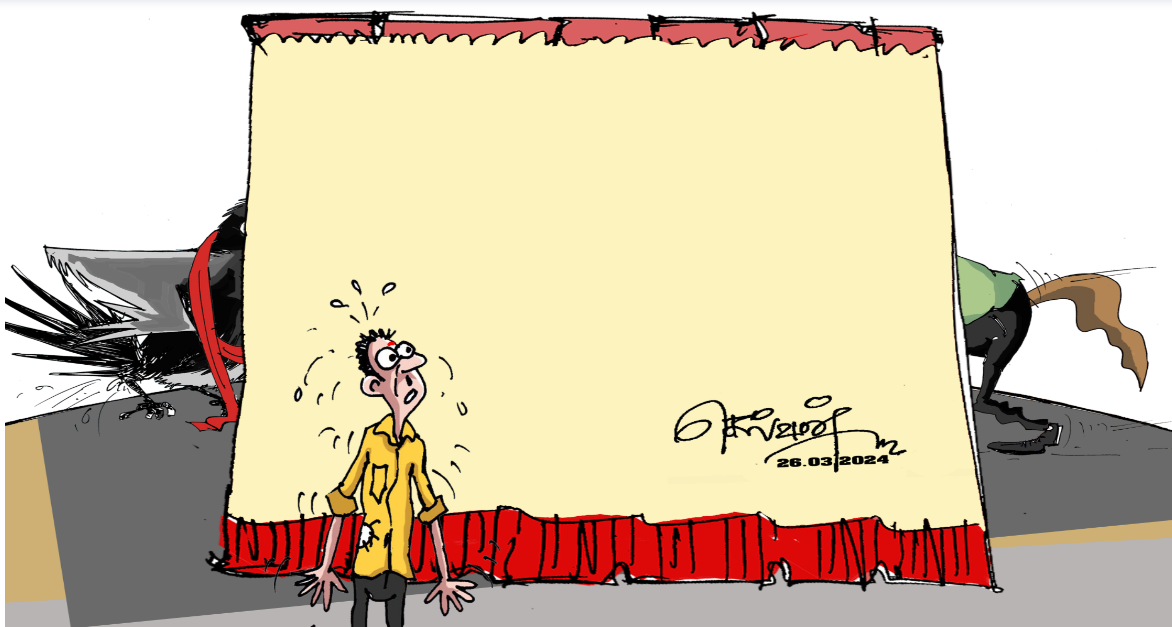
Courtesy of Virakesari, Mar.26, 2024
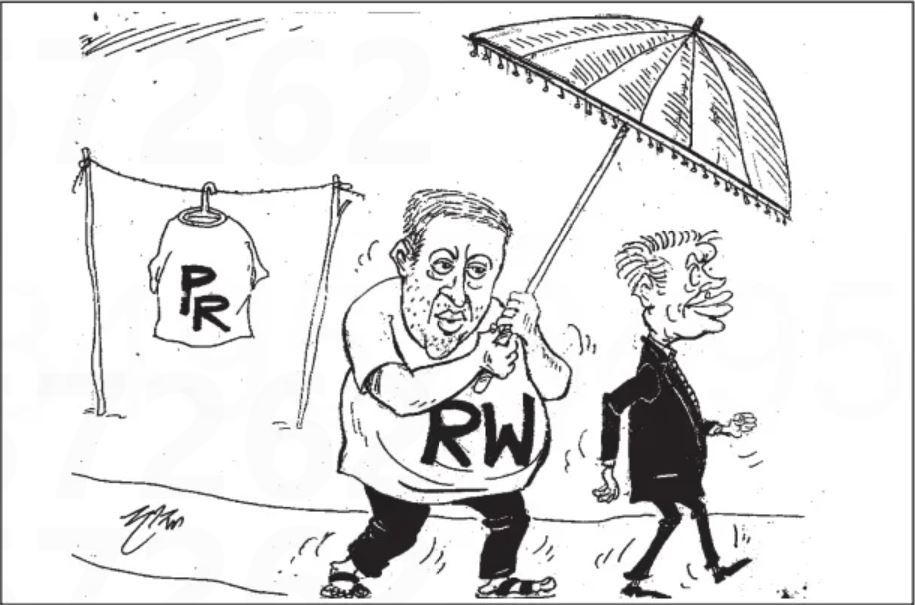
Courtesy of Lankadeepa, Apr.1, 2024
Context: Minister Prasanna Ranatunga escorting President Ranil Wickremesinghe under the muthu kuda (a special umbrella used mainly during Buddhist events in Sri Lanka), which signifies a sacred status.
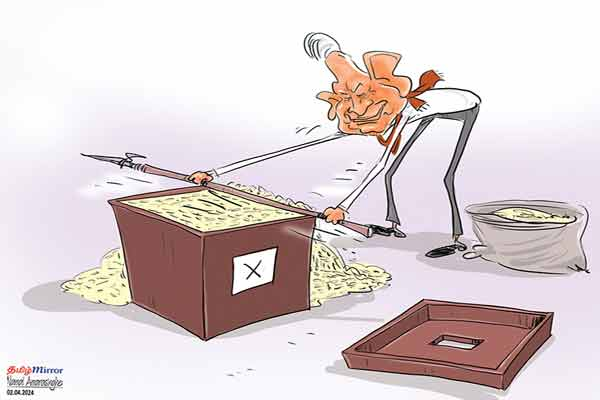
Courtesy of Tamil Mirror, Apr.2, 2024
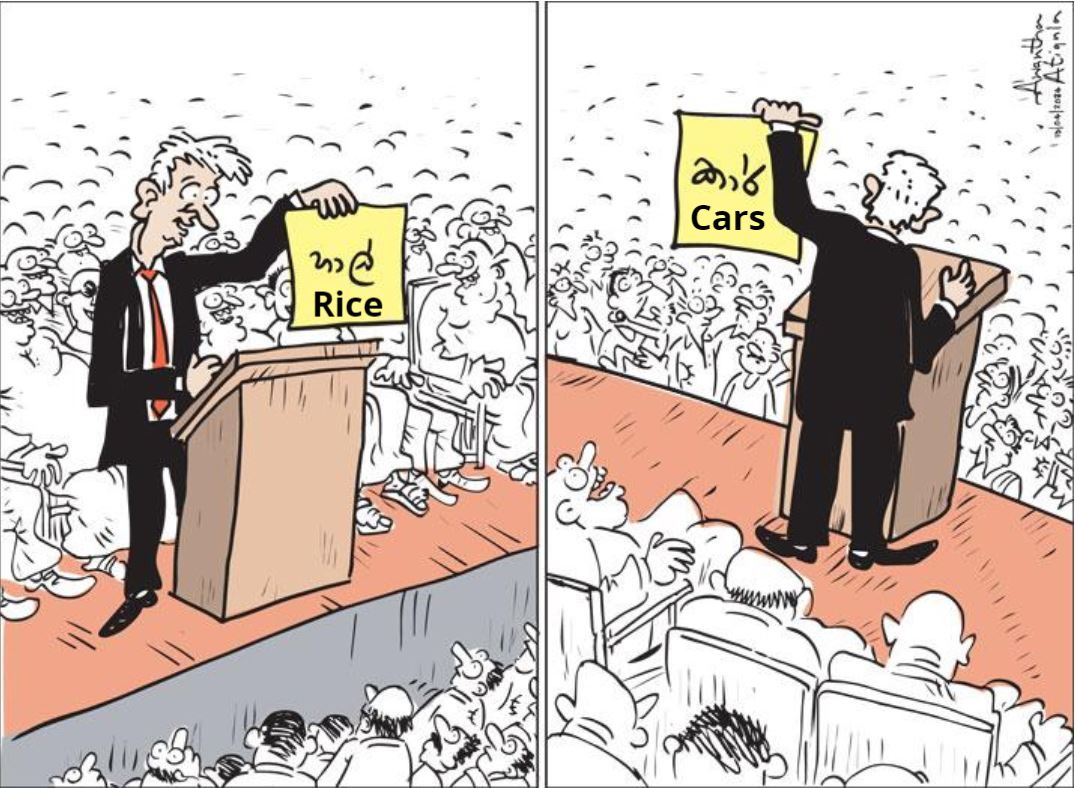
Courtesy of Ada, Apr.16, 2024
05. This week’s memes
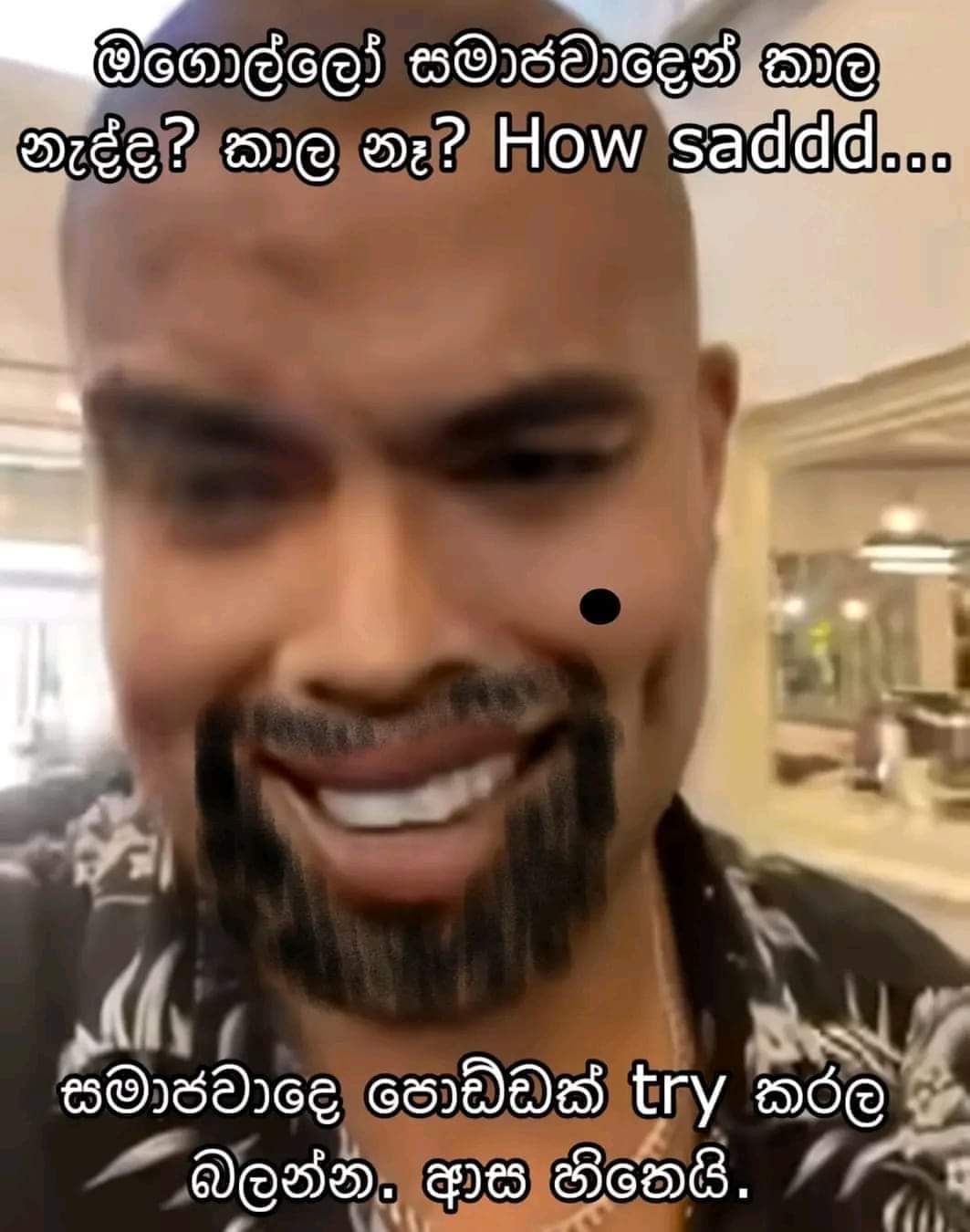
Haven’t you all tried socialism yet? You haven’t? How saddd….
Try socialism a little and see how it is. You will like it.
Context: This meme puns on TikTok videos published by content creator Mr. How Sad. Mr. How Sad creates Sinhala TikTok videos that promote products using the catchphrase lines, “Haven’t you tried it yet? How sad. Try it a little, you will like it.” This particular meme has modified Mr. How Sad’s face to resemble NPP Leader Anura Kumara Dissanayaka and puns on Mr. How Sad’s video on promoting Sri Lankan food.
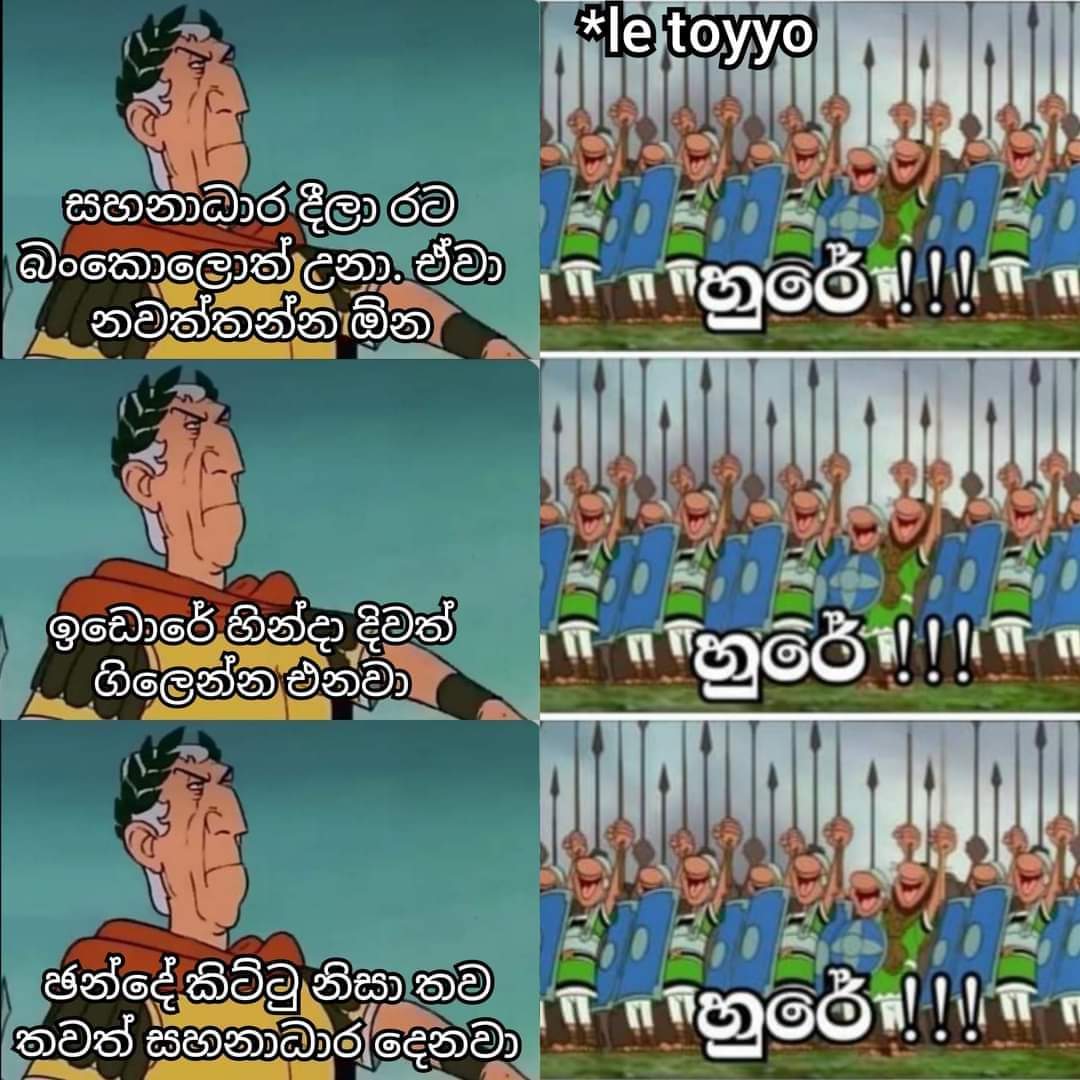
Frame 1: Julius Caesar: Providing subsidies made the country go bankrupt. We must stop providing subsidies
The toyyas (UNP supporters): Hooray!!!
Frame 2: Julius Caesar: My tongue is almost parched due to the drought
The toyyas: Hooray!!!
Frame 3: Julius Caesar: We will provide more and more subsidies since the election is near
The toyyas: Hooray!!!
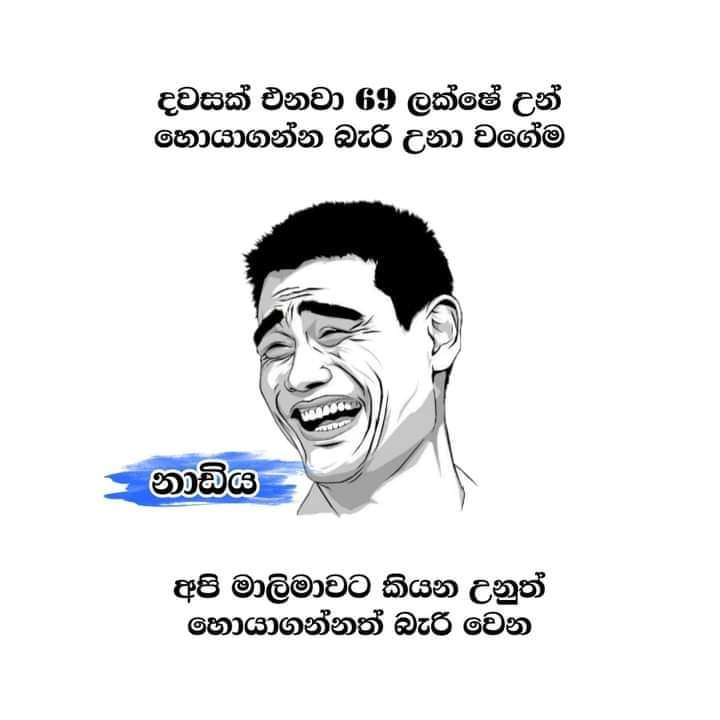
Just like we can no longer find the 6.9 million [who voted for Gotabaya Rajapaksa], there will come a day when we will not be able to find the ones who are now saying “We are for the compass (the NPP)”
06. Other topics covered in reportage
- Arrest and imprisonment of actress Damitha Abeyratne and her spouse in connection with alleged financial fraud
- Proposed debate between the leaders of the SJB and the NPP on the economy
- Preparations of political parties for the commemoration of May Day/Labour Day
- Death of former MP Palitha Thewarapperuma
- Reported harassment of tourists in Sri Lanka
To view this week’s news summaries, please click here