
The Verité Media Analysis Market Fit Survey: Share your thoughts

We are currently conducting a short Market Fit Survey on The Verité Media Analysis. Please click here to fill out this survey which will only take three to four minutes of your time.
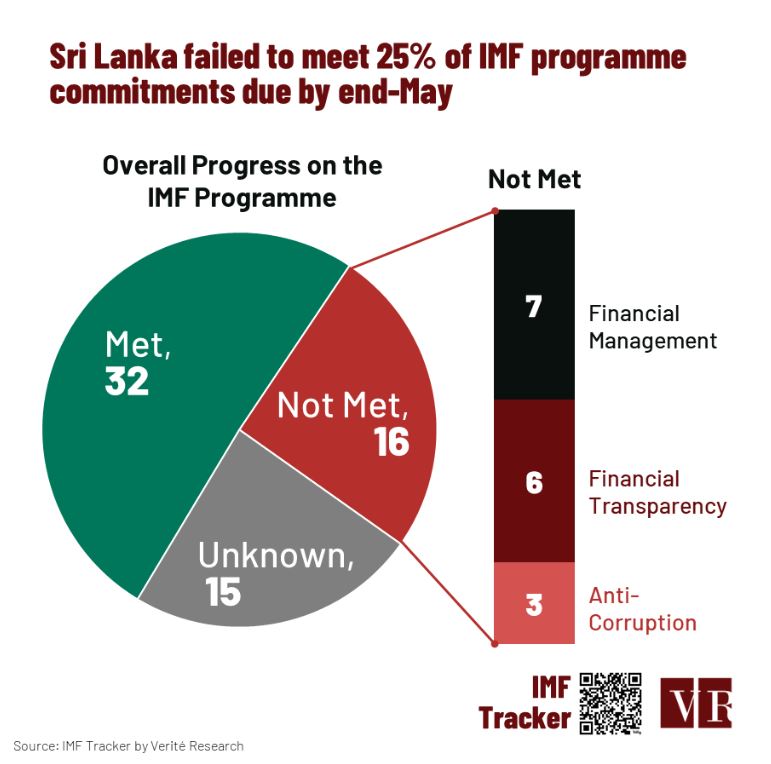
Sri Lanka’s progress on the IMF programme
|
This week in The Media Analysis...
01. Indian elections resonate in Sri Lanka
02. Economic bill: Means and motives distrusted
03. The Language Divide
04. The TV coverage of the issues
05. This week’s cartoons
06. This week’s memes
07. Other topics covered in reportage
Past issues can be viewed here
Disclaimer: This week’s TMA is focusing on the election of Narendra Modi as India’s prime minister for the third time and the proposed Economic Transformation Bill (ETB).
01. Indian elections resonate in Sri Lanka
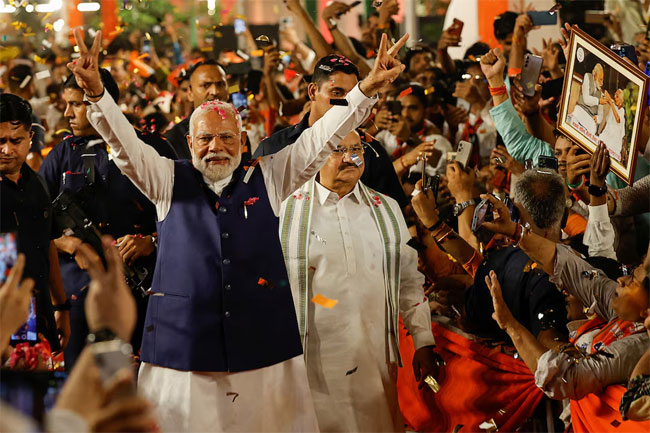
Photo credits: Associated Press via Ada Derana
Event: The Indian general elections were held from April 19 to June 1 to elect all 543 members of the Lok Sabha (Indian Parliament).[1][2] The National Democratic Alliance (NDA), led by the Bharatiya Janata Party (BJP), won the election by securing 293 seats in the Lok Sabha.[3][4]
On June 9, President Ranil Wickremesinghe attended the swearing-in ceremony of Indian Prime Minister Shri Narendra Modi, held at the Rashtrapati Bhavan in New Delhi.[5][6]
Analysis
Over the past week, the Sinhala media predominantly covered the Indian general elections and Prime Minister Narendra Modi’s victory. The Sinhala print media discussion was led by media commentators (e.g. columnists, editorials and op-eds), not political figures. Social media commentary and TV coverage primarily focused on President Ranil Wickremesinghe’s attendance at the swearing-in ceremony of the Indian prime minister.[1]
A closer evaluation of the Sinhala media coverage on the Indian elections suggests that its reading of the Indian elections appears to be shaped by Sri Lanka’s electoral experiences and a mix of anxiety and admiration in relation to Indian politics.
Last week’s local media reporting majored on sentiments across two distinct themes: (1) the influence of Narendra Modi in Indian politics and (2) the influence of India on Sri Lanka.
1. Influence of Modi in Indian politics
Sinhala media voices viewed the influence of Narendra Modi in Indian politics through a positive lens and a negative lens.
i. Positive lens: Modi’s personality
On the one hand, voices featured in the Sinhala media depicted Modi as embodying qualities that are ideal for a leader steering a country’s future. These voices, which included but are not limited to privately-owned Aruna, characterised Modi as a leader with exceptional communication skills, a charismatic personality and a focus on delivery and development.
In the lead-up to the 2019 Presidential Election, the Sinhala media advocated for leadership qualities in a local president similar to those it admires in PM Modi. At the time, it framed former President Gotabaya Rajapaksa as that suitable candidate for the presidency, emphasising his ability to deliver on his development-oriented approach.[2] The Sinhala media’s admiration for these qualities of Modi suggests that there is currency in Sri Lanka for that type of “strongman” leadership.
ii. Negative lens: Modi’s politics/policies
On the other hand, Sinhala media voices featured in privately-owned Aruna and Divaina were critical of Modi’s politics/policies. Their criticisms followed two main strands, both rooted in Sri Lanka’s own negative political experiences with similar approaches.
First, Modi was criticised for engaging in ethno-national politics by prioritising the Hindutva political ideology and alienating the Muslim population. Similar concerns were highlighted during Rajapaksa’s bid to secure victory in the presidential election, as he was seen as galvanising the ethnic/cultural sentiments of the majority Sinhala Buddhists over and against minority communities.[3]
Second, Modi faced criticism for marginalising farmers and the poor – a criticism that has also been directed at the UNP for its long history of marginalising the rural poor, dating back to Sri Lanka’s independence in 1948.[4]
Overall, Modi’s functioning within Indian politics appears to resonate with Sri Lanka’s experiences with its own political leaders. Despite the admiration for Modi’s personality (style of leadership), those positive perceptions were overshadowed by the critical views of his politics/policies.
2. Influence of India on Sri Lanka
Sinhala media discourse on the Indian elections viewed the influence of India on Sri Lanka through a negative lens and a positive lens.
i. Positive effects on Sri Lanka
On the one hand, privately-owned Divaina and government-aligned voices such as Advisor to President Ranil Wickremesinghe, Sunanda Madduma Bandara, portrayed Wickremesinghe’s attendance at the swearing-in ceremony as a significant event opening new avenues for Indo-Sri Lanka relations. However, this positive lens received only marginal traction in the print media.
ii. Negative effects on Sri Lanka
On the other hand, Sinhala media discourse on the victory of Modi revealed an anxiety over the influence of India on local politics. The Sinhala media concerns drew from longstanding anxieties within the public psyche of Indian influence in domestic affairs, driven mainly by concerns over compromising the country’s sovereignty and interests.[5] These anxieties resurfaced following Modi’s support of the claim that Katchatheevu Island was territory of India, though it is currently regarded as a part of Sri Lanka.[6] The concerns of excessive Indian influence have also been heightened in the recent past, with concerns over the government’s decision to outsource the visa issuance process to a reportedly Indian company and its alleged plans to hand over the power plant in Mannar to the Indian company Adani Group.[7]
Overall, the positive influence of India on Sri Lankan politics was overshadowed by the negative effects of Indian influence on local politics.
**************************************************************************************
Additionally, the Sinhala media discourse on the Indian elections reflects its admiration for their adherence to democratic processes. This admiration arises from two main aspects that arise from Sri Lanka’s electoral experience.
First, a sense of appreciation arises for the lack of concentration of power in a single individual or party in India. This appreciation stems from the Sri Lankan experience scarred by the abuse of power that has resulted from ‘super majorities’ (SLPP victory at the general election in 2020).
Second, a sense of appreciation arose for Indian democracy for holding elections on time, contrasting sharply with Sri Lanka’s anxieties over delayed elections. In recent years, successive Sri Lankan governments have faced criticism for postponing elections. For example, the yahapaalanaya government was criticised for delaying Local Government (LG) and Provincial Council (PC) elections.[8] More recently, President Wickremesinghe, in his capacity as minister of finance, withheld the needed funds from the election commission, and thereby prevented the holding of LG elections.[9] Consequently, the appreciation for Indian democracy’s timely elections arises also from concerns over the delaying of elections in Sri Lanka.
02. Economic bill: Means and motives distrusted
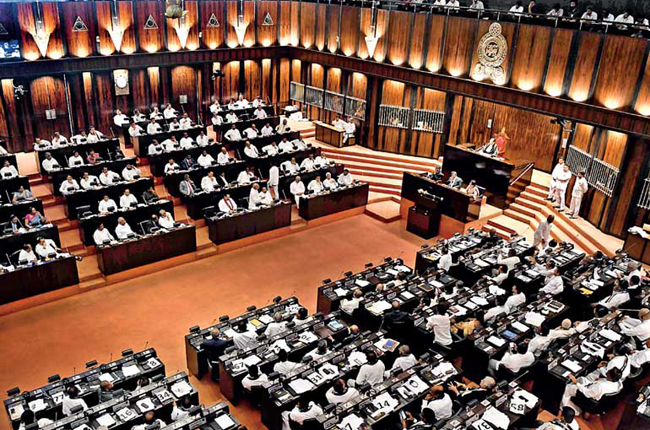
Event: On May 22, President Ranil Wickremesinghe – in his role as the minister of finance, economic stabilisation and national policies – presented the Economic Transformation Bill (ETB) in parliament.[1][2] The ETB sets targets for the country’s economy for the next two and a half decades.[3][4]
In early June, the JVP-led NPP filed a fundamental rights petition against the ETB before the Supreme Court.[5][6]
On June 5, Samagi Sewaka Sangamaya, a trade union associated with the SJB, filed a special determination petition in the Supreme Court challenging the constitutionality of the ETB.[7][8]
Three reasons emerged in the Sinhala media discourse that shaped the narrative of distrust surrounding the government’s motives for presenting the ETB.
First, the ETB was perceived as an attempt to consolidate power in the hands of the president. Political voices such as MP G. L. Peiris and MP Jayantha Samaraweera criticised the ETB, arguing that it creates several ‘omnipotent’ commissions covering areas related to international trade, national productivity and investments. They pointed out that the president holds extensive powers to appoint members to these commissions, making it inevitable that these institutions would be subject to executive overreach.
Second, the ETB was perceived as an attempt to appease the international community rather than serving the country’s best interests. Critical voices, including but not limited to MP Harsha de Silva, framed the ETB as an attempt by the Wickremesinghe government to codify economic indicators in line with the requirements of the IMF with the implication of binding successive governments.
Third, the ETB was perceived as an attempt to appease the public ahead of an election. Critics, such as Sumanasiri Liyanage, argued that the ETB is being used to convince the public that the Wickremesinghe government is laying the foundation for a stable economy ahead of the anticipated election.
Opponents of the ETB criticised the government for the means by which the bill was passed. These critics viewed the bill with suspicion due to the government’s ‘rushed/hurried’ approach, similar to the process used for passing other instrumental bills such as the Online Safety Act (OSA) and SLEB.[2]
In sum, the ETB was marred by public distrust of the government and the bill’s underlying motives. Similar to the negative reception of the SLEB discussed in the TMA issue published last week, the ETB was also subjected to distrust in the limited media discussion on the topic.
03. The Language Divide
Signposts the differences and nuances in reporting between Sinhala and Tamil language newspapers
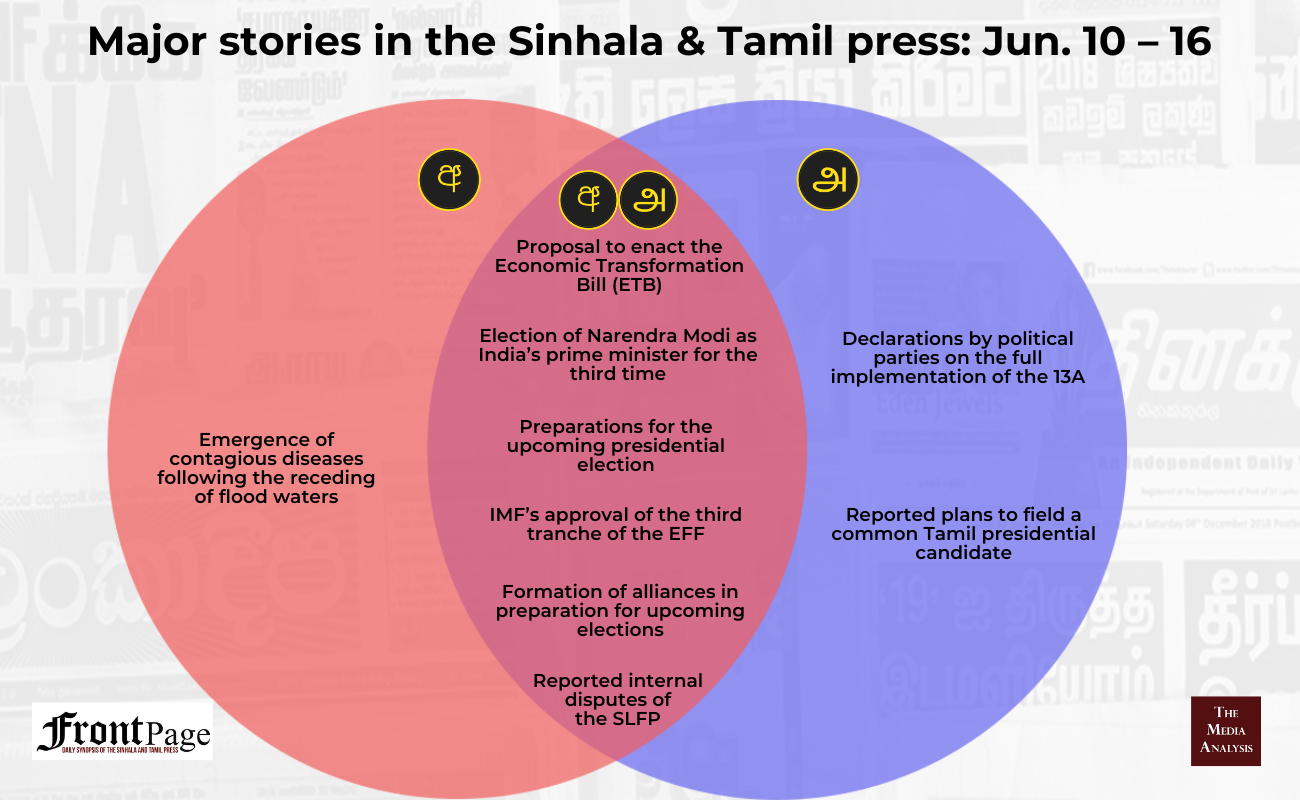
Last week’s Sinhala and Tamil press converged in relation to six main stories. The six stories were on the: (i) proposal to enact the Economic Transformation Bill (ETB); (ii) election of Narendra Modi as India’s prime minister for the third time; (iii) preparations for the upcoming presidential election; (iv) International Monetary Fund’s (IMF) approval of the third tranche of the Extended Fund Facility (EFF); (v) formation of alliances in preparation for upcoming elections; and (vi) reported internal disputes of the SLFP. The Sinhala press exclusively featured one topic, and it was on the emergence of contagious disesases following the receding of flood waters. The Tamil press exclusively featured two main stories, and they were on the: (i) declarations by political parties on the full implementation of the 13th Amendment to the Constitution (13A) and (ii) reported plans to field a common Tamil presidential candidate.
Do you want to see the divided priorities on a daily basis? Check out FrontPage. It captures the day’s headlines and features succinct summaries of the political news reported in the most widely read Sinhala and Tamil newspapers.
34 years since the killing of 600 police officers in the Eastern Province: How did TV channels cover it?
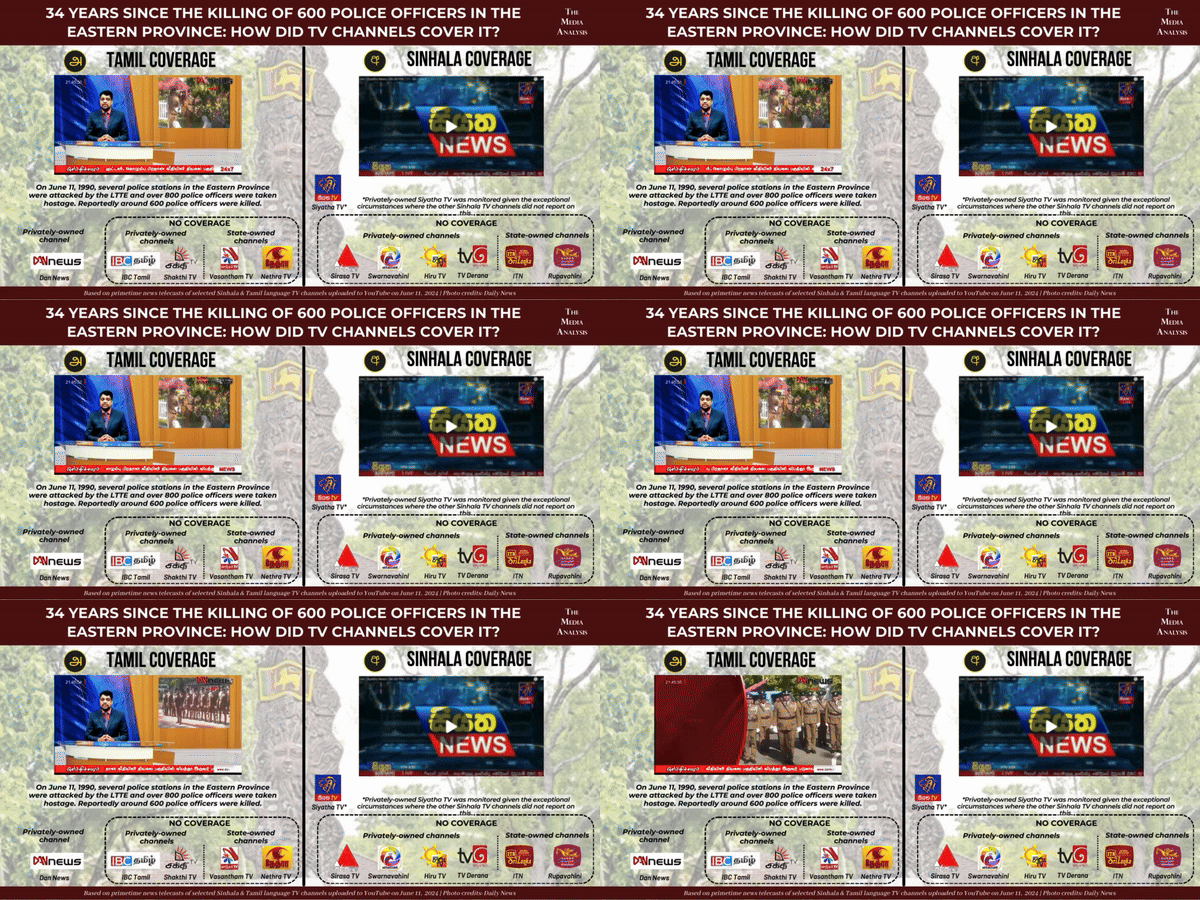
On June 11, 1990, several police stations in the Eastern Province were attacked by the LTTE and over 800 police officers were taken hostage. Reportedly around 600 police officers were killed. On June 11, 2024, privately-owned Tamil TV channel DAN News and privately-owned Sinhala TV channel Siyatha TV afforded coverage to the 34th anniversary of the attack in their primetime news telecasts. By contrast, no coverage was afforded to the anniversary of this incident by privately-owned Tamil TV channels IBC Tamil and Shakthi TV, state-owned Tamil TV channels Vasantham TV and Nethra TV, privately-owned Sinhala TV channels Sirasa TV, Swarnavahini, Hiru TV and TV Derana, and state-owned Sinhala TV channels ITN and Rupavahini. For more information, click here
04. The TV coverage of the issues
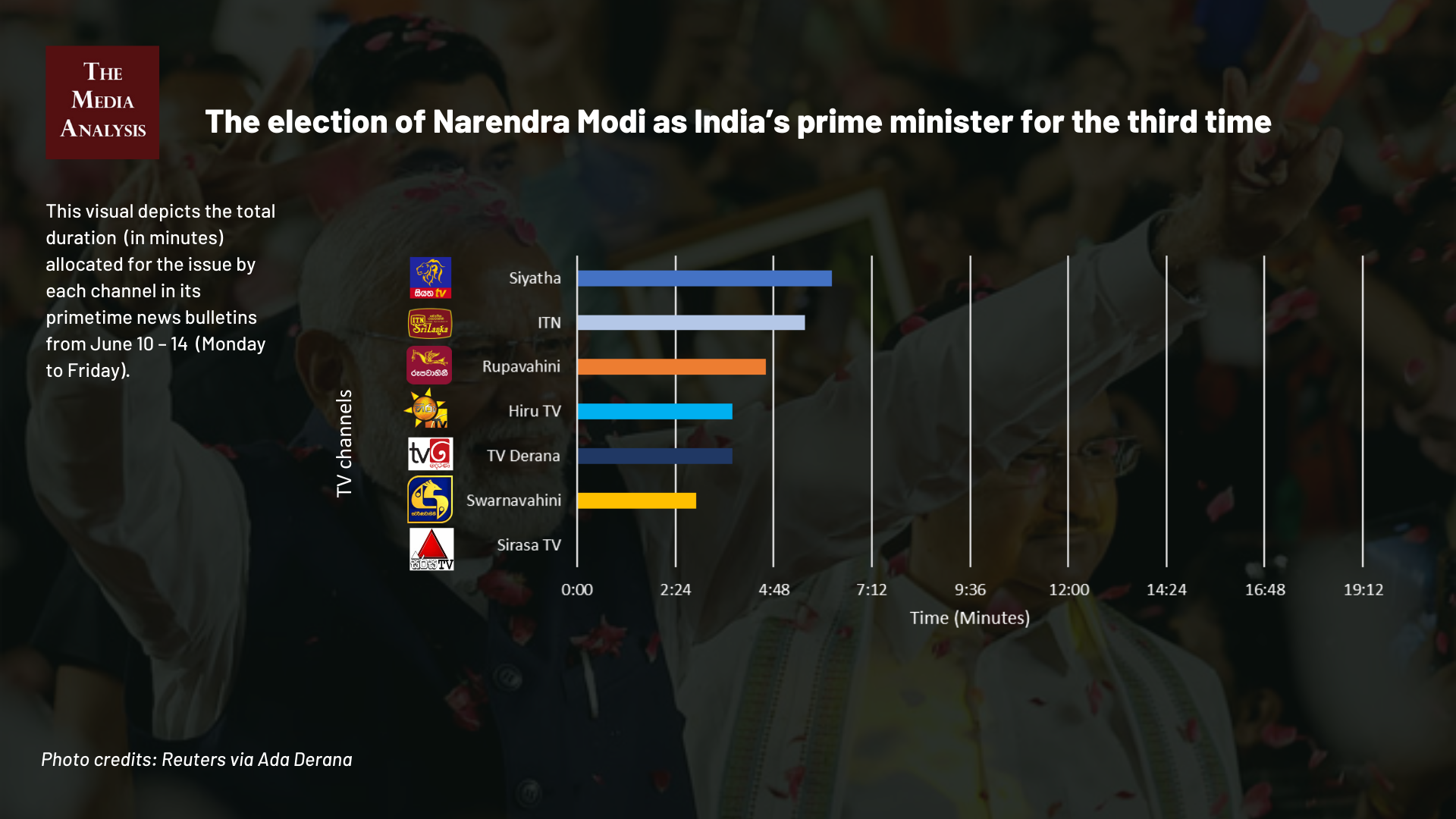
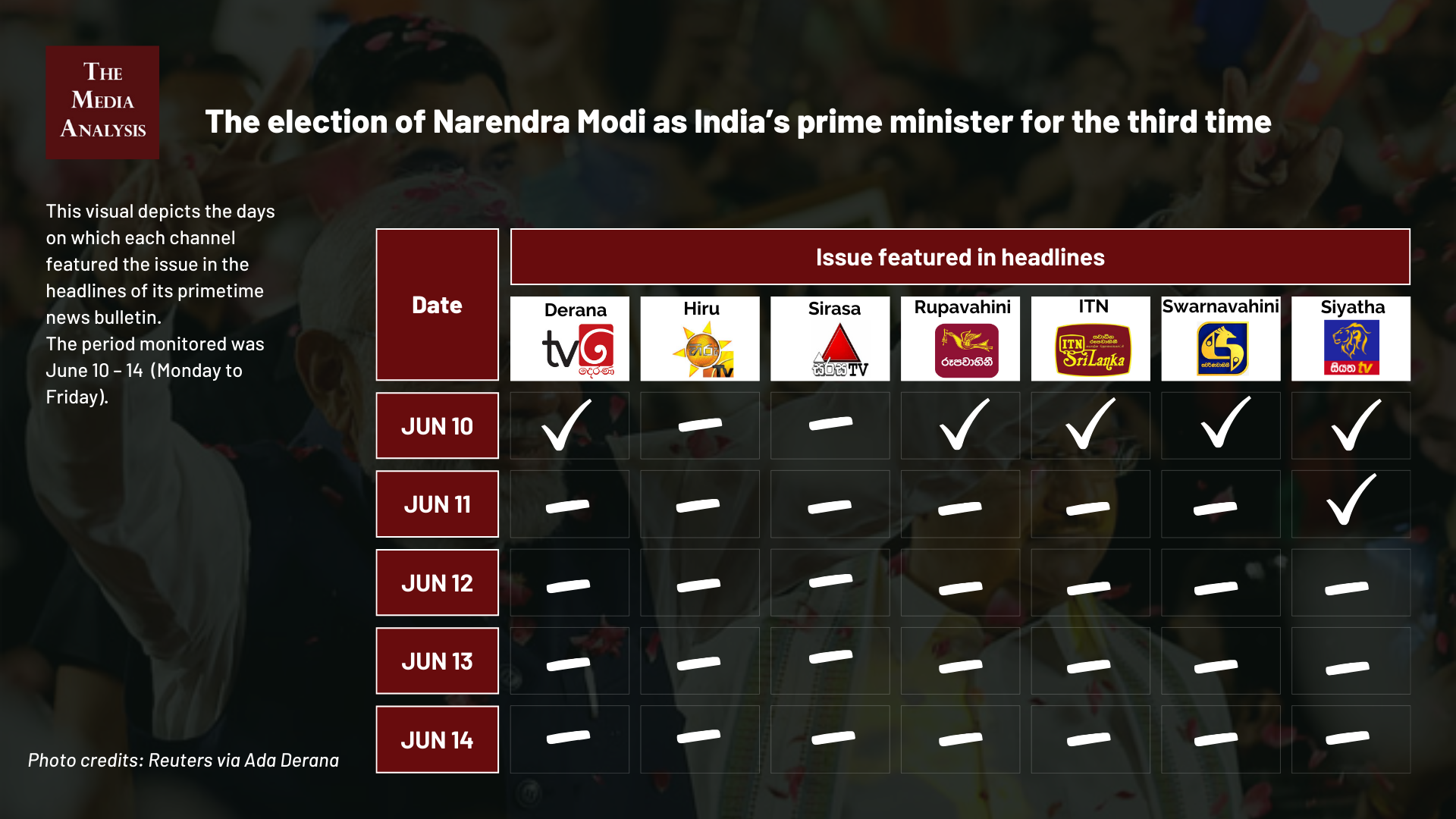
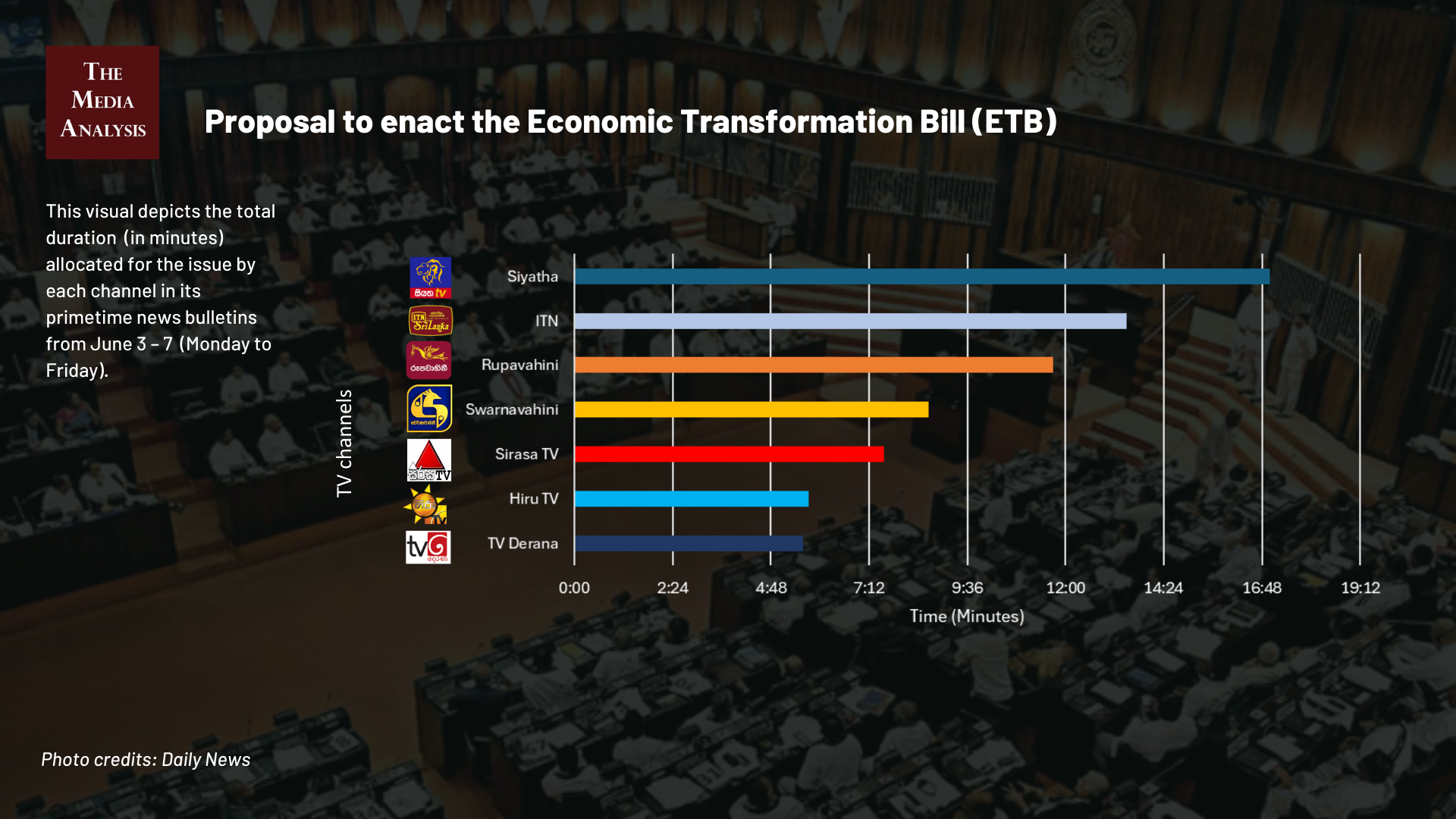
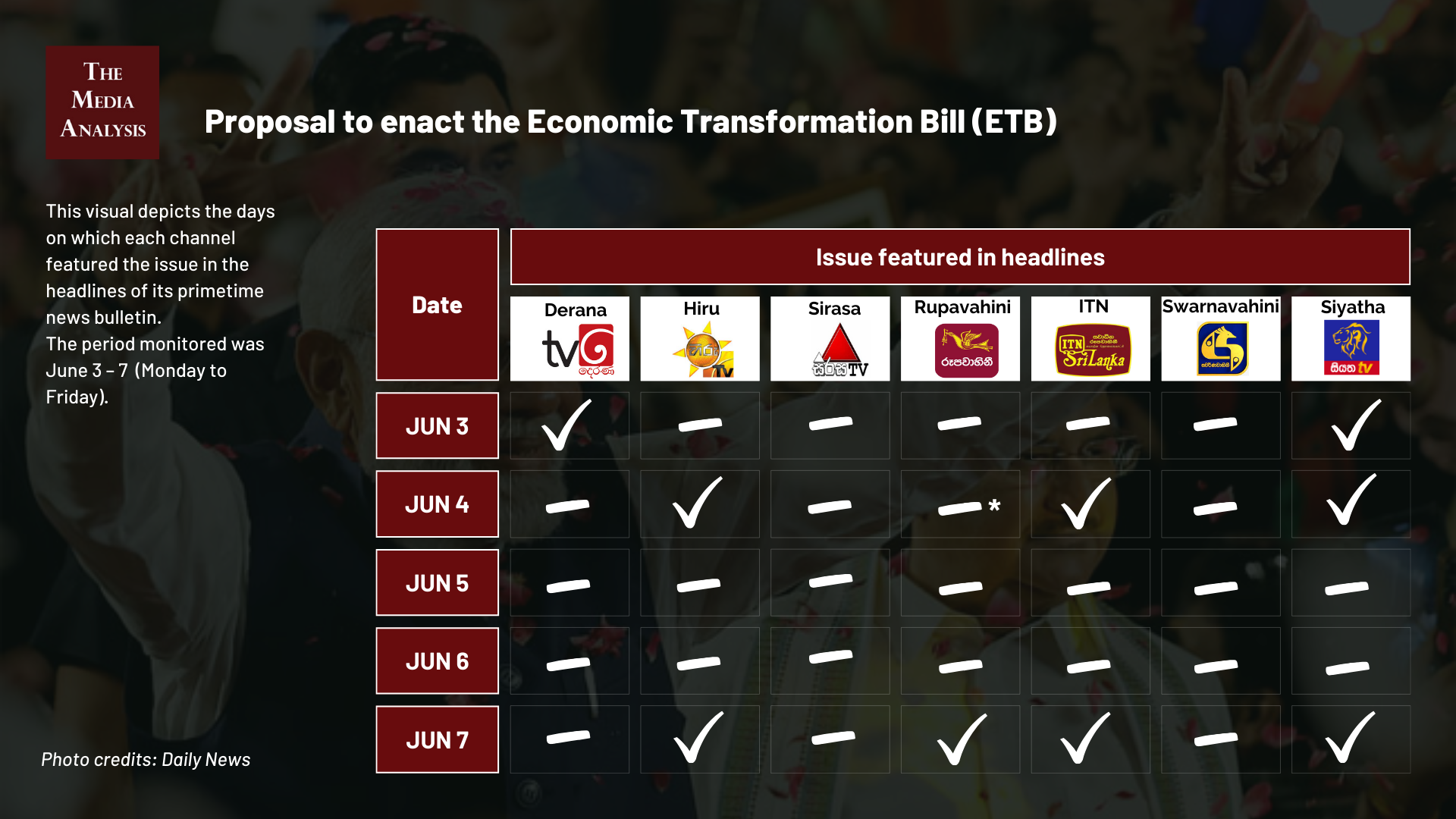
The data on television coverage is based on the monitoring of the primetime news telecasts of selected Sinhala language TV channels uploaded to YouTube. Monitoring for the issue on the proposal to enact the Economic Transformation Bill was carried out from June 3 – 7 as there was no coverage of the issue from June 10 – 14. The Rupavahini news telecast for June 4 uploaded to YouTube did not include headlines.
05. This week’s cartoons
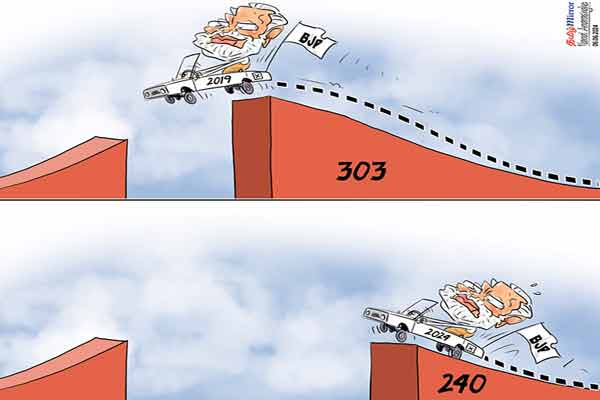
Courtesy of Tamil Mirror, Jun.5, 2024
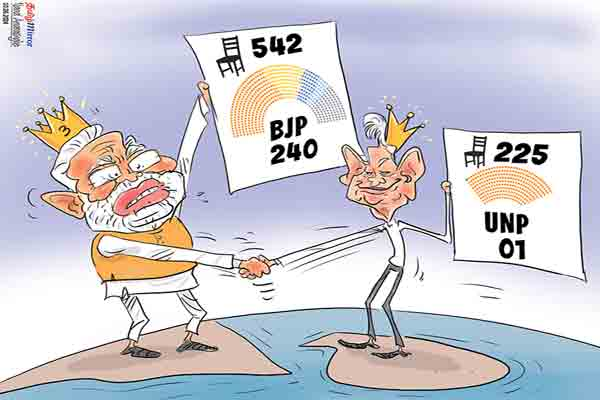
Courtesy of Tamil Mirror, Jun.10, 2024
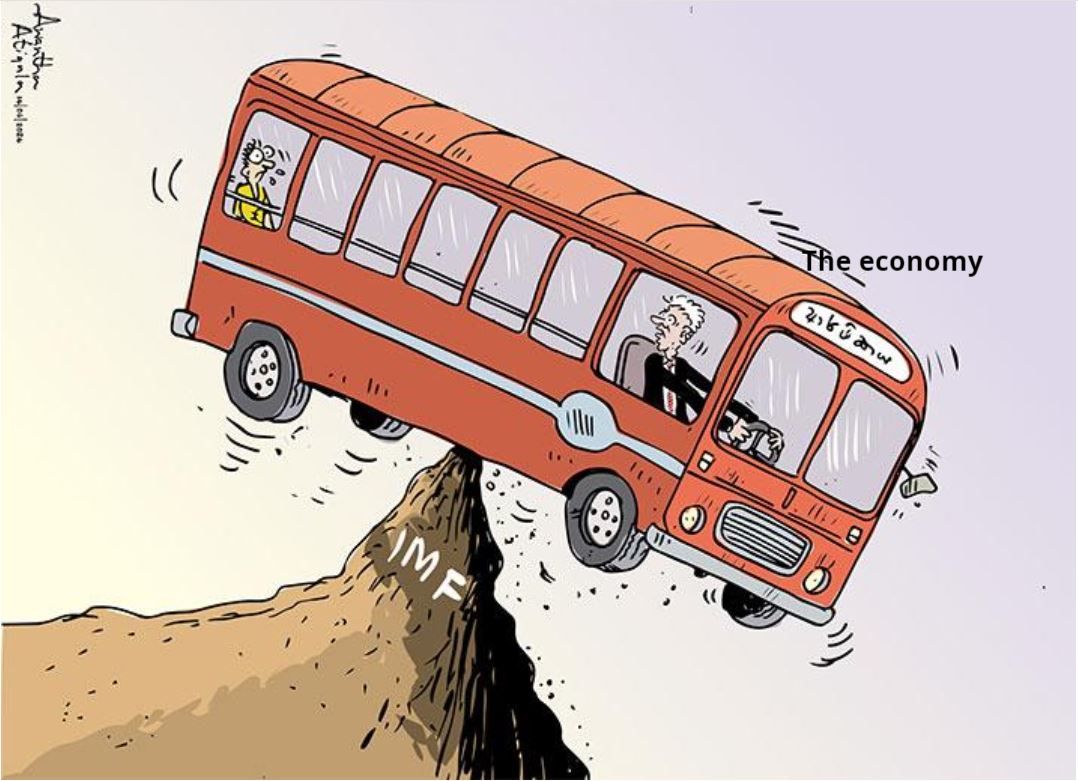
Courtesy of Ada, Jun.14, 2024
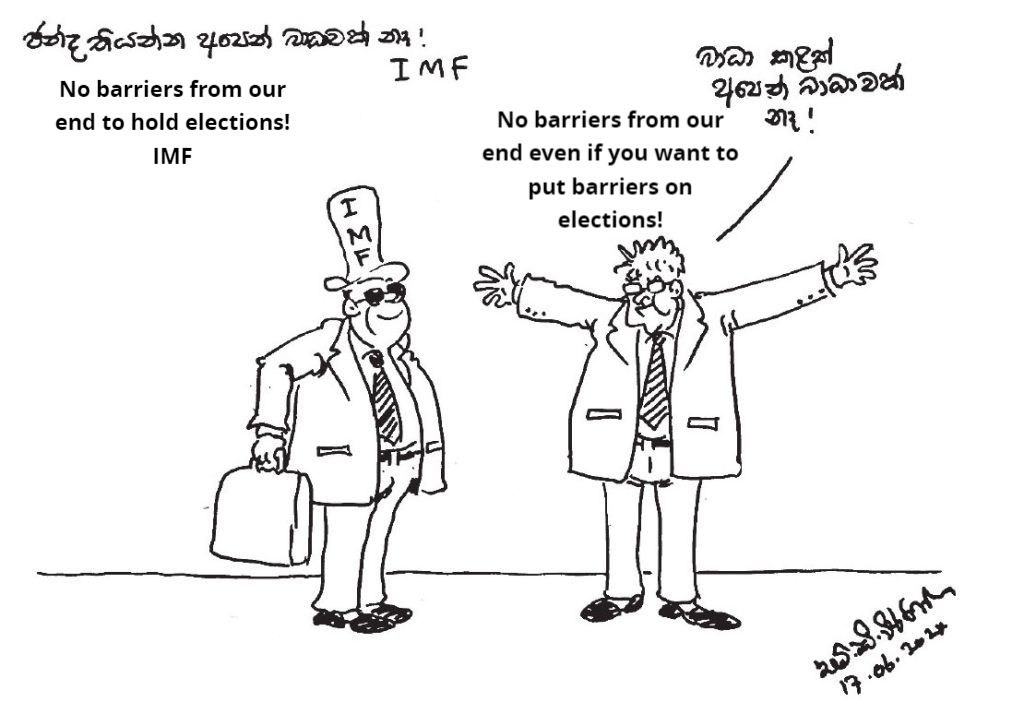
Courtesy of Mawbima, Jun.17, 2024
06. This week’s memes
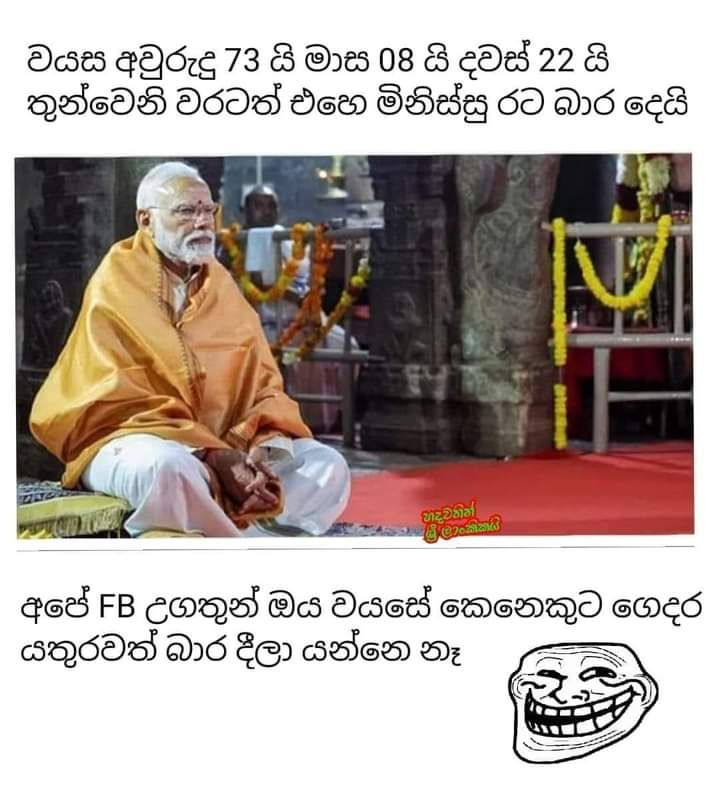
Age, 73 years, eight months and 22 days. The people there have entrusted the country to him for the third time as well
Our FB pundits don’t even entrust the key to their homes to someone of that age
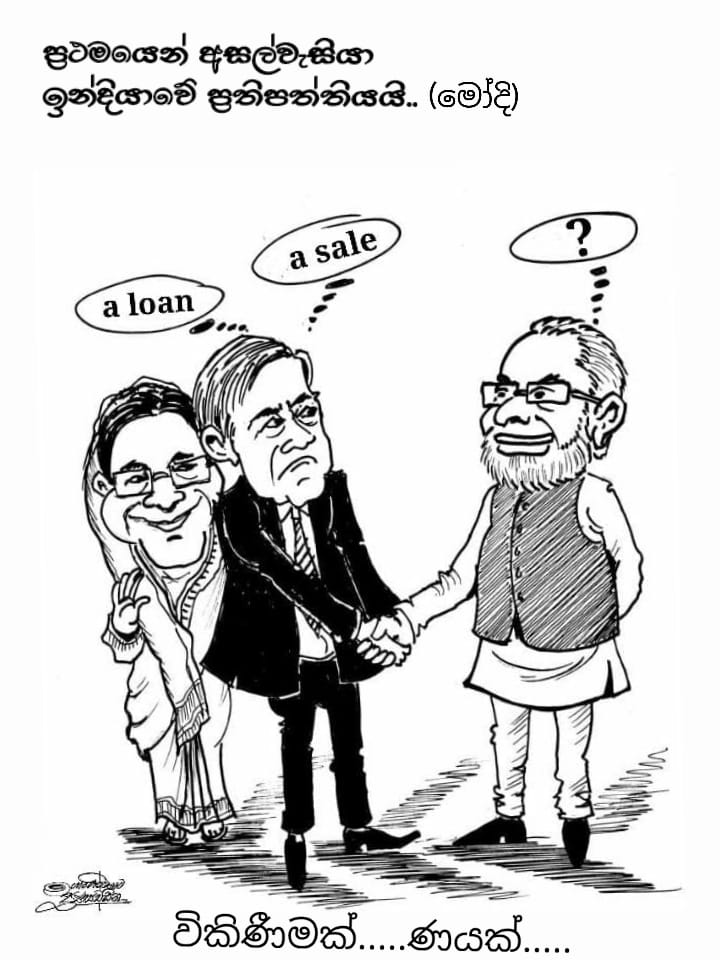
Neighbourhood first is India’s policy…(Modi)
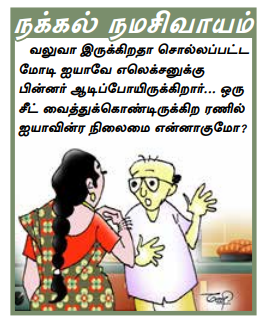
Mr. Namasivayam (a man who is kidding):
Modi Sir, who is said to be strong, has been shaken after the election… What will happen to Ranil Sir who is holding a single seat?
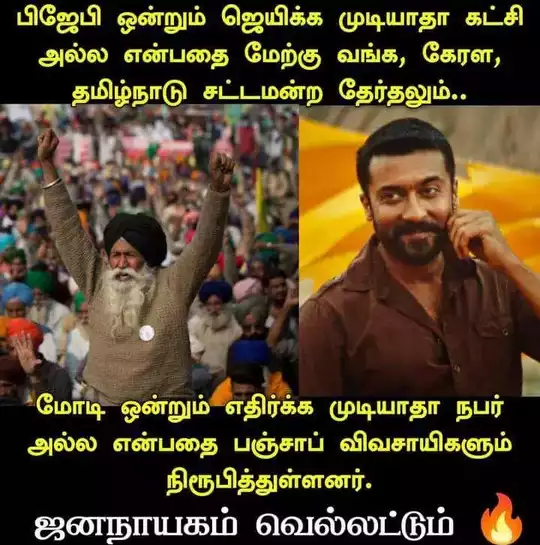
West Bengal and Kerala assembly elections have proven that the BJP is not an invincible party…
The farmers of Punjab have proven that Modi is not a person who cannot be opposed.
Let democracy win
07. Other topics covered in reportage
- Problems faced by the education sector due to strikes launched by the non-academic staff of universities and the teachers and principals of schools
- Calls made by UNP General Secretary Palitha Range Bandara requesting a referendum instead of the presidential and general elections
- Declarations by political parties on the full implementation of the 13th Amendment to the Constitution (13A)
- Enactment of the Sri Lanka Electricity Bill (SLEB)
- Defeat of Sri Lanka’s cricket team at the T20 World Cup
To view this week’s news summaries, please click here