
The Verité Media Analysis Market Fit Survey: Share your thoughts

We are currently conducting a short Market Fit Survey on The Verité Media Analysis. Please click here to fill out this survey which will only take three to four minutes of your time.
Airtime allocated for the inaugural public rally of Sarvajana Balaya
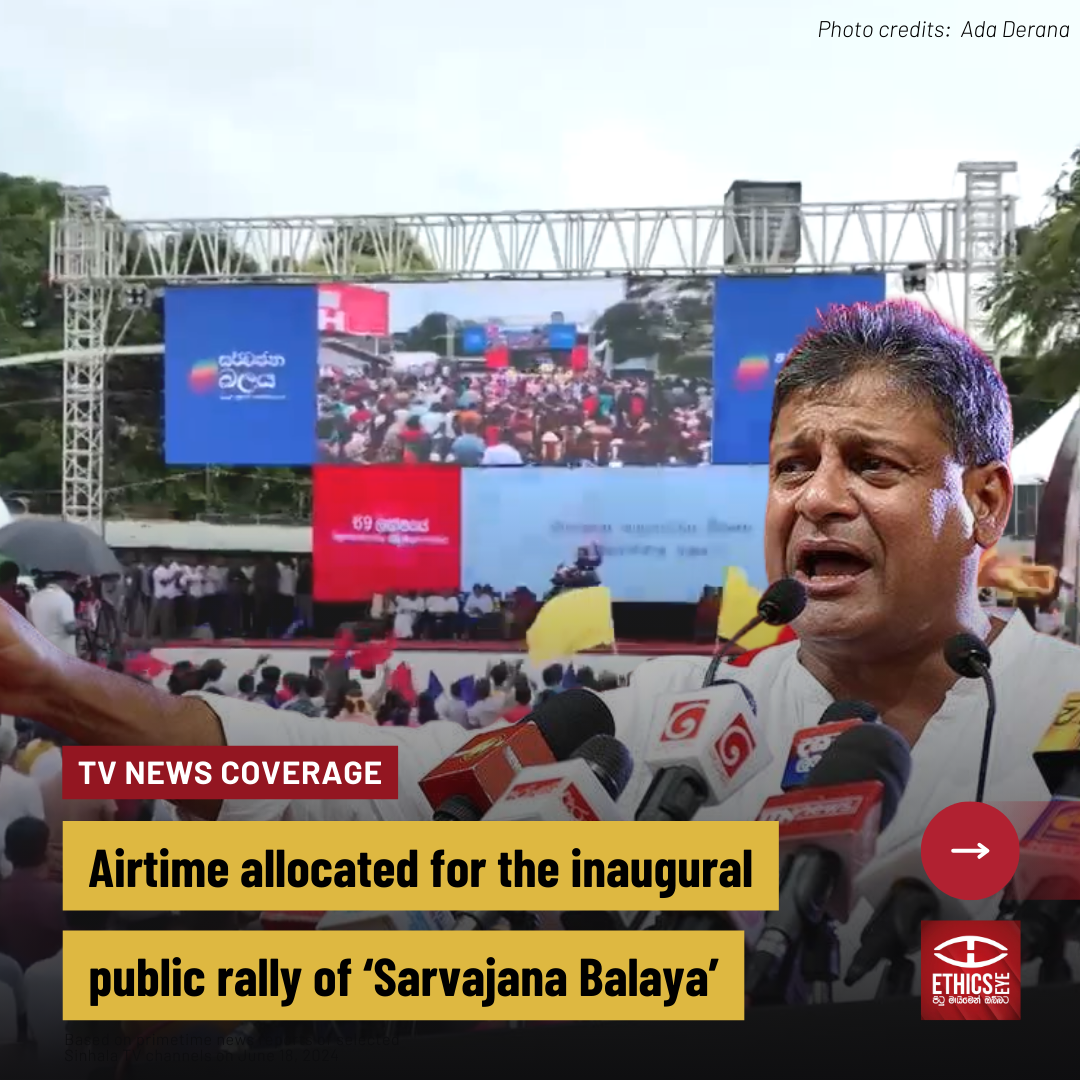
On June 18, the inaugural public rally of the Sarvajana Balaya, a new alliance formed by several political parties, was held in Nugegoda. To find out how much airtime Sinhala TV channels provided to this event, click here
This week in The Media Analysis...
01. The president, elections and democracy
02. The president, the judiciary and the gender bill
03. The Language Divide
04. The TV coverage of the issues
05. This week’s cartoons
06. This week’s memes
07. Other topics covered in reportage
Past issues can be viewed here
Disclaimer: This week’s TMA is focusing on the alleged attempt to extend the president’s term and preparations for upcoming elections and the proposed Gender Equality Bill (GEB).
01. The president, elections and democracy
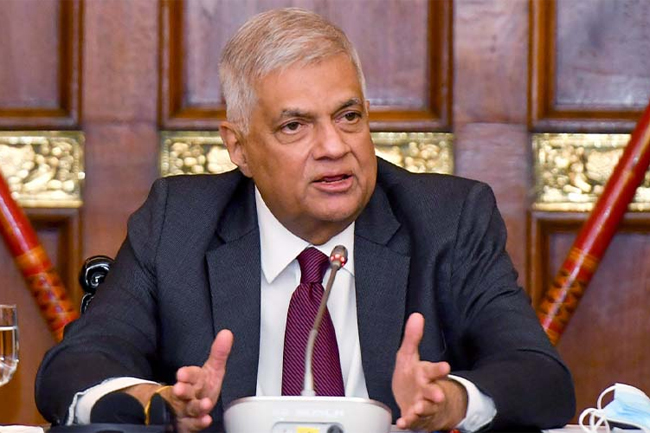
Photo credits: Ada Derana
Event: On May 28, UNP General Secretary Palitha Range Bandara suggested that President Ranil Wickremesinghe’s presidential term and the parliamentary term should be extended by two years.[1][2]
On June 11, an article published by the political correspondent in Economy Next mentioned that the president can extend his tenure by ‘almost a year due to a mistake in the constitution that has been overlooked since the 19th Amendment in April 2015’.[3][4]
Analysis
Over the past week, the Sinhala media (print, TV and social media) featured a discussion around the potential extension of the presidential term and the postponement of the election. The Sinhala media discourse on the potential extension of the presidential term[1] and the postponement of the election was shaped by narratives related to (1) the portrayal of Wickremesinghe and (2) the (legal) possibility of extending the president’s term to six years. This week’s TMA will briefly unpack these narratives below.
1. Wickremesinghe: Man of the hour or man without legitimacy?
On the one hand, voices critical of the president portrayed him as a leader lacking public legitimacy. These voices included the privately-owned newspaper Mawbima, SJB MP Tissa Attanayake and NPP MP Anura Kumara Dissanayaka. As highlighted in past TMAs, Wickremesinghe and his government have faced continuous and consistent criticism over a perceived lack of a public mandate.[2] For instance, political voices such as MP Charitha Herath criticised the Wickremesinghe government over lacking the public mandate to pass laws related to major structural reforms to the energy sector through the Sri Lanka Electricity Bill.[3] This was the dominant narrative in last week’s media discussion on the president.
On the other hand, government-aligned voices such as Minister Prasanna Ranatunga, State Minister Anupa Pasqual and Minister Pavithra Wanniarachchi advanced the narrative that Wickremesinghe is the man of the hour. They argued that he deserved another term in office to help the country recover post-economic crisis. They drew from the longstanding perception of Wickremesinghe as being highly skilled in managing the economy and having positive foreign relations, highlighting that these characteristics are precisely what the country needs during this period of economic recovery.[4] This was a contesting narrative, which had little traction.
2. Six-year tenure: Not possible
Critical voices, including but not limited to the privately-owned newspaper Mawbima, SJB MP Tissa Attanayake and Gamini Viyangoda, argued that extending the president’s term beyond five years is not possible within the framework of the constitution. They asserted, therefore, that any such extension would not be lawful without changing the constitution, which would then also require popular approval at a referendum. This line of argument also reinforced the perception that the president lacks the public mandate to extend his tenure.
The contesting narratives on the extension of the presidential term – which were featured in the media only last week – underscore a heightened sense of anxiety that President Wickremesinghe might use any means necessary to stay in power. This sentiment seems to arise from existing democratic anxieties around delayed elections. For instance, the yahapaalanaya government led by Wickremesinghe faced criticism for delaying Provincial Council (PC) elections.[5] More recently, Wickremesinghe, in his role as minister of finance, withheld the necessary funds from the election commission, thereby preventing the Local Government (LG) elections from being held.[6]
Overall, the Sinhala media was overwhelmingly critical of the suggestion to extend Wickremesinghe’s presidential term. This criticism appears to draw on the narrative that has developed around Wickremesinghe over the past two years portraying him as a “power-hogging manipulator”.[7] This perception of a “power-hogging manipulator” arises from his unelected rise to office, which has been marked by heavy-handed suppression of democratic dissent, the introduction of suppressive laws, preventing local government elections by withholding funds and pressuring the judiciary into submission.[8] Consequently, the proposal to extend Wickremesinghe’s term in office has significantly increased democratic anxiety and uncertainty within Sri Lankan society about whether elections will take place on time.
02. The president, the judiciary and the gender bill
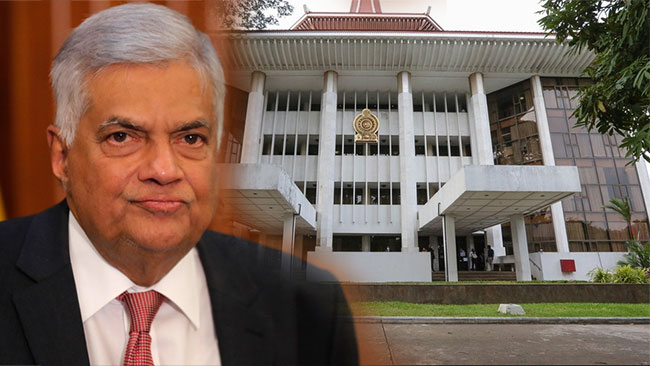
Photo credits: Ada Derana
Event: On May 9, President Ranil Wickremesinghe in his role as the minister of women, child affairs and social empowerment presented the Gender Equality Bill (GEB) to parliament.[1][2]
On June 7, a three-judge bench of the Supreme Court (SC) ruled that the GEB as a whole is inconsistent with the constitution and cannot be enacted without a two-thirds parliamentary majority and approval by the people at a referendum.[3][4][5]
On June 18, President Ranil Wickremesinghe raised a point of order that the SC determination on the GEB violates the powers of parliament and asked for a Parliamentary Select Committee (PSC) to be appointed to investigate the decision.[6][7]
On June 19, the Bar Association of Sri Lanka (BASL) issued a statement reiterating its unwavering commitment to upholding the rule of law and safeguarding the independence of the judiciary while addressing remarks made by President Wickremesinghe in parliament on the SC’s ruling on the GEB.[8][9][10]
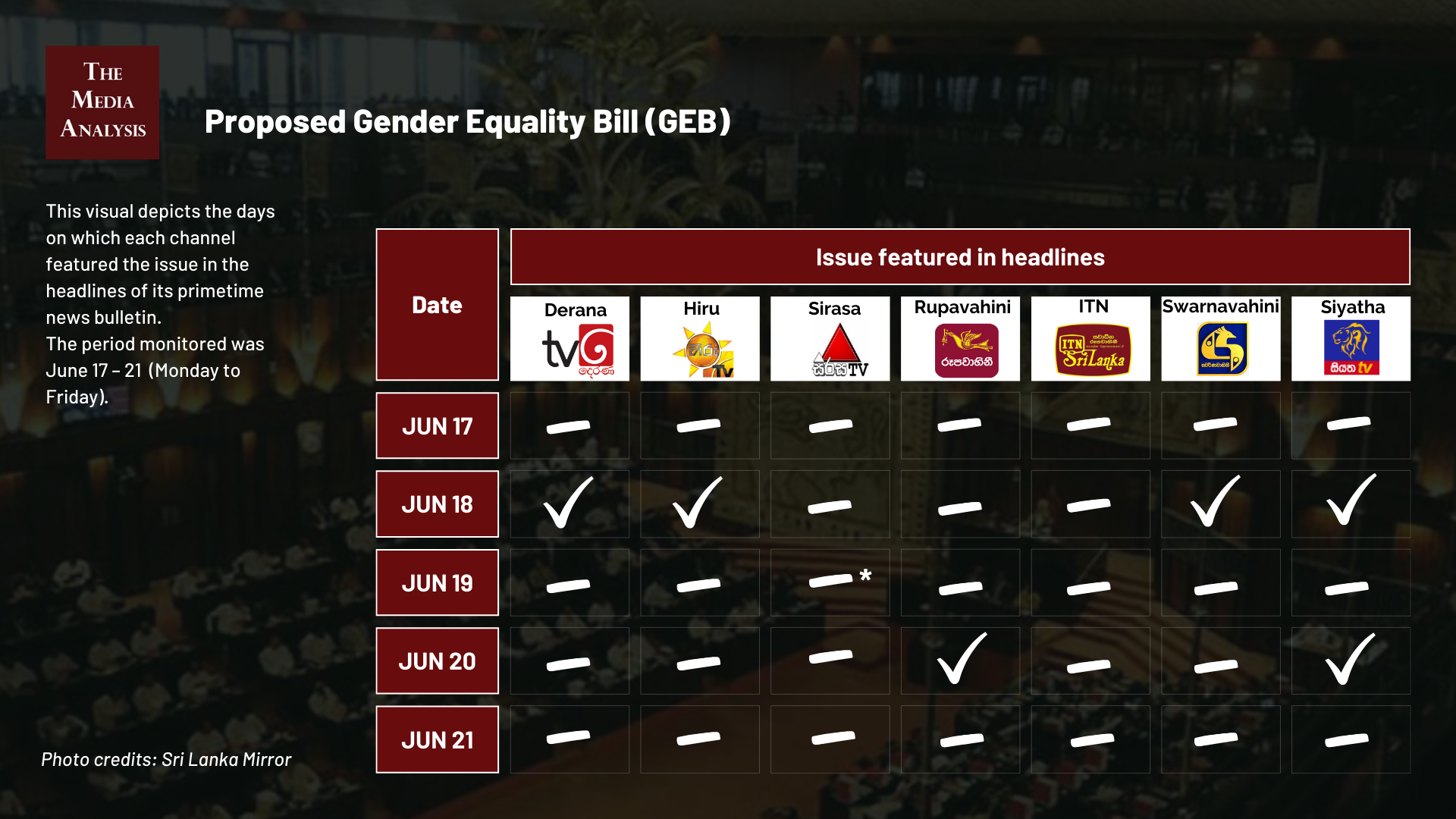
Over the past few days, Sinhala media discussion primarily focused on President Wickremesinghe’s response to the Supreme Court’s determination which stated that the GEB is inconsistent with the constitution.
This week’s TMA will briefly analyse two sets of distinct responses to the GEB. These include the responses to the content of the GEB from those of its opponents and proponents as well as the responses to the president’s statement.
Responses to the content of the GEB
Two camps, one in support of and one in opposition to the content of the GEB, emerged in the media discourse.
Opponents of the GEB mainly drew on existing prejudices against transgender persons to support their arguments against the bill. MP Wimal Weerawansa, who questioned the inclusion of transgender persons in the GEB, was predominantly featured in the TV coverage and social media commentary. Social media commentary on the GEB also featured direct and indirect transphobic and homophobic remarks, reflecting prevalent public attitudes and biases towards the LGBTQI+ community in Sri Lanka.[1]
Proponents of the GEB framed the bill around the protection of women, a topic that easily garners majority support due to the widespread issues of violence and sexism against women.
Government-aligned figures, including SLPP MP Jayantha Weerasinghe, State Minister Anupa Pasqual and State Minister Suren Raghavan, praised the bill as a timely and necessary measure to ensure women’s rights, prevent harassment and empower women. They highlighted the bill’s potential to create a more equitable society by providing legal frameworks to address and mitigate gender-based discrimination and violence.
Responses to the president’s statement on the SC’s determination
Responses to the president’s statement on the SC’s determination – which were separate from those on the content of the GEB – were also distilled from the media discussion.
The Sinhala media discourse on Wickremesinghe’s response to the SC determination interpreted his actions as executive overreach, undermining the independence of the judiciary. The perception of Wickremesinghe as a ‘power-hogging manipulator’ has been influenced by his past actions of pressuring the judiciary (please refer to the analysis published in this week’s TMA).[2]
Similar to the response to the Sri Lanka Electricity Bill (SLEB) and the Economic Transformation Bill (ETB), the Sinhala media was largely critical and distrusting of the GEB.[3]
In the English media, President Wickremesinghe may have gained some support (or at least mitigated criticism) for his illiberal approach to the judiciary from the liberal support for the content of the bill. However, this was not evident in the Sinhala media, where the support for the content of the bill was low, while the criticism of the president’s actions has been high.
03. The Language Divide
Signposts the differences and nuances in reporting between Sinhala and Tamil language newspapers
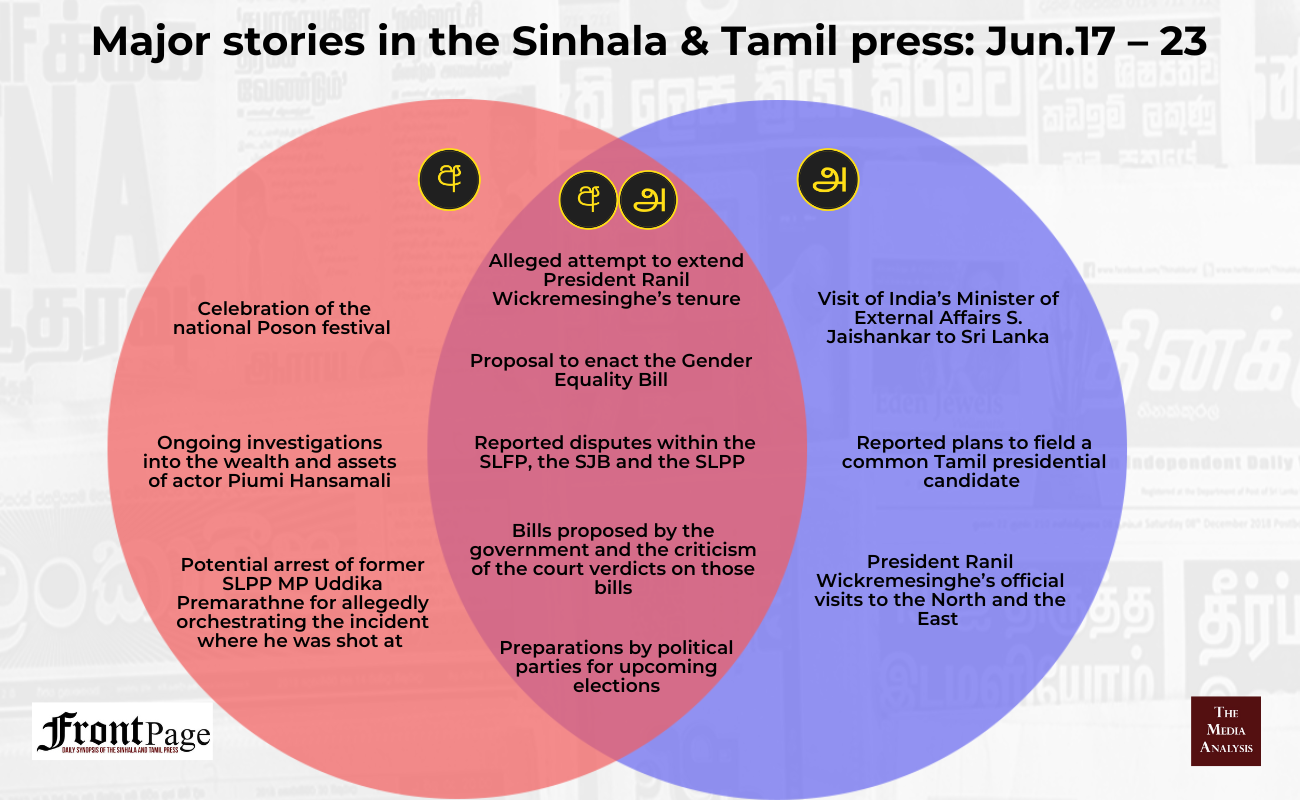
Last week’s Sinhala and Tamil press converged in relation to five main stories. The five stories were on the: (i) alleged attempt to extend the president’s term; (ii) proposed Gender Equality Bill; (iii) reported disputes within the SLFP, the SJB and the SLPP; (iv) bills proposed by the government and the criticism of the court verdicts on those bills; (v) preparations by political parties for upcoming elections. The Sinhala press exclusively featured three main topics, and they were on the: (i) celebration of the national Poson festival; (ii) ongoing investigations into the wealth and assets of actress Piumi Hansamali; (iii) potential arrest of former SLPP MP Uddika Premarathne for allegedly orchestrating the incident where he was shot at. The Tamil press exclusively featured three main stories, and they were on the: (i) visit of India’s Minister of External Affairs S. Jaishankar to Sri Lanka; (ii) reported plans to field a common Tamil presidential candidate; (iii) President Ranil Wickremesinghe’s official visits to the North and the East.
Do you want to see the divided priorities on a daily basis? Check out FrontPage. It captures the day’s headlines and features succinct summaries of the political news reported in the most widely read Sinhala and Tamil newspapers.
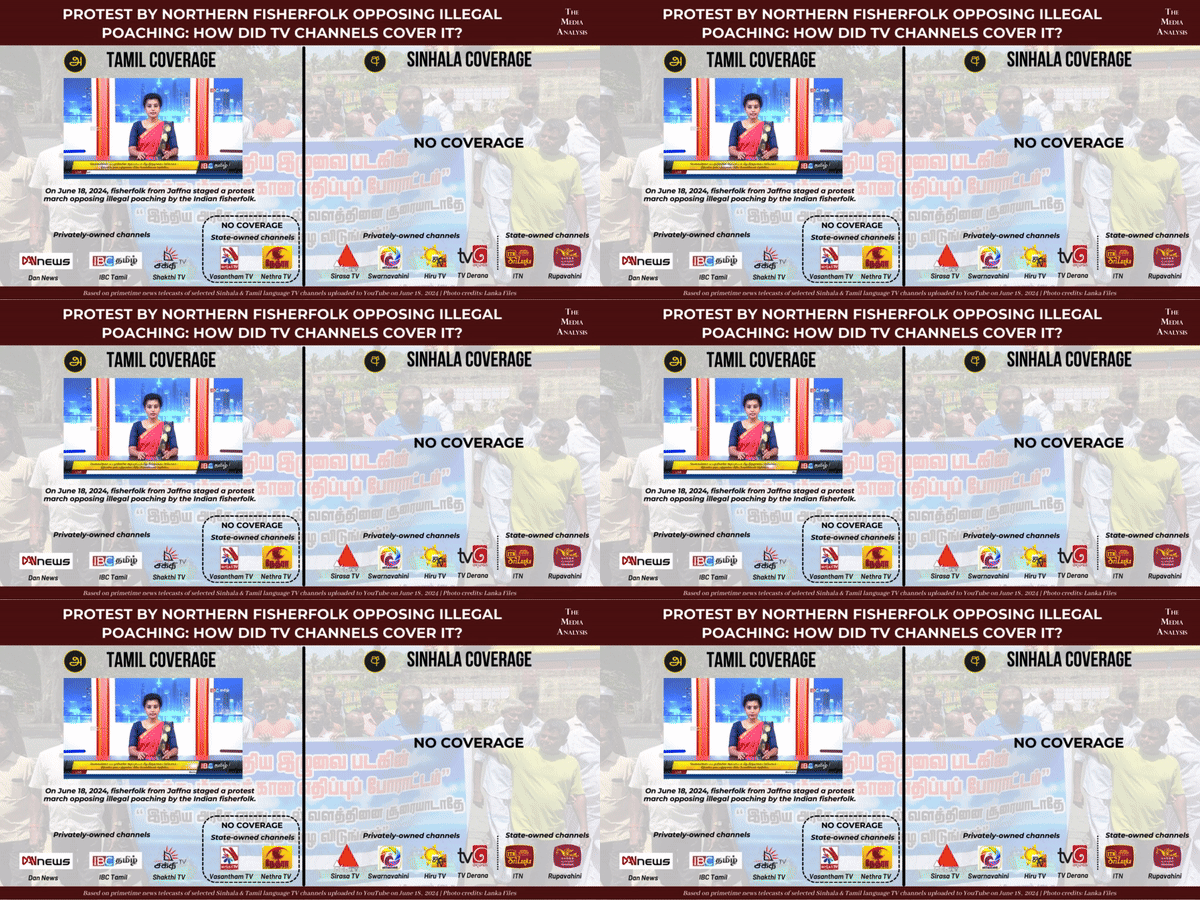
Protest by Northern fisherfolk opposing illegal poaching: How did TV channels cover it?
|
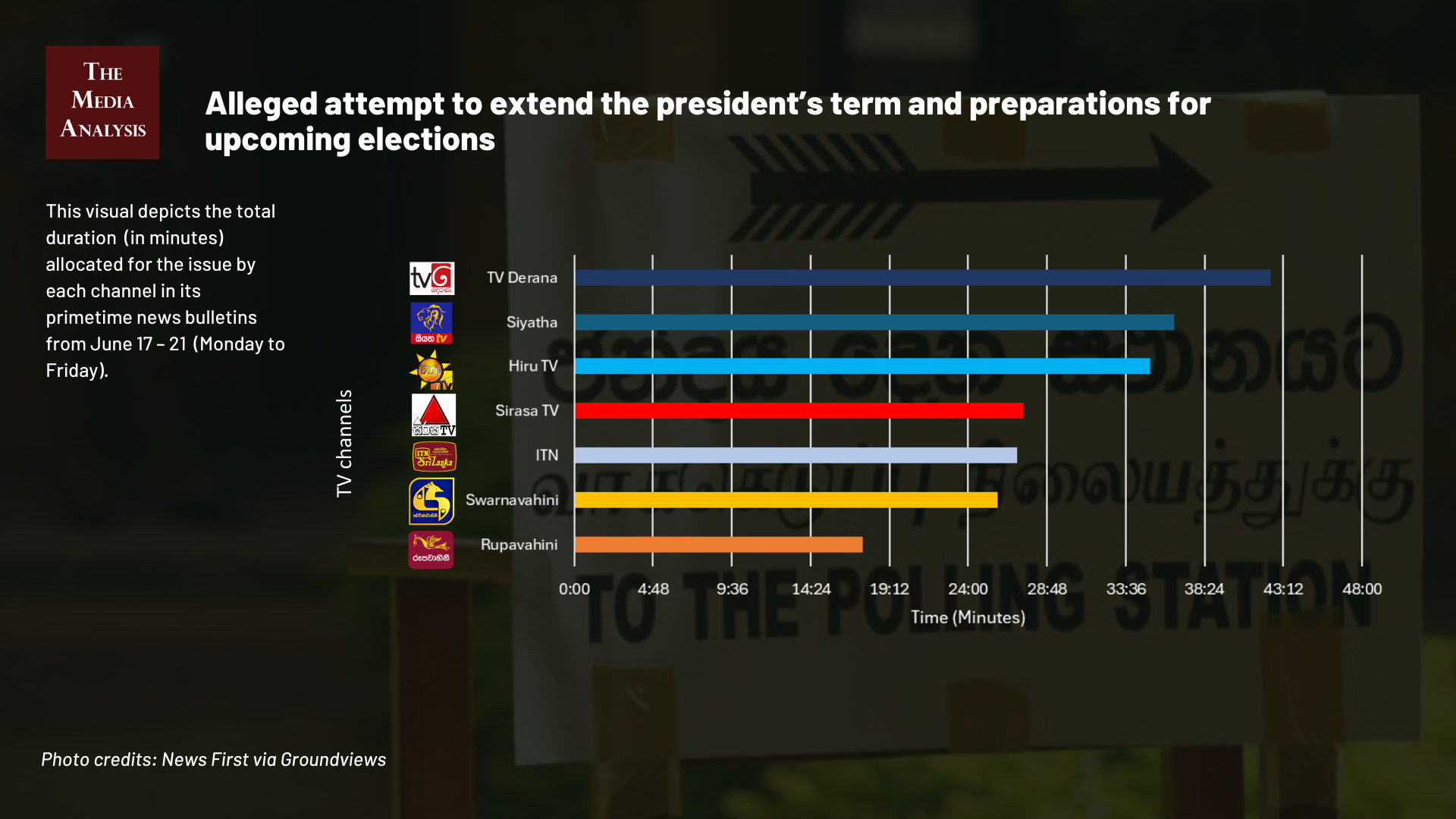
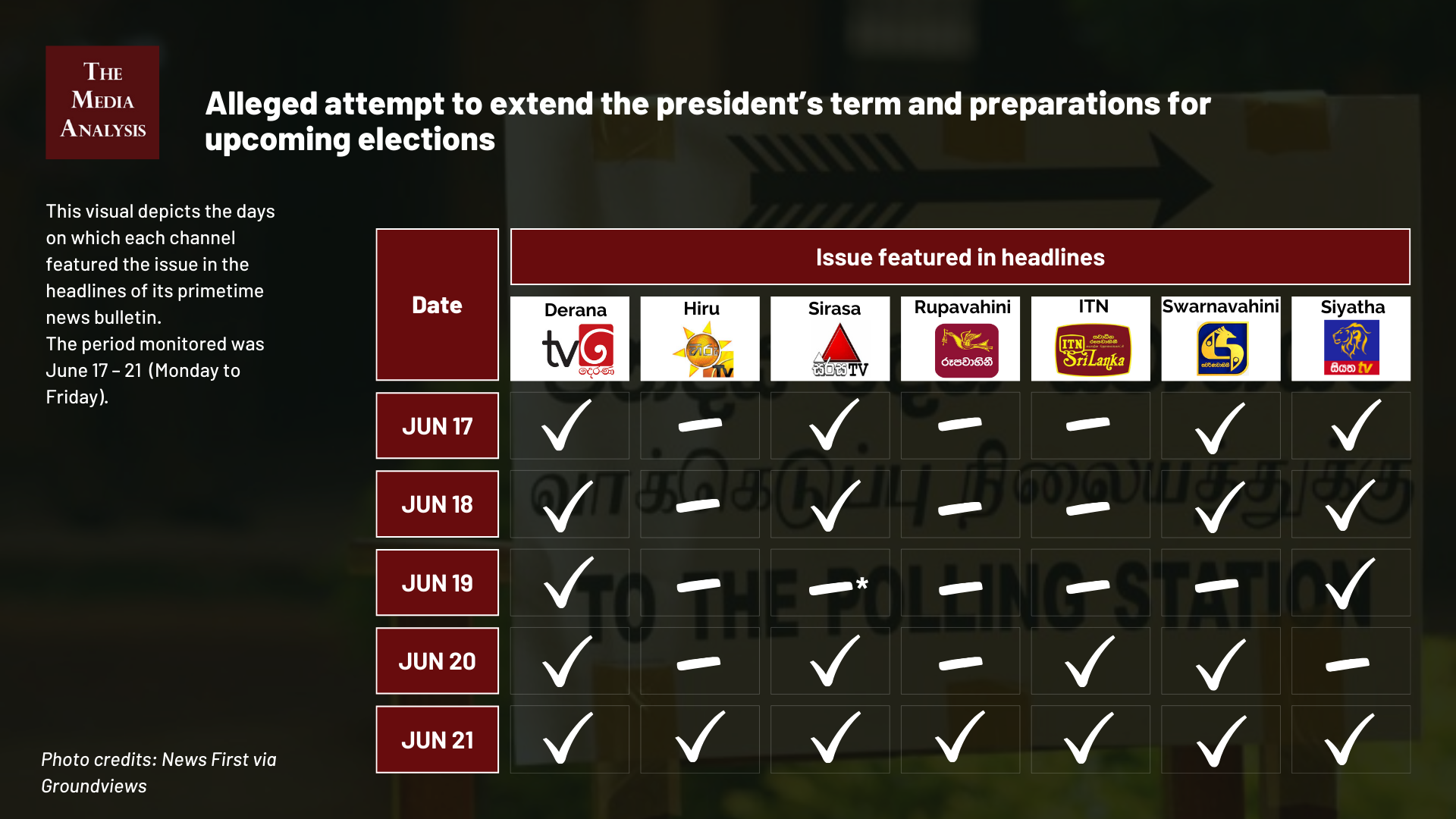
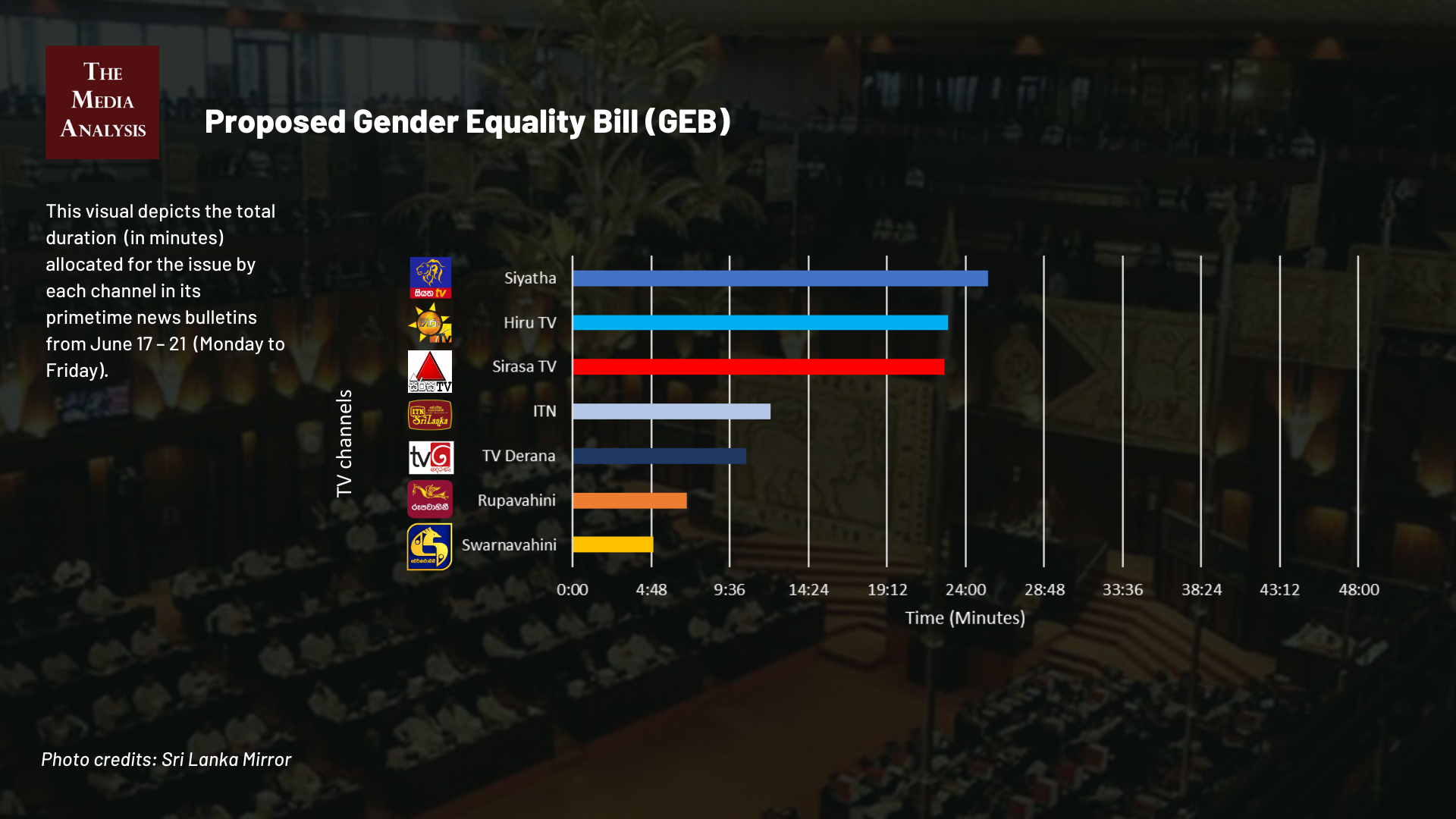
04. The TV coverage of the issues
|
|
|
05. This week’s cartoons
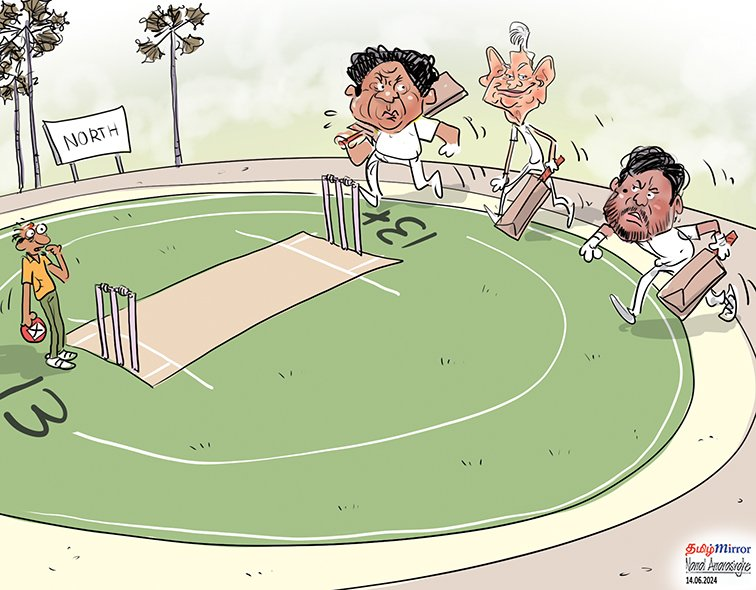
Courtesy of Tamil Mirror, Jun.14, 2024
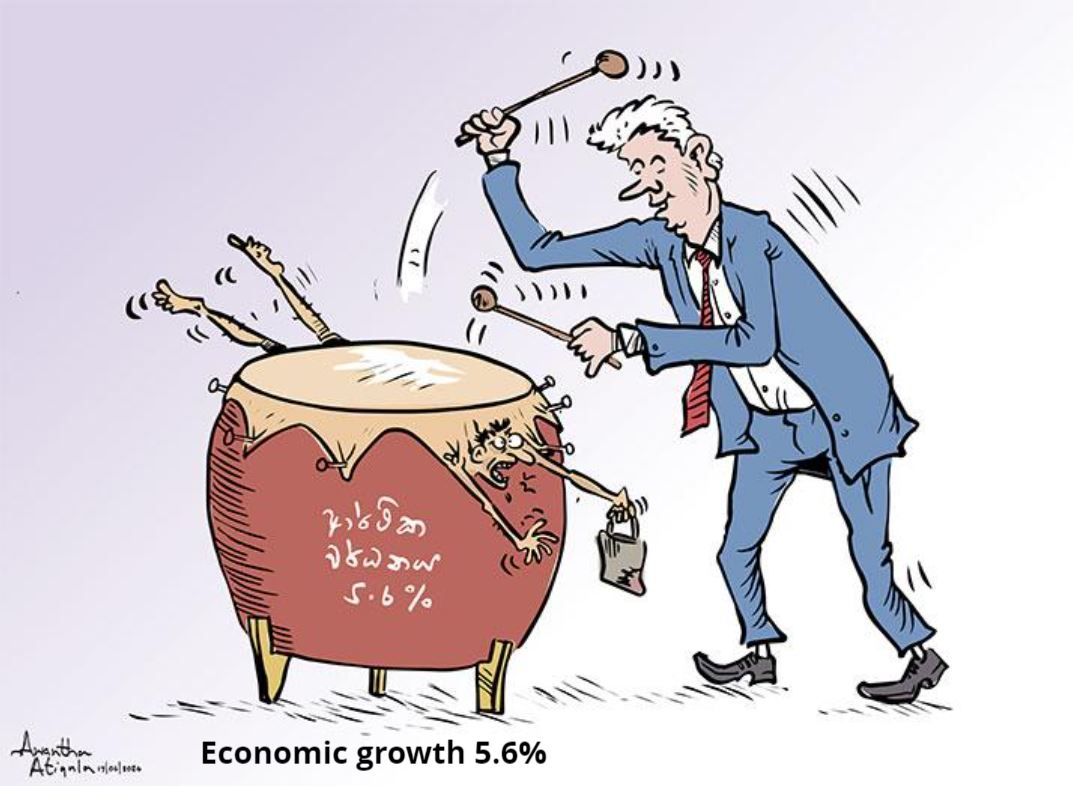
Courtesy of Ada, Jun.17, 2024
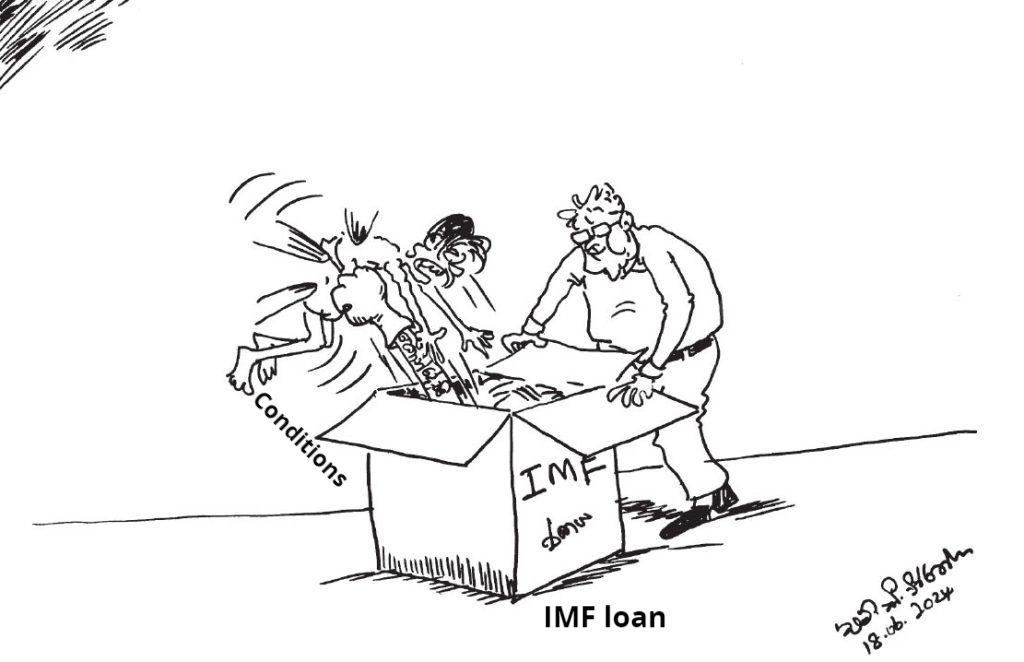
Courtesy of Mawbima, Jun.18, 2024
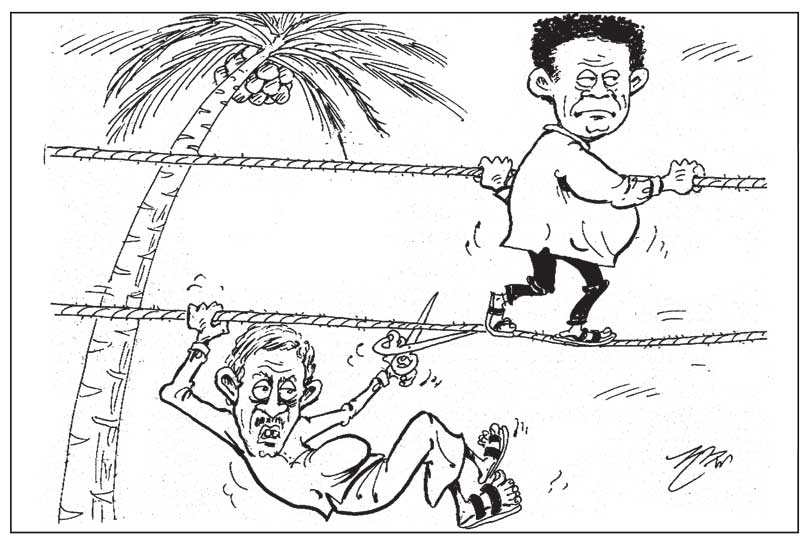
Courtesy of Lankadeepa, Jun.24, 2024
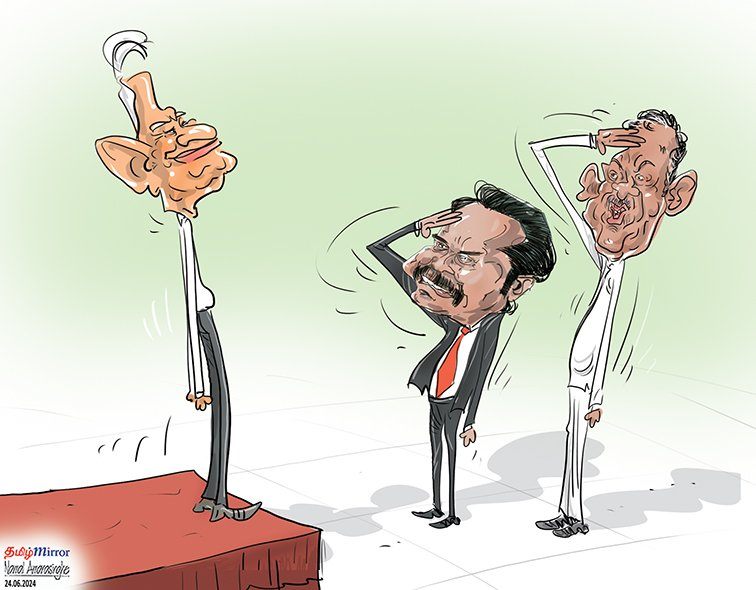
Courtesy of Tamil Mirror, Jun.24, 2024
06. This week’s memes
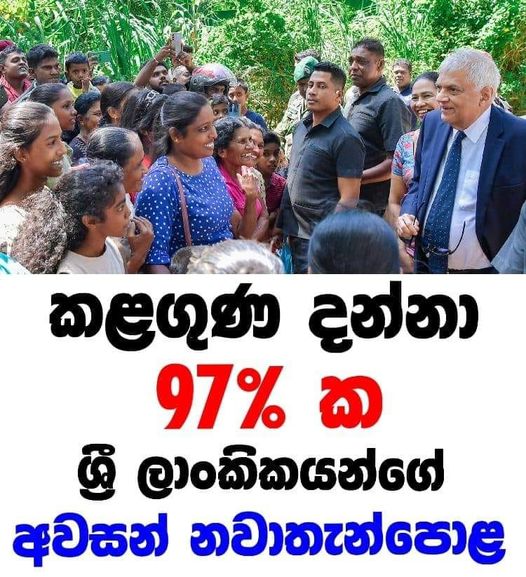
The final shelter of the 97% of Sri Lankans who know to be grateful
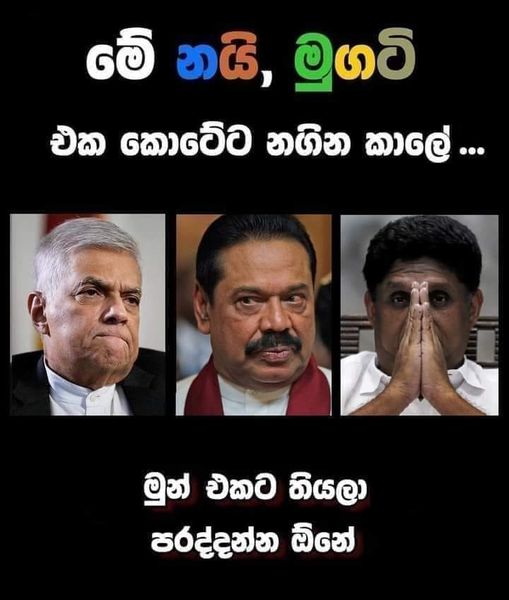
These are times when cobras and mongooses climb onto the same log [to save themselves during a flood] …They must all be defeated in one fell swoop
(In Sinhala folklore, cobras and mongooses are seen as archenemies. This meme uses that analogy to imply that the challenging political situation will compel political opponents to unite for their survival.)
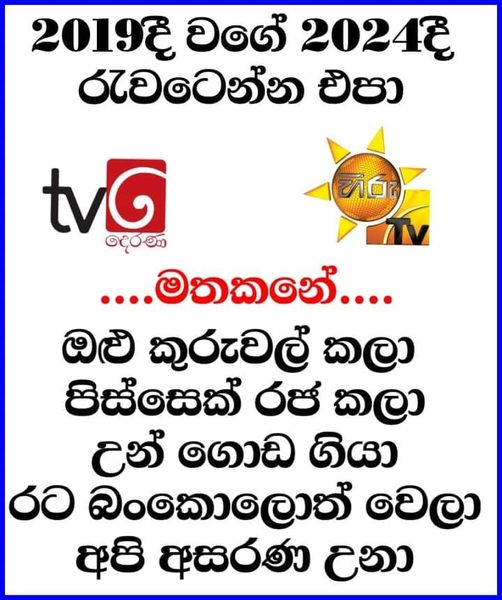
Do not be deceived in 2024 as you were in 2019. You remember, don’t you? They [TV Derana and Hiru TV] confused the people and appointed a mad man as king. They themselves fared well but the country went bankrupt and we were rendered helpless
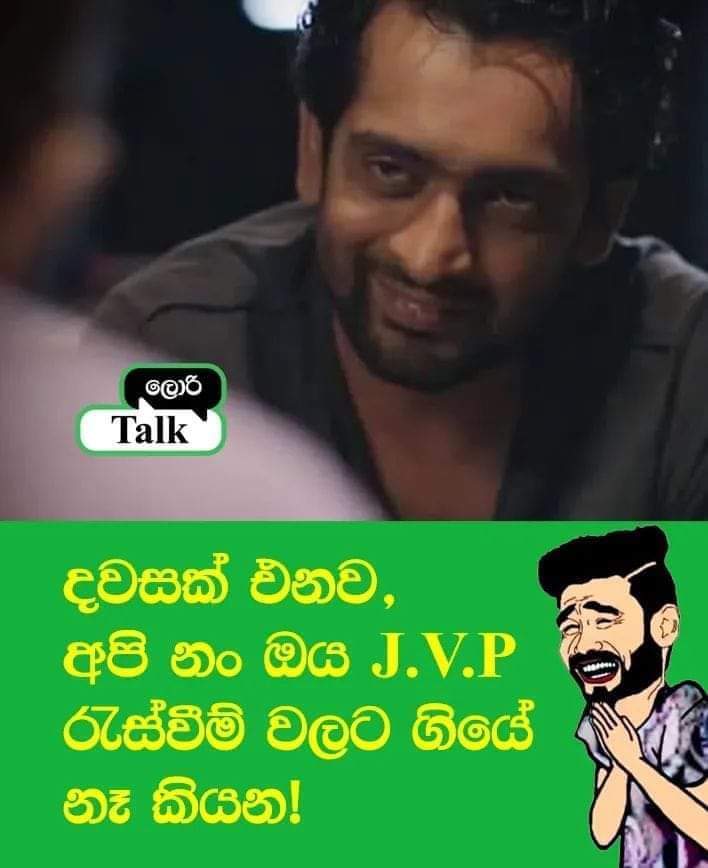
There will come a day when people will say they never attended those JVP meetings! (Refers to the widespread disappointment of SLPP voters who allegedly deny having supported the party. This meme implies that the fate of the NPP will be the same.)
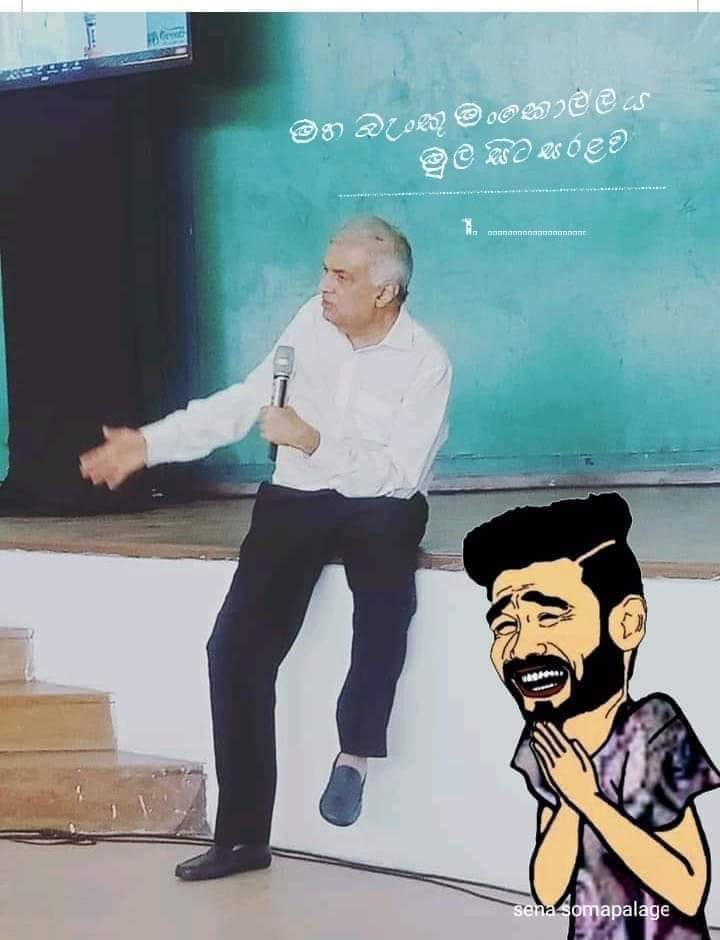
Simplified lessons on the fundamentals of the Central Bank robbery
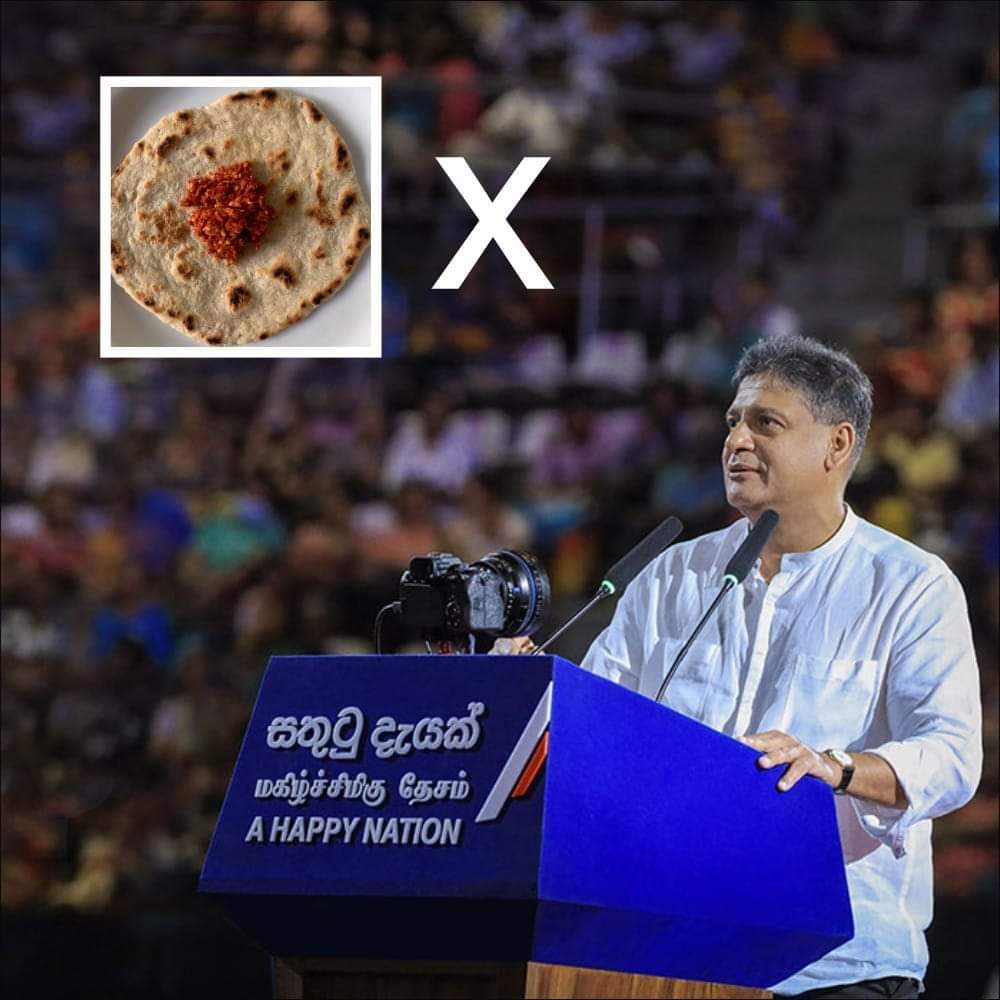
(Leader of the Mawbima Janatha Party Dilith Jayaweera featured as having a coconut roti as his party’s symbol. Sri Lankan politicians are frequently seen to publicly display certain behaviours that aim to create an image of being simple and in touch with the common citizens, e.g. Maithripala Sirisena once eating food wrapped in a banana leaf. Thus, when Dilith Jayaweera posted photos on his Facebook page in which he was seen eating/preparing roti, it was widely seen and ridiculed on social media as an attempt to appear ‘simple’ and close to the general public.)
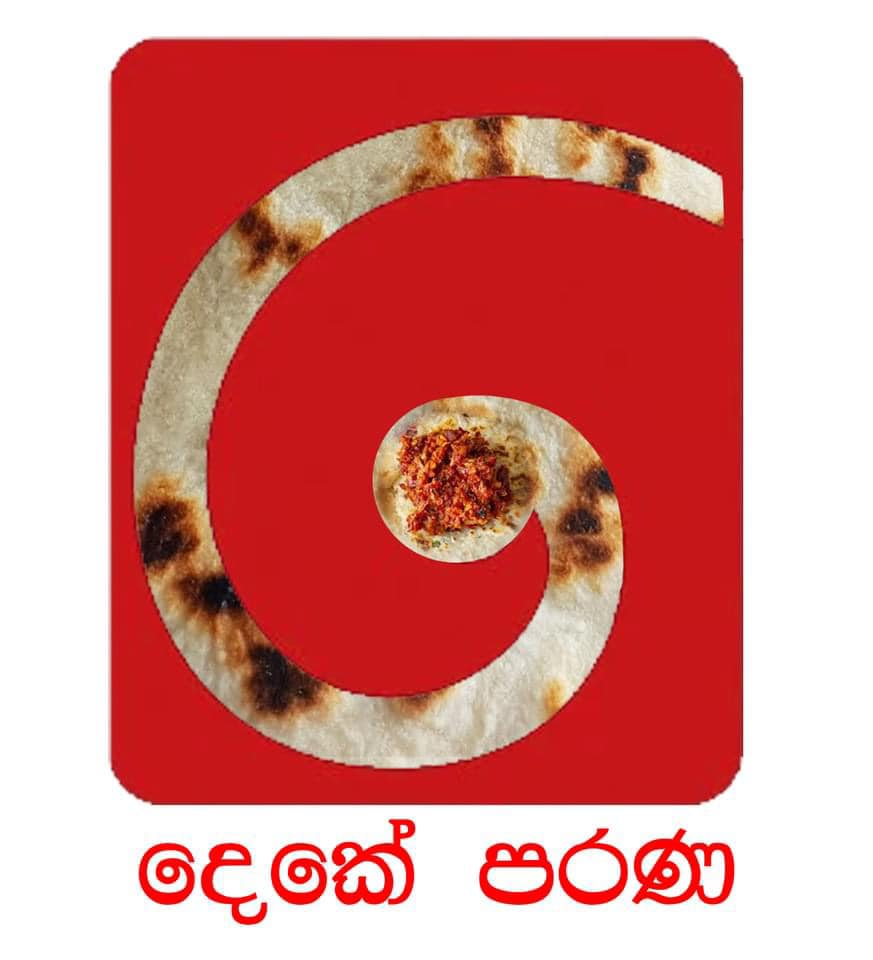
Good-for-nothing Derana (The meme uses profane language in reverse order in Sinhala to convey this idea. TV Derana’s logo has been changed to a coconut roti to ridicule Leader of the Mawbima Janatha Party Dilith Jayaweera, who is also a co-owner of TV Derana.)
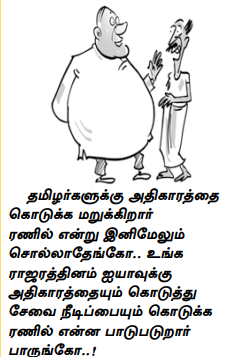
No more saying that Ranil refuses to give power to the Tamils…
See how much he strives to give power and a service extension to your Rajaratnam Sir (the attorney general)..!
(Courtesy of Thamilan, Jun.20, 2024)
07. Other topics covered in reportage
- Ongoing strikes by the non-academic staff of universities
- Visit of India’s Minister of External Affairs S. Jaishankar to Sri Lanka
- Declarations by political parties on the full implementation of the 13th Amendment to the Constitution (13A)
- Proposed wage hike for plantation workers
- Granting of approval to disburse the third tranche of the IMF Extended Fund Facility (EFF)
To view this week’s news summaries, please click here