
July 1 – July 7, 2024 | Vol.14, #27
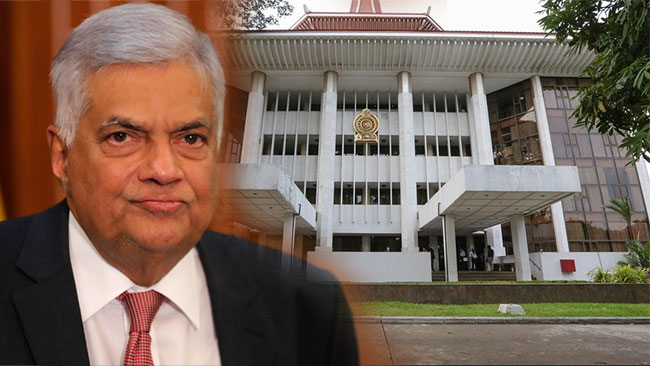
Event: In early July, Chamindra Dayan Lenawa, a businessperson from Moratuwa, filed a fundamental rights (FR) petition in the Supreme Court.[1][2][3] He requested an interim order to prevent the election commission from holding the presidential election until the court provides an interpretation of the end date of the president’s official term.[4][5][6] Seven intervening petitions were filed against the FR petition filed by Lenawa.[7][8]
On July 4, through a media release, President Wickremesinghe stated that Lenawa had not consulted the president or his lawyers prior to filing this application in the Supreme Court.[9][10] The media release also stated that the president is ‘firmly of the opinion’ that ‘term of the president is five years, and the election commission is correct in taking steps to hold the presidential election in 2024.’[11][12]
On July 8, the Supreme Court dismissed the case filed by Lenawa.[13][14]
Analysis
The Sinhala media (including print, TV and social media commentary) was overwhelmingly critical of the FR petition filed by C. D. Lenawa. This week’s TMAbriefly analyses the assessment and the consequence of the FR petition in the Sinhala print media.
The assessment
The Sinhala media widely viewed the petition as an attempt by the president to postpone the election. This perception persists despite the president publicly stating that he had no hand in or knowledge of the petition being filed, and further stating his view that the presidential term should be five years, not six.
The consequence
The Sinhala print media’s criticism of the petition underscores a heightened sense of anxiety that President Wickremesinghe might use any means necessary to stay in power.[1] This sentiment seems to arise from existing anxieties around delayed elections. For instance, earlier last year Wickremesinghe, in his role as minister of finance, withheld the necessary funds from the election commission, thereby preventing the Local Government (LG) elections from being held – even to this date.[2] In this context, any perceived attempt to extend the president’s term in office is seen as an attempt to further undermine the basic democratic expectations. Therefore, these developments have significantly increased anxiety and generated uncertainty within Sri Lankan society about whether elections will take place on time.[3]
Overall, within the Sinhala media discourse, the president is widely perceived as unlikely to win a forthcoming election (please refer to memes shared in this issue of TMA). Consequently, he is seen as exploring various strategies to avoid holding elections. However, efforts to legitimise any delays in the election are being pre-emptively blocked by these expressions of strong public concern.
[1] See TMA Vol.14, #25.
[2] See TMA Vol.13, #33; Vol.13, #40.
[3] See TMA Vol.14, #25.