
No confidence motion against the speaker
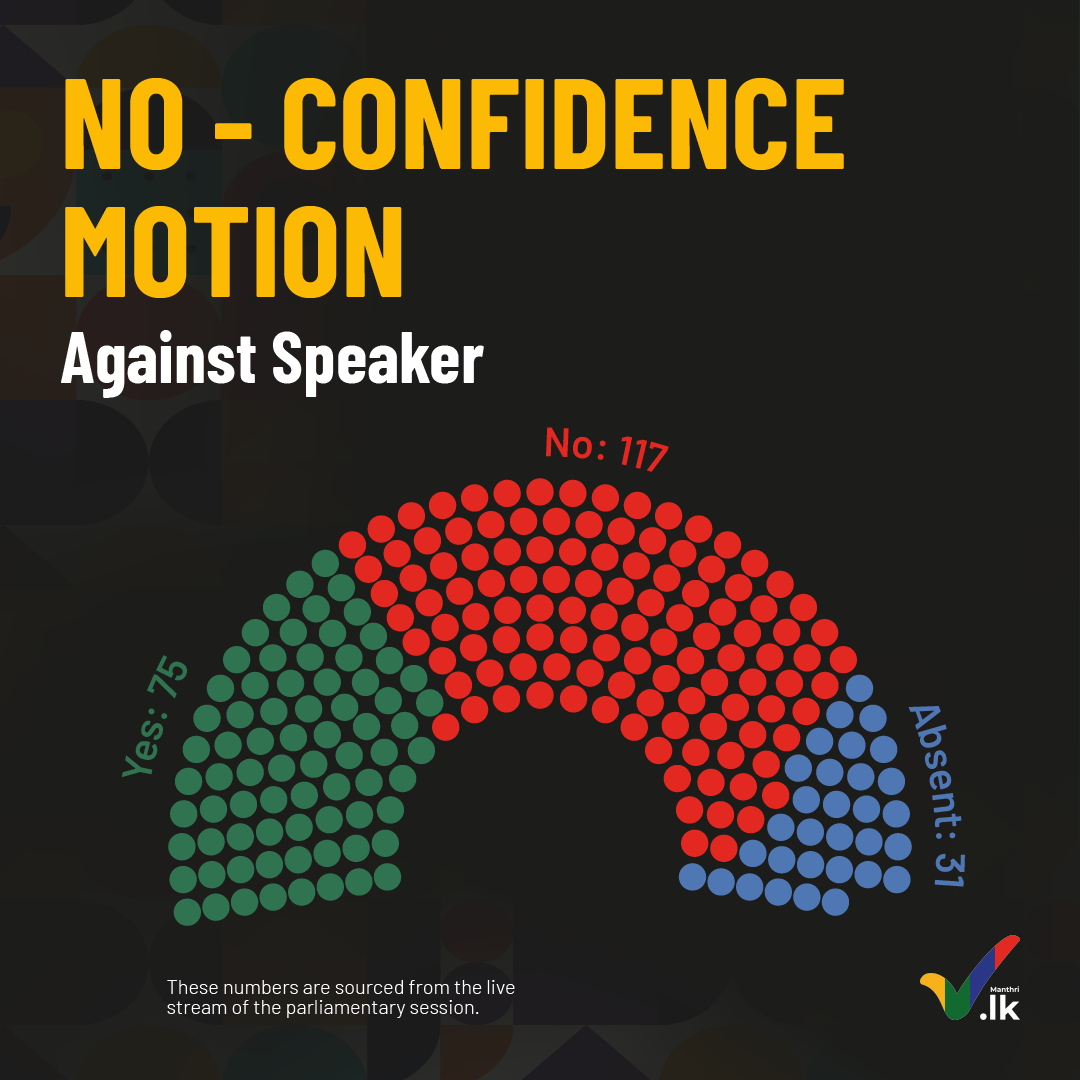
The no confidence motion brought against Speaker Mahinda Yapa Abeywardana was defeated on March 21. 75 MPs voted in favour of the motion, 117 voted against it and 31 MPs were absent at the time of the vote. For more information on the breakdown of the votes, click here
Mood of the Nation
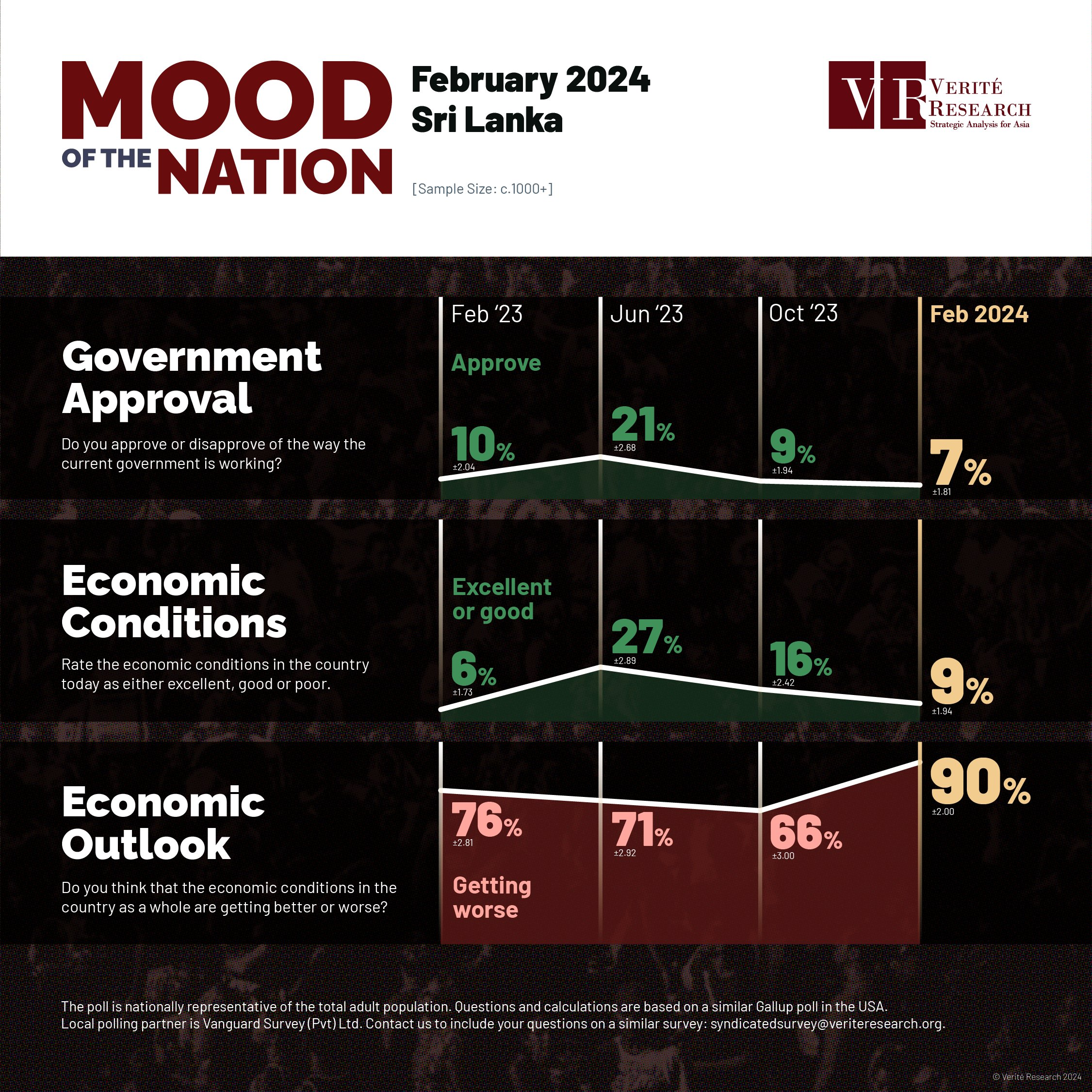
The approval rating of the government fell from nine percent in October 2023 to seven percent in February 2024 as found by the Mood of the Nation poll of Verité Research. Only nine percent rated the current economic conditions in Sri Lanka as either excellent or good and 90 percent thought economic conditions were getting worse. For more information on the poll results, click here
This week in The Media Analysis...
01. No confidence in no confidence motion
02. The Language Divide
03. The TV coverage of the issues
04. This week’s cartoons
05. This week’s memes
06. Other topics covered in reportage
Past issues can be viewed here
Disclaimer: This week’s TMA is focussing solely on the No Confidence Motion (NCM) brought against Speaker Mahinda Yapa Abeywardana.
01. No confidence in no confidence motion
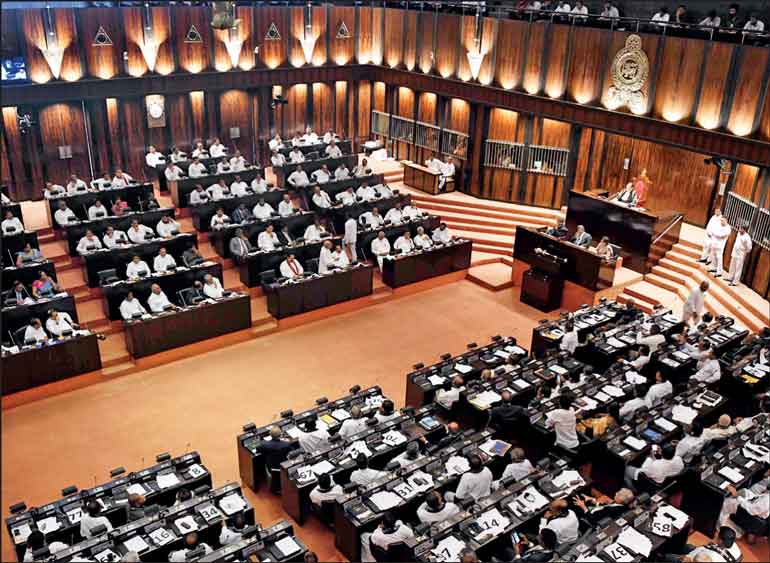
Event: On March 5, the opposition parties handed over a No Confidence Motion (NCM) against Speaker of Parliament Mahinda Yapa Abeywardana to the deputy speaker of parliament.[1][2] The NCM was filed against the speaker for allegedly violating the constitutional and parliamentary privileges of members of parliament by endorsing the Online Safety Act.[3][4]
On March 21, following a three-day debate (March 19–21) in parliament on the NCM against the speaker, the motion was defeated by a majority of 42 votes (117 votes against and 75 in favour).[5][6]
Analysis
Over the past week, the Sinhala print media reporting and TV news bulletins featured the parliamentary debate on the No Confidence Motion (NCM) against Speaker Mahinda Yapa Abeywardana. However, except for privately-owned Lankadeepa (also the most-read newspaper),[1] no other newspaper carried editorials on the topic. The social media commentary on the NCM was dominated by the speech made by MP Anura Kumara Dissanayaka during the parliamentary debate. As per the methodology followed by TMA, six out of the top 10 social media posts with the highest interactions were in relation to MP Dissanayaka’s speech made in parliament.[2]
This week’s TMA aims to unpack three underlying premises that may serve to explain the lack of interest in the NCM in the media and in the wider public discourse.
1. Lack of expectations from the institution of parliament
First, the public disillusionment[3] with parliament as an establishment to address and raise the grievances of the public–a concern raised during the aragalaya (democratic protests held in 2022)–re-emerged in the media discussion on the NCM. Previous issues of TMA have observed that during and post aragalaya the present majority in parliament (which had stood by the previous president) suffered a loss of popular legitimacy.[4] This continuation of the same majority in parliament, despite its loss of legitimacy, has fuelled a widespread sense that the parliamentary democratic process has been ‘hijacked’ and is currently not serving the interests of the country.
This sentiment is encapsulated in the #225epa (trans. do not want all 225 parliamentarians) slogan popularised during the aragalaya.[5] The slogan #225epa called for a significant ‘system-oriented’ change (a complete overhaul of the composition of parliament).
These diminished expectations of the public from parliament thus echo the aragalaya’s calls for ‘system change’ – a transformation aimed at better aligning the actions of parliament with the interests of the wider public.[6]
2. Lack of understanding of parliamentary processes
Second, limited public understanding and awareness of how the parliamentary processes/procedures were violated, the basis of the NCM against the speaker, may have also contributed to the lack of interest in the NCM in the media discussion.
For instance, MP Lakshman Kiriella criticised the speaker for failing to appoint sectoral oversight committees thereby breaching parliamentary standing orders.[7] Despite these allegations, the significance of parliamentary processes in the effective operation of a parliamentary democracy seemed to have been lost on the public, especially in the limited media discussion on the same.
3. Lack of expectations from members of parliament
Third, the low public expectations from individual members of parliament (MPs) to act with integrity to advance national interests may also serve as an explanation for the underlying lack of interest in the NCM.
There appears to be widespread dissatisfaction with parliamentarians, anchored around the belief that they are both corrupt and incompetent.[8] The public reactions of celebration on the recent death of MP Sanath Nishantha illustrate the depth of discontent with parliamentarians.[9]
In the discourse surrounding the NCM on former Minister Keheliya Rambukwella, social media commentary bemoaned the majority of parliamentarians who voted to defeat the NCM. In the case of that scandal, relating to the supply of medicines, the adverse actions of the minister were much clearer to the public.
However, not all parliamentarians are painted with the same brush. The traction MP Anura Kumara Dissanayaka’s speech–which raised issues such as nepotism in the current ‘system’–gained in social media indicates that some politicians who are able to raise the concerns that emerged from the aragalaya are not subjected to public discontent and disillusionment.
Overall, the widespread lack of interest in the NCM against the speaker and its broader implications highlights the growing public disenchantment with the overall ‘system’. This includes disenchantment with their political representatives and institutional structures that are designed to serve the public.
02. The Language Divide
Signposts the differences and nuances in reporting between Sinhala and Tamil language newspapers
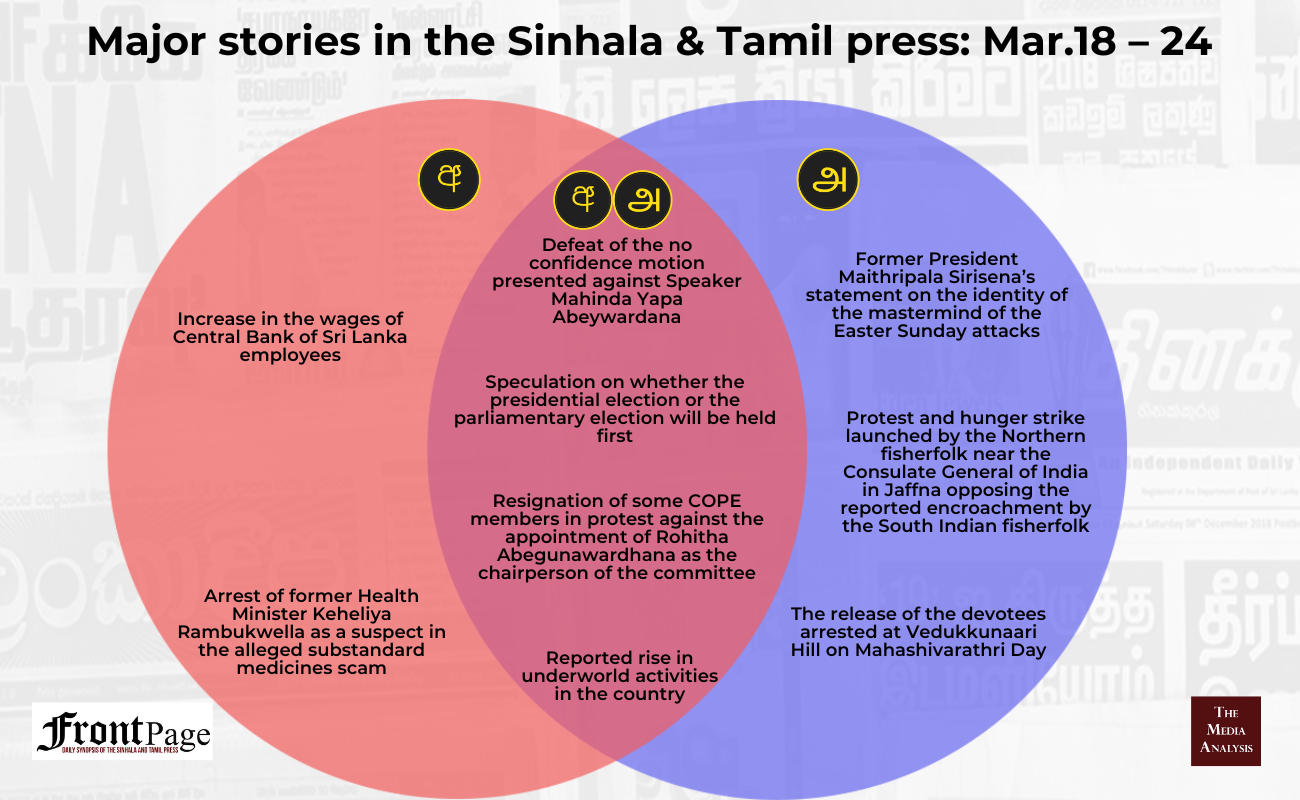
Last week’s Sinhala and Tamil press converged in relation to four main stories. The four stories were on the: (i) defeat of the no confidence motion presented against Speaker Mahinda Yapa Abeywardana; (ii) speculation on whether the presidential election or the parliamentary election will be held first; (iii) resignation of some COPE members in protest against the appointment of Rohitha Abegunawardhana as the chairperson of the committee; (iv) reported rise in underworld activities in the country. Two main stories were featured exclusively in the Sinhala press, and they were on: (i) the increase in the wages of Central Bank of Sri Lanka employees and (ii) the arrest of former Health Minister Keheliya Rambukwella as a suspect in the alleged substandard medicines scam. The Tamil press exclusively featured three main stories. They were on: (i) former President Maithripala Sirisena’s statement on the identity of the mastermind of the Easter Sunday attacks, (ii) the protest and hunger strike launched by the Northern fisherfolk near the Consulate General of India in Jaffna opposing the reported encroachment by the South Indian fisherfolk and (iii) the release of the devotees arrested at Vedukkunaari Hill on Mahashivarathri Day.
Do you want to see the divided priorities on a daily basis? Check out FrontPage. It captures the day’s headlines and features succinct summaries of the political news reported in the most widely read Sinhala and Tamil newspapers.
Contested sacred site in Vavuniya: Contested coverage
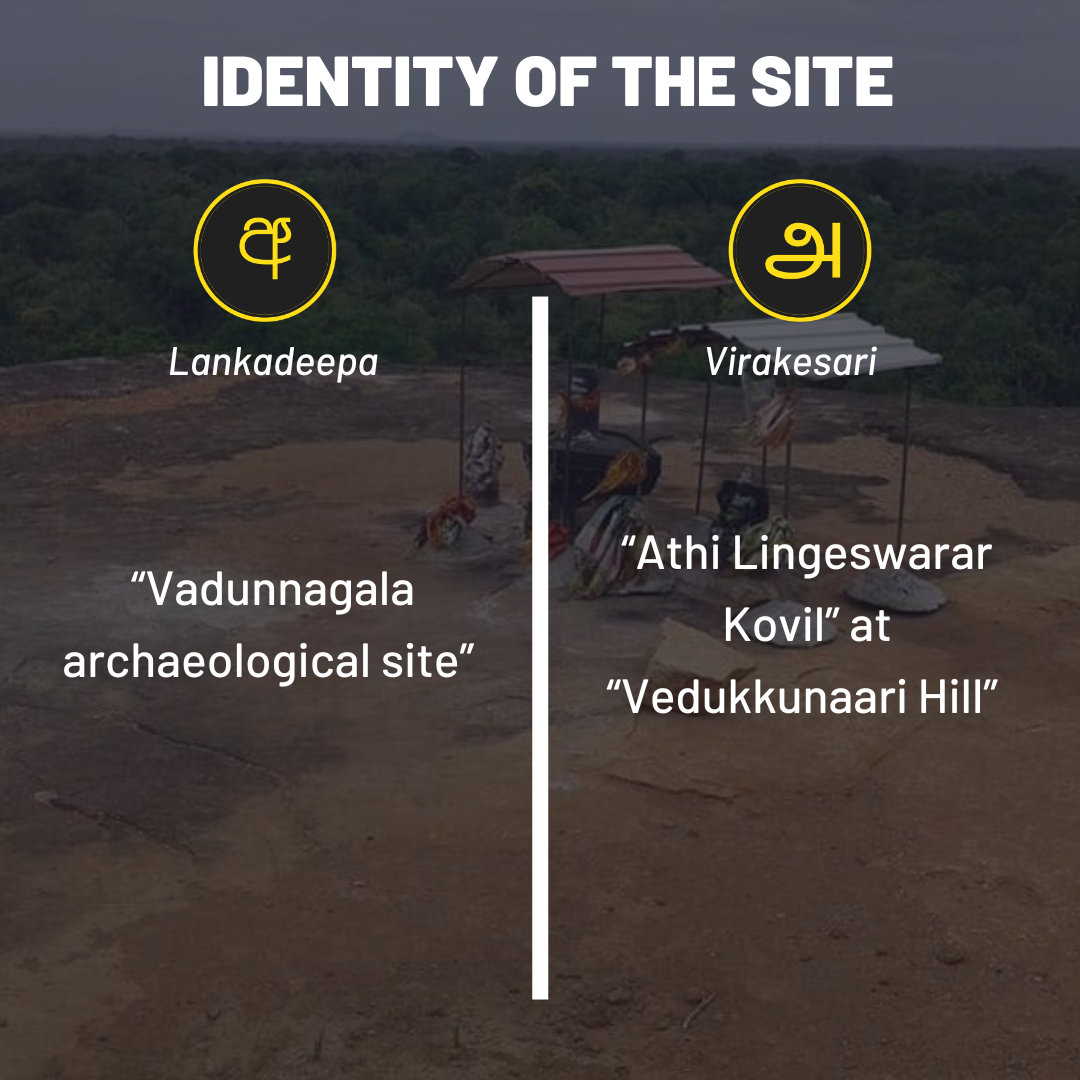
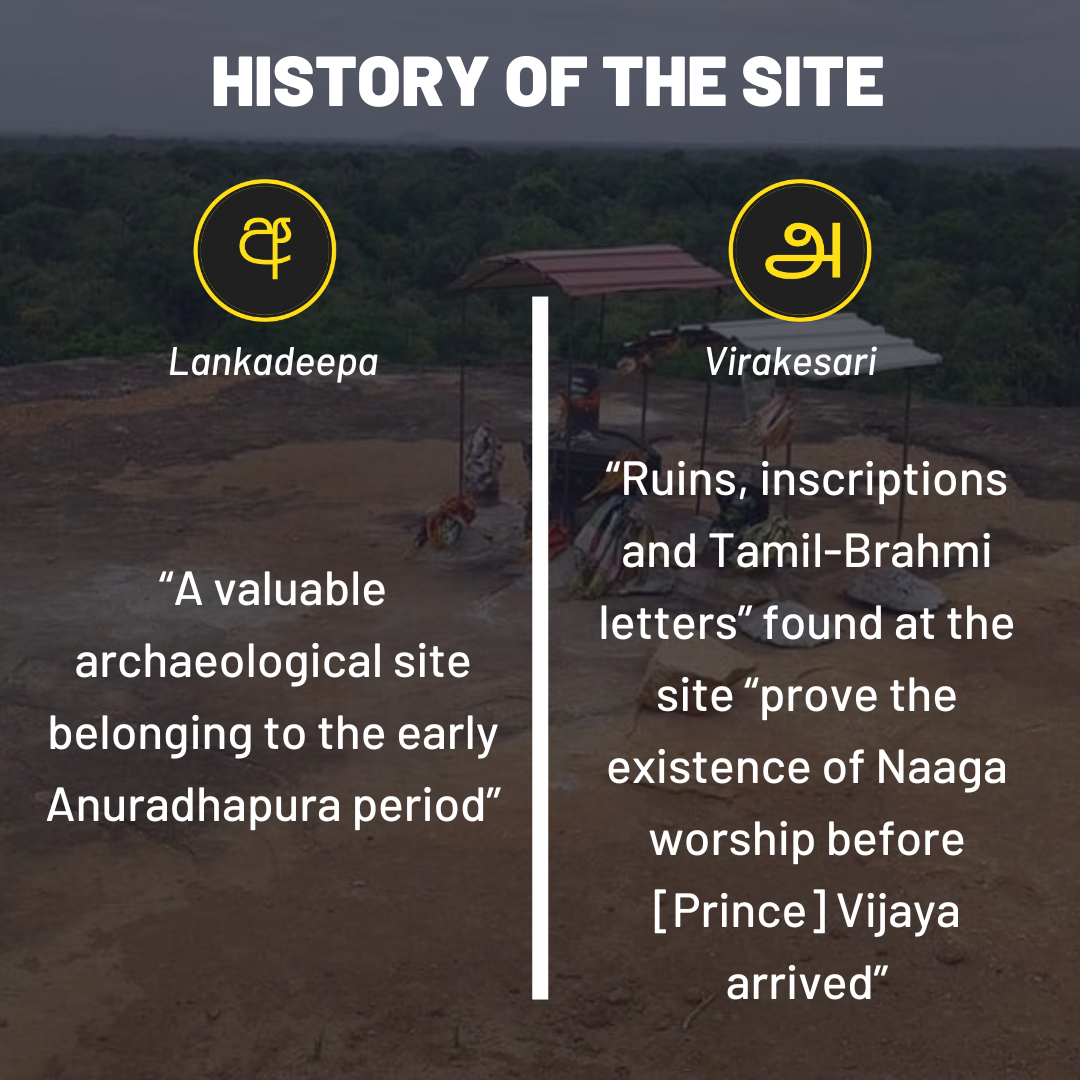
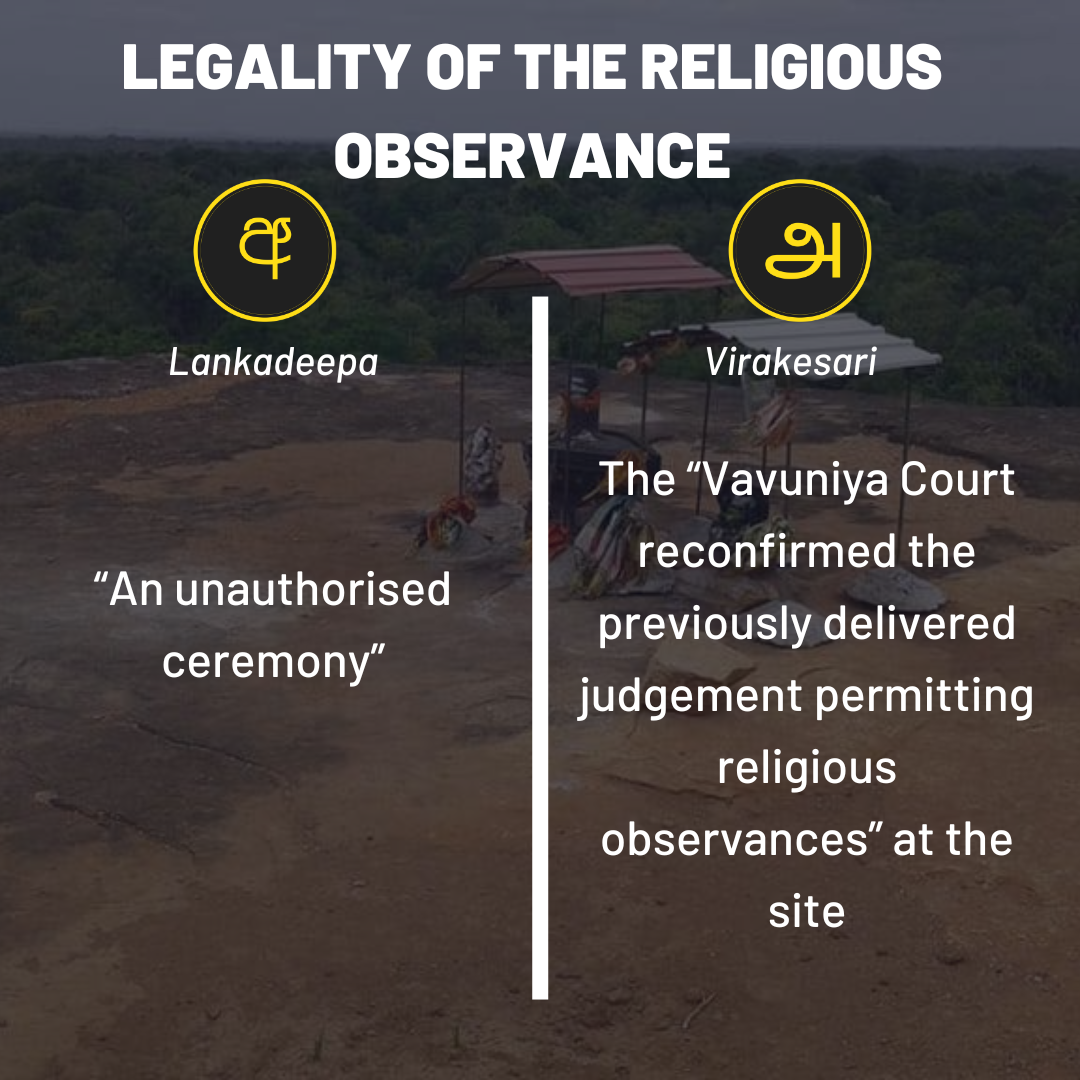
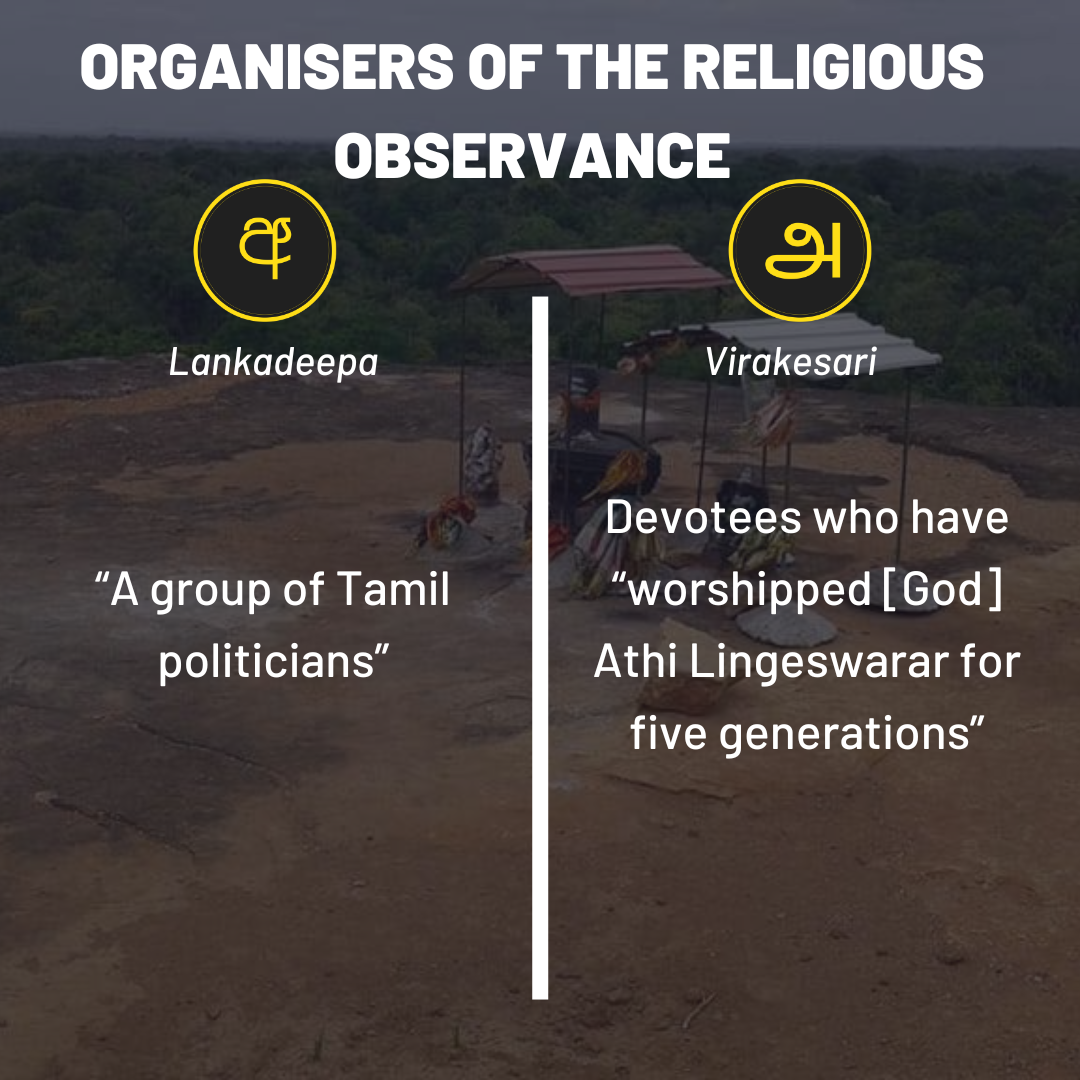
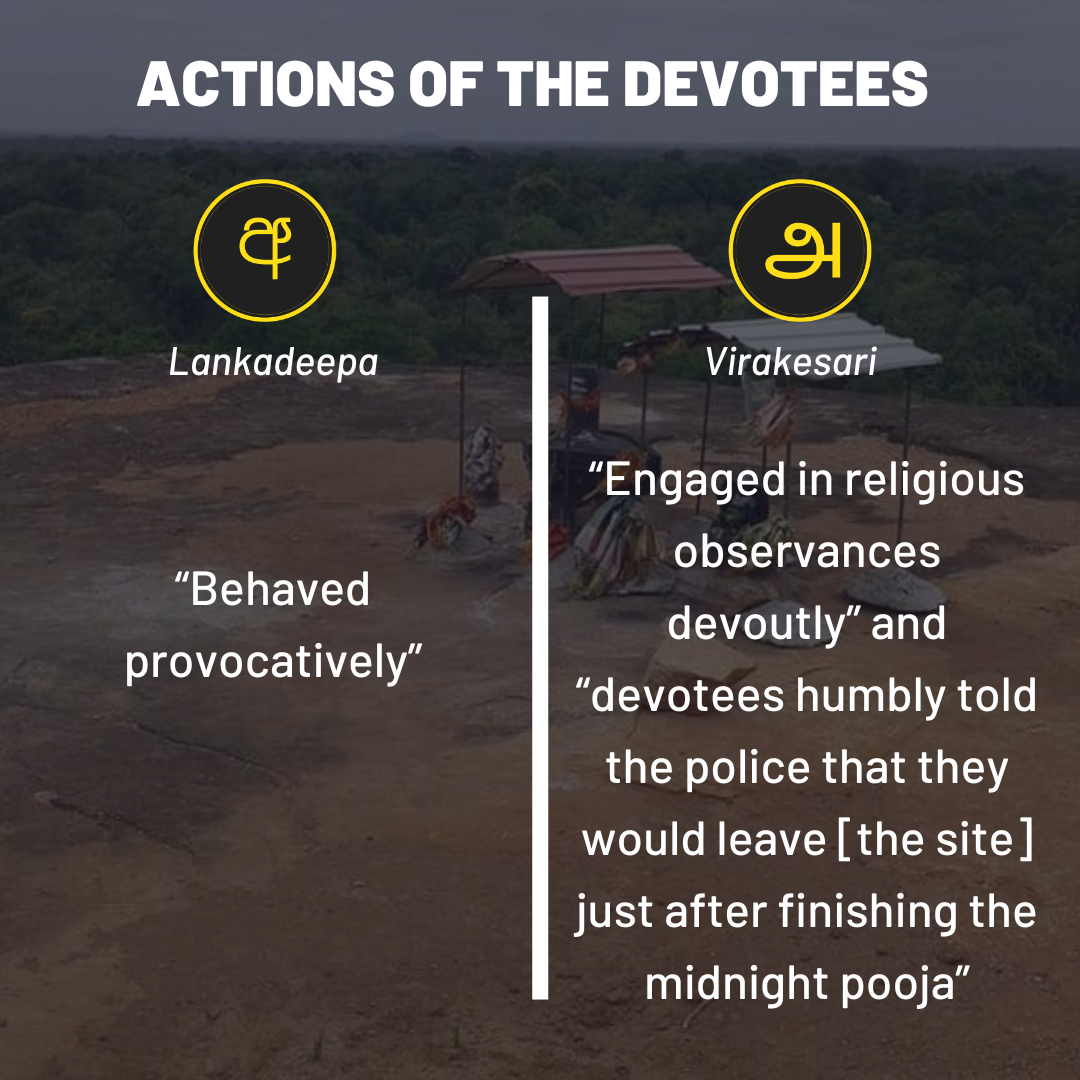
On March 8, during the Shivarathri pooja, a tense situation erupted at a contested sacred site in Vavuniya. During the pooja, some devotees were arrested and reportedly ill-treated by the police. The Sinhala newspaper Lankadeepa and Tamil newspaper Virakesari provided contrasting coverage of the incident. For more information, click here
03. The TV coverage of the issue
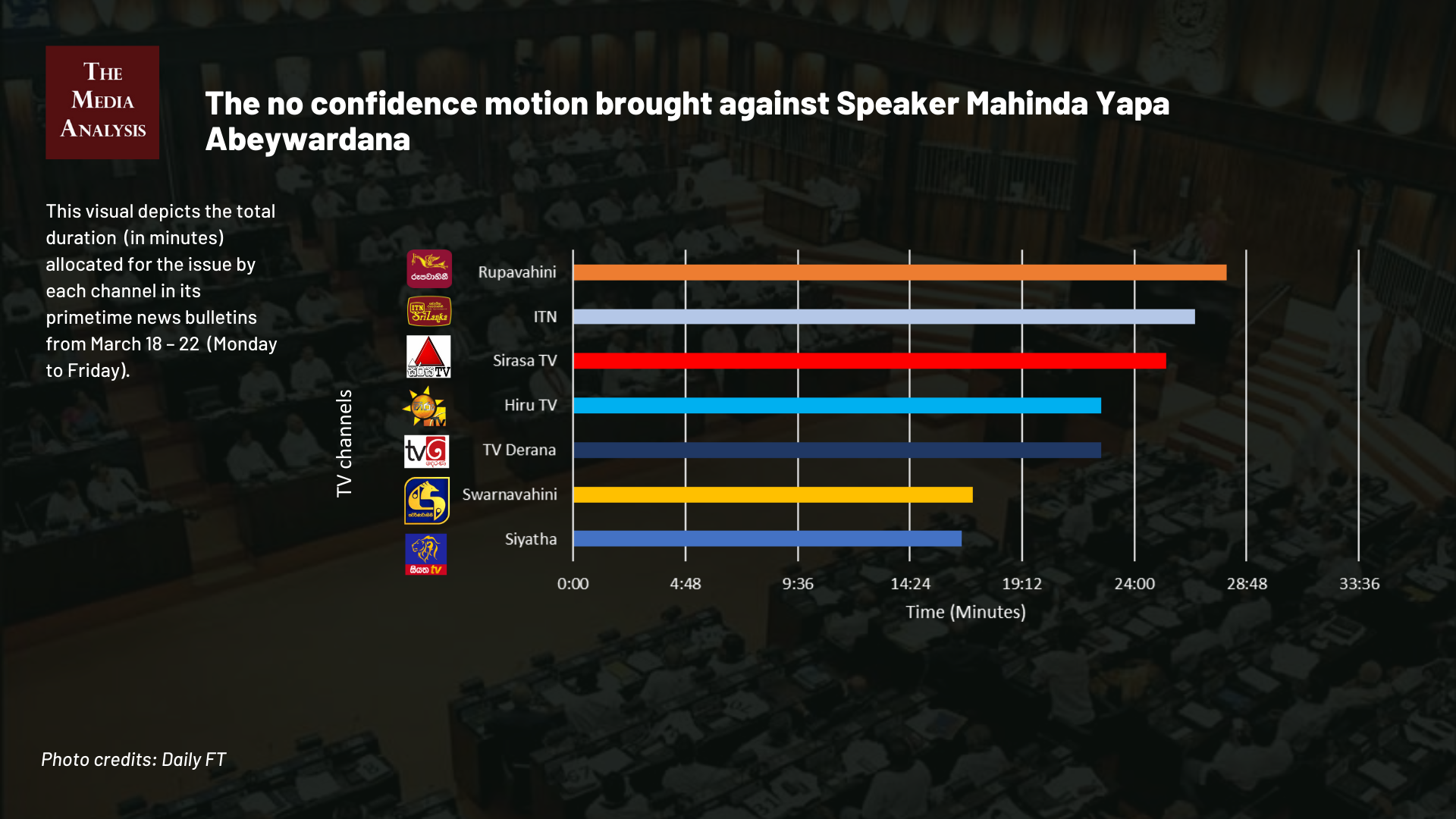
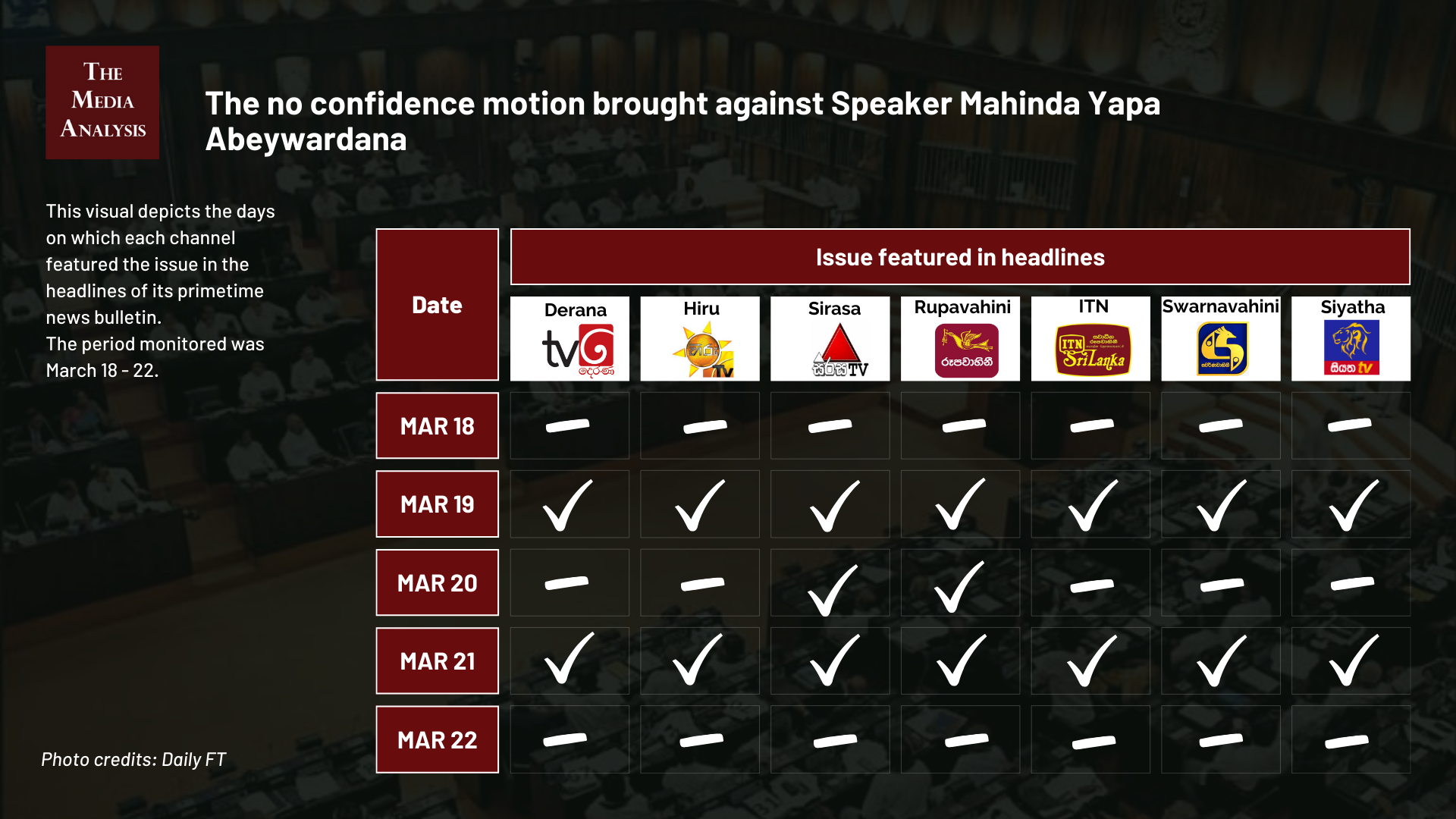
The data on television coverage is based on the monitoring of the primetime news telecasts of selected Sinhala language TV channels uploaded to YouTube.
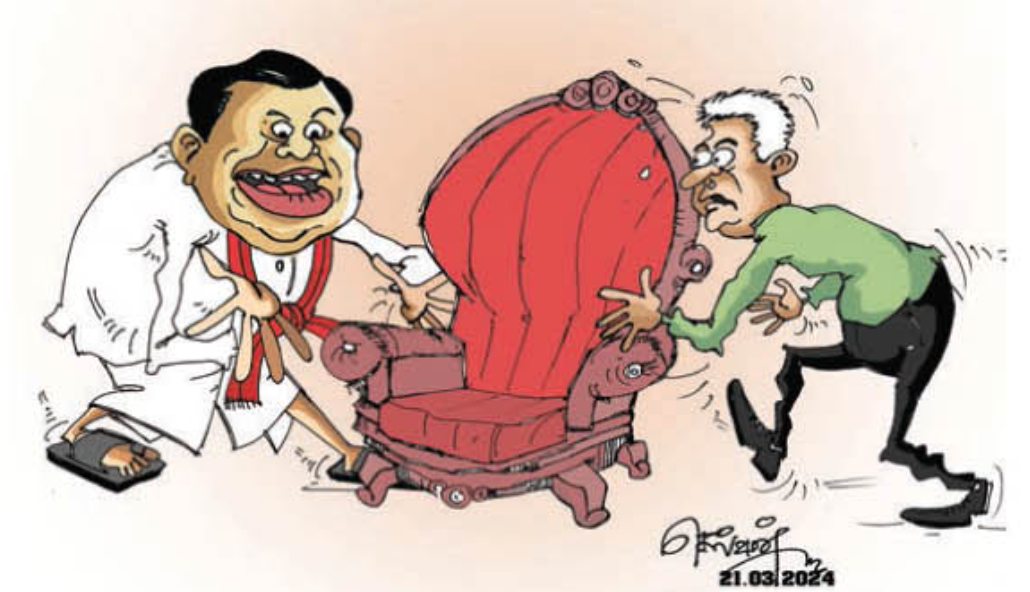
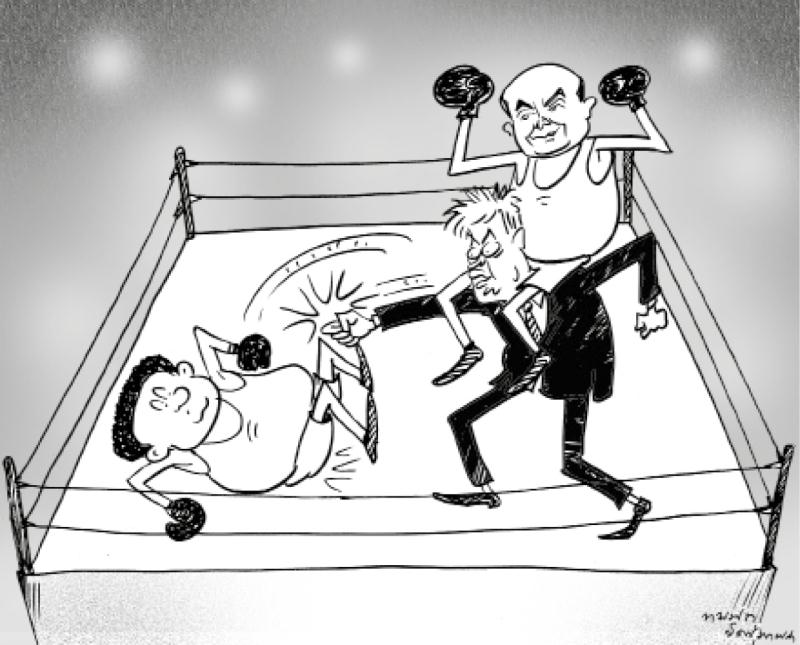
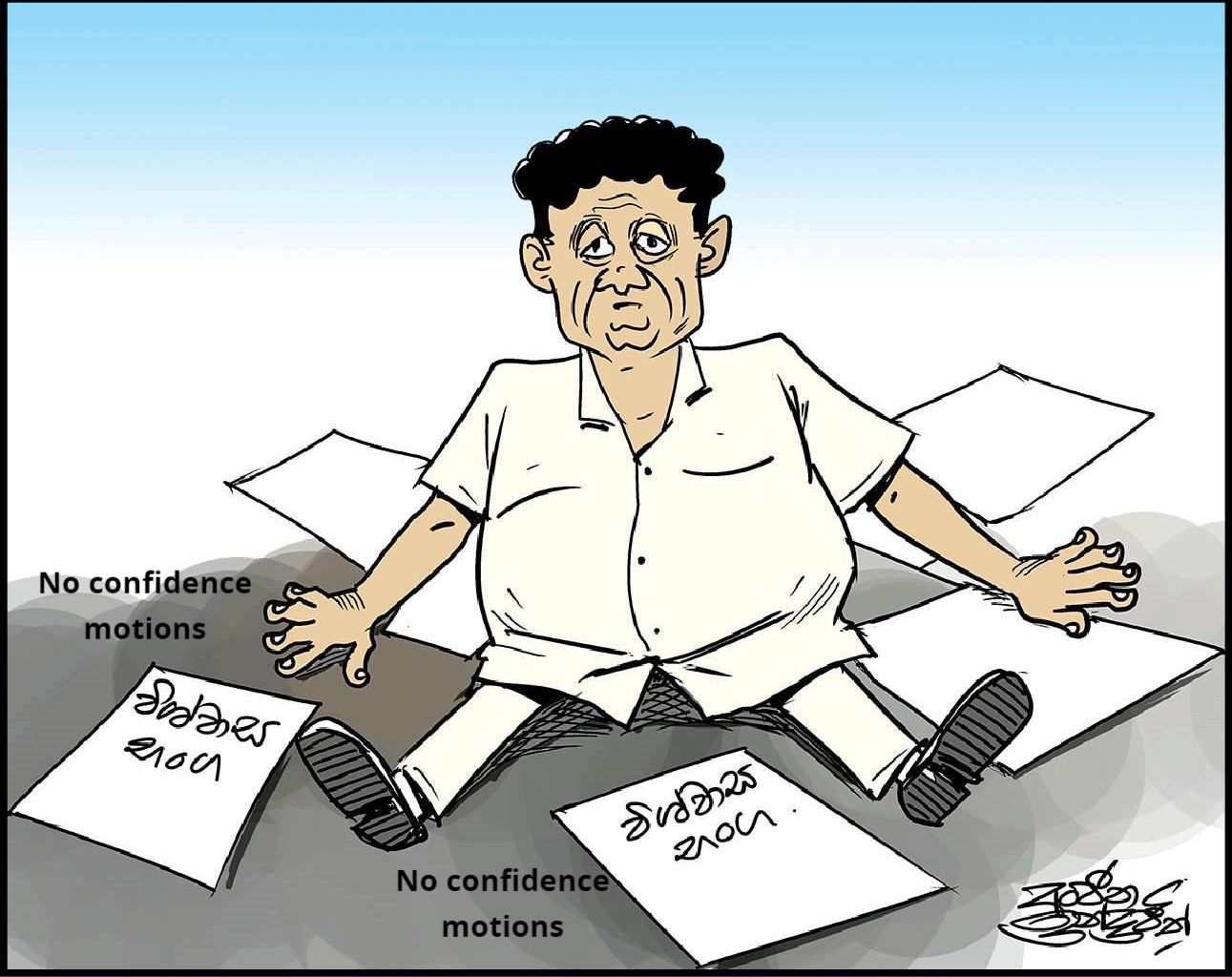
04. This week’s cartoons
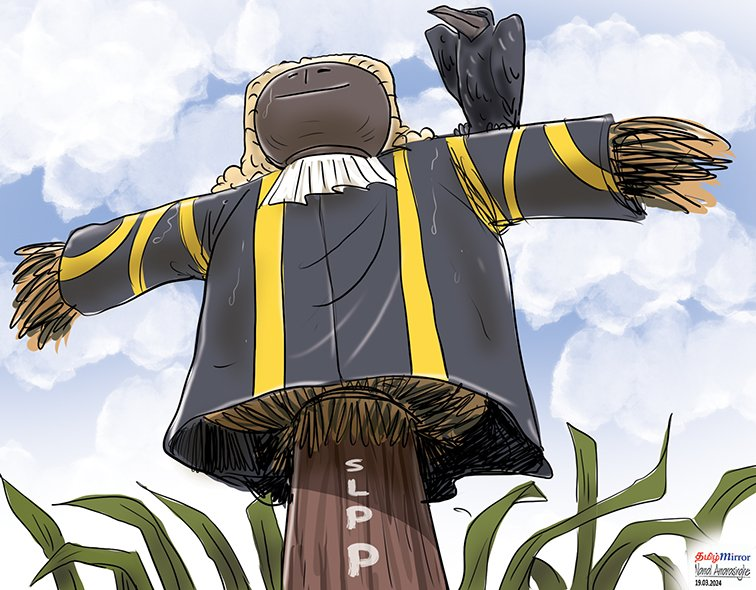
Courtesy of Tamil Mirror, Mar.19, 2024
Courtesy of Virakesari, Mar.21, 2024
Courtesy of Aruna, Mar.22, 2024
Courtesy of Silumina, Mar.24, 2024
05. This week’s memes
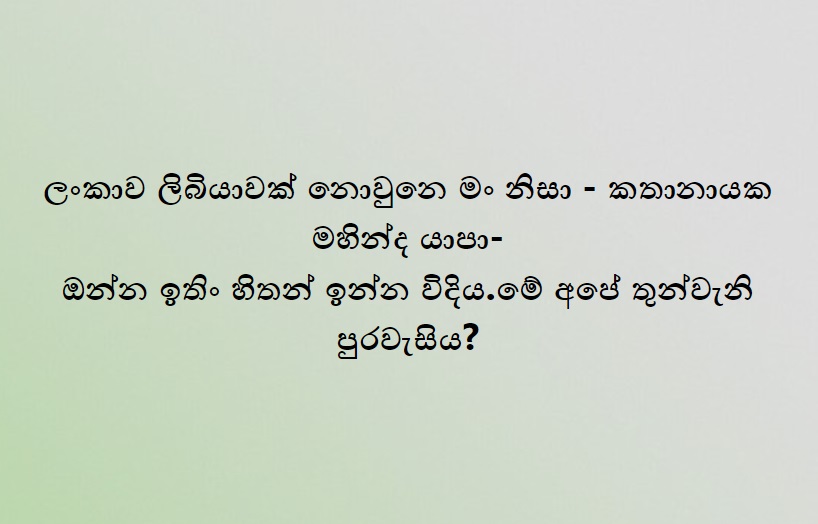
“It’s because of me that Sri Lanka did not turn into another Libya” – Speaker Mahinda Yapa [Abeywardana]
Now just look at how he thinks. Is this really our third citizen?
|
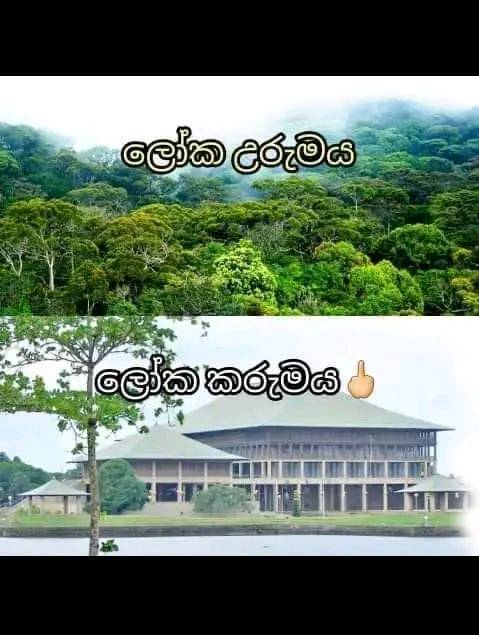
Top: A world heritage site (Sinharaja forest)
Bottom: A (massive) site of misfortune/karma to the world (Sri Lanka’s parliament) |
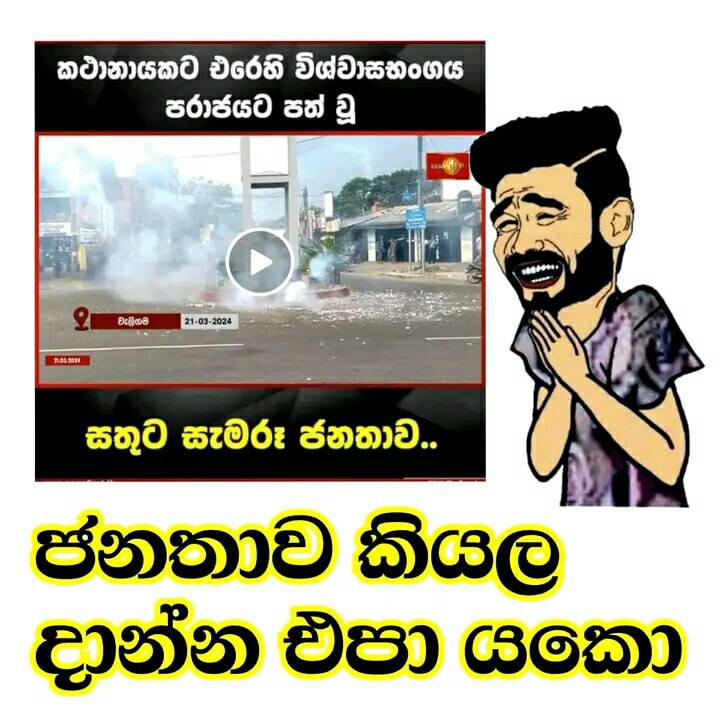
News caption: The people who celebrated the defeat of the no confidence motion against the Speaker
Meme caption: Don’t say it was the people who celebrated it you devil
06. Other topics covered in reportage
- Continuation of the ‘Yukthiya’ operation launched to curb drugs and underworld activities
- Prevailing hot weather conditions
- Reported dispute between SLPP MP Rohitha Abegunawardhana and NPP MP Vijitha Herath due to the latter accusing Abegunawardhana of corruption
- Attacks by the police on protests launched by university student unions
- Reported plans to restructure state-owned enterprises
To view this week’s news summaries, please click here