Both political parties and media commentary have positioned the LG elections as a national-level contest that could either affirm or challenge the NPP government’s mandate.
Macro Media Political Analysis
UK sanctions: Reactions reveal changed dynamics
Sri Lanka’s recent political shift, through presidential and general elections, was driven by promises to displace the traditional political élite and to fight corruption. This has translated into greater public interest in reducing corruption. Despite strong public interest in corruption accountability, conflict accountability has not gained the same level of attention.
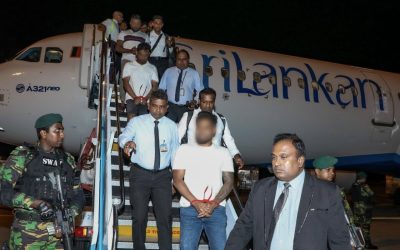
Deshabandu Tennakoon: Different reactions to the lethargy of the law
Since Deshabandu Tennakoon’s initial appointment as acting Inspector General of Police (IGP), he was seen as a ‘problematic’ figure and considered unsuitable for the role. He faced various allegations ranging from abuse of police power to orchestrating an attack on the aragalaya. Most damningly, the Supreme Court ruled that he had violated the fundamental rights of a suspect by subjecting him to torture.
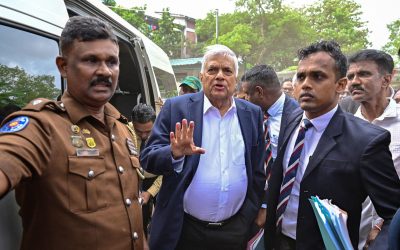
Batalanda report: Wickremesinghe remains freshly tainted
The widespread attention around the Report has pressured the government to speak of addressing historical injustices, particularly to take meaningful steps to ensure accountability for the victims of the Batalanda incident.
Rape reporting reflects illiberal responses
Within the Sri Lankan psyche, medical doctors hold a special and esteemed social status. Therefore, harm inflicted on a doctor can provoke outsized attention. The reported rape of a medical doctor in Anuradhapura sparked widespread outrage and gained more attention than other cases of sexual assault that are regularly reported.
Government criticised for yahapaalanaya trauma and complicity in criminal corruption
These forms of corruption have become of focal interest and, therefore, the key yardsticks for evaluating the incumbent government’s performance.
Mehdi Hasan interview: Questions on Batalanda reinforce criticism of the rejected political establishment
Hasan’s questioning about Wickremesinghe’s alleged involvement in Batalanda reignited deep-seated public frustration with Sri Lanka’s long-established political leadership. It was this “political cabal” that was decisively rejected in the 2024 Presidential and Parliamentary Elections. As a key figure within this establishment, Wickremesinghe was cast in a negative light.
Confidence in government strong and steady
Some private media outlets seemed to have adopted a more partisan stance, shaping their coverage in a way that appeared to be aligned with specific political interests that also limited the positive news about the government. This was reflected, among other things, in the limited coverage of COPE’s corruption investigations, which were discussed favourably in social media commentary supporting the government.
Convergence and divergence of social and mainstream media on economy and security
Over the past week, the government faced heightened media scrutiny following two major events: 1) President Dissanayake’s maiden budget speech and (2) the shooting of a suspect linked to organised crime at the Colombo Hulftsdorp Court Complex.
Independence Day flags anxiety and assertions
A closer examination of last week’s Sinhala media coverage of the Independence Day celebration revealed two concerns that have arisen regularly in how the Sinhala public reflects on ‘independence’: (1) anxiety over economic independence and (2) assertion of national identity.