
September 30 – October 6, 2024 | Vol.14, #39 | ISSN – 2386-1827
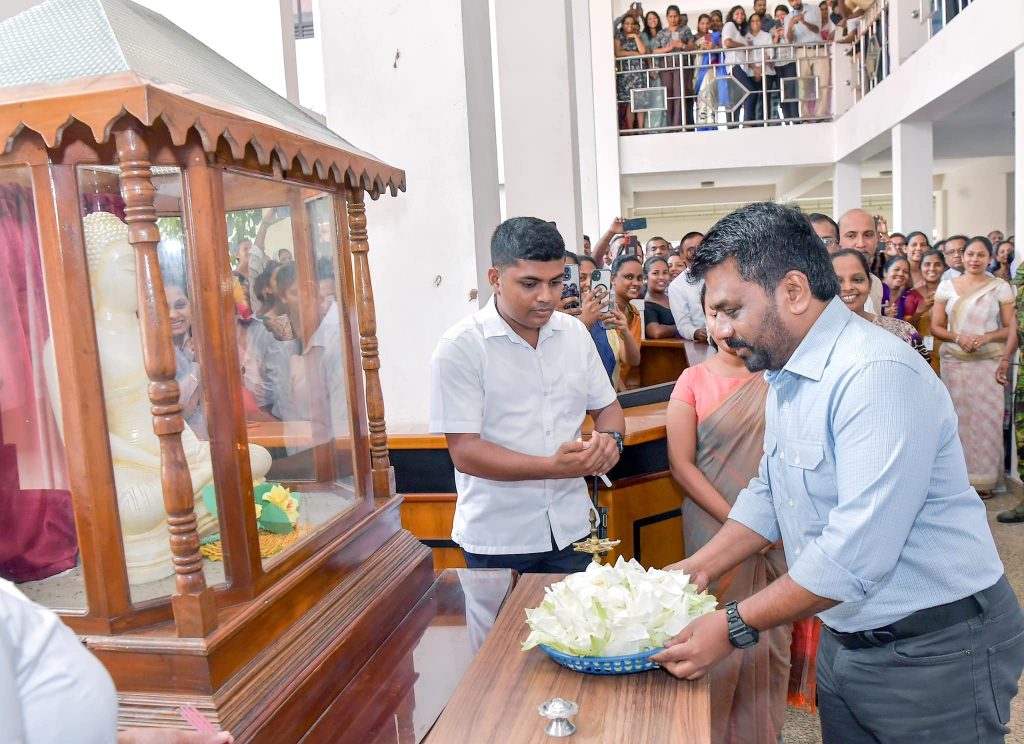
Photo credits: Anura Kumara Dissanayaka’s official Facebook page
Issue: On September 24, President Anura Kumara Dissanayaka signed the extraordinary gazette notification dissolving the ninth parliament of Sri Lanka.[1][2][3] The same gazette fixed the date for holding the parliamentary (general) election as November 14, 2024.[4][5]
On the same day, the president appointed a three-member cabinet of ministers to run the country as an interim government.[6][7] Subsequently, Dissanayaka appointed several new officials to the state sector, including secretaries to the presidential secretariat, and various ministries.[8][9][10][11][12]
Analysis
Last week’s press reportage, TV coverage and social media commentary reveal two key narratives emerging in the post-election period: the post-election positioning of Anura Kumara Dissanayaka/NPP and the shift in political legitimacy following the election. (The social media commentary is analysed through Junkipedia, a monitoring and analysis tool).[1]
This week’s TMA will briefly unpack each of these narratives below.
Narrative I: Post-election positioning of Anura Kumara Dissanayaka/NPP
There are two facets to the development of the post-election positioning of President Dissanayaka and the NPP: (1) the increasing momentum of support for Dissanayaka and (2) the continuing concerns about the NPP’s ability to manage government.
(1) Support for Dissanayaka gaining momentum
The popular image of Dissanayaka being in close proximity to the public (‘from the masses, for the masses’) continued after the election.[2] The Sinhala media continues to portray Dissanayaka as ‘brother’ Anura (or affectionately referred to as Anura aiya or sahodaraya – trans. Anura elder brother). Such framing of Dissanayaka has strengthened his public image.[3] Support for Dissanayaka has gathered momentum, elevating him to celebrity status especially on social media.
A Dissanayaka fandom is evident from the crowds gathering around him for photographs, handshakes and admiration of his ‘simple’ attire. His ‘relatable, down-to-earth persona’ has extended beyond the political arena, positioning him as a trendsetter, with even his fashion choices becoming popular, and casting him as a ‘national crush’ (please refer to memes published in the previous week’s TMA). He seems to be perceived as a people-friendly leader who conveys a sense of hope and authenticity. Overall, he is being treated as a celebrity, in a way that he was not prior to the election.
(2) Lurking concerns over the NPP’s ability to manage government
Voices in the Sinhala media expressed continuing concern over the NPP’s ability to effectively manage government. These concerns focussed on two main areas: the experience and capability of the NPP team to manage the economy and the ability of the NPP to manage an entrenched and problematic bureaucracy.
These concerns got highlighted around particular developments. One was the new appointments made by the NPP to specific positions. Despite the individuals selected having education and experience, Sinhala media voices were cynical about their overall effectiveness/suitability. The appointment of Superintendent of Police Ajantha Rodrigo was later reversed when it surfaced that he had been involved in suppressing the aragalaya.[4] The newly appointed Secretary of the Ministry of Environment Prabath Chandrakeerthi faced allegations of having misused public funds.[5]
This line of public scrutiny is infused with cynicism associated with Viyathmaga, a group of professionals under former President Gotabaya Rajapaksa’s administration,[6] where so-called experienced, competent individuals failed to meet public expectations, resulting in economic mismanagement.[7] The privately-owned Lankadeepa newspaper noted that the NPP may face the same challenges as preceding governments in navigating bureaucratic hurdles set up by public officials. Consequently, Sinhala media voices expressed concern that the NPP may struggle to manage the bureaucracy, leading to unfulfilled promises and stalled progress.
Narrative II: Post-election shift in political legitimacy
Dissanayaka and the NPP, elected on the promise of ‘change’ and portrayed as corruption-free, tend to further the delegitimisation of the prevailing political system. The traditional political establishment is being rejected for being corrupt, élite and patronage-based, perceived as such during the period of the election campaign.
Sinhala media voices positioned Dissanayaka and the NPP as contributing, post-election, to a shift in public perception, highlighting clear public rejection of corrupt, élite, traditional political establishments, thus strengthening their political legitimacy.[8] For example, the privately-owned Aruna and state-owned Dinamina newspapers emphasised the need to establish a parliament free of corruption in the upcoming general election. Dissanayaka’s stance of zero tolerance for corruption appears to have set a new precedent, forcing political parties to reconsider their approach to candidate selection for the upcoming general election.
Against this backdrop, Sri Lanka’s recent political landscape has witnessed many politicians with problematic records withdrawing from contesting in the upcoming general election, citing various reasons such as disappointment with the current state of party politics or providing the opportunity for the youth to contest.[9] Simultaneously, political parties also appear to be seeking candidates with clean, corruption-free backgrounds to field for the upcoming general election in alignment with the changing public sentiment.
Overall, anti-corruption remains a key factor shaping post-election sentiment, with Dissanayaka gaining momentum due to his perceived corruption-free stance and proximity to the people.
[1] With the sunset of CrowdTangle as a publicly available social media listening tool, the TMA team monitored Facebook, TikTok and YouTube profiles, pages and channels using Junkipedia for the keywords Anura, presidential election, general election, parliament and UNP. The monitoring period covered was September 30 to October 4.
[2] See TMA Vol.14, #38.
[3] Ibid.
[4] For more information, see: https://www.ft.lk/front-page/SP-Ajantha-Rodrigo-s-new-appointment-cancelled-amidst-public-backlash/44-767598.
[5] For more information, see: https://www.themorning.lk/articles/86498.
[6] For more information, see: https://businesstoday.lk/viyathmaga-driving-change-for-the-future/.
[7] For more information, see: https://foreignpolicy.com/2022/03/05/sri-lanka-organic-farming-crisis/ and https://www.themorning.lk/articles/181104.
[8] See TMA Vol.14, #38.
[9] For more information, see: https://island.lk/former-speaker-yapa-decides-against-contesting-general-election/, https://www.adaderana.lk/news.php?nid=102440, https://www.hirunews.lk/english/383268/c-v-wigneswaran-will-not-contest-in-upcoming-general-elections and https://srilankamirror.com/news/rw-wont-contest-elections-again-ruwan/.